Brown Jennifer R, Seymour Joseph D, Brox Timothy I, Skidmore Mark L, Wang Chen, Christner Brent C, Luo Bing-Hao, Codd Sarah L
Chemical and Biological Engineering Department, Montana State University, Bozeman, MT 59717, USA.
Center for Biofilm Engineering, Montana State University, Bozeman, MT 59717, USA.
Biotechnol Rep (Amst). 2014 Jun 20;3:60-64. doi: 10.1016/j.btre.2014.06.005. eCollection 2014 Sep.
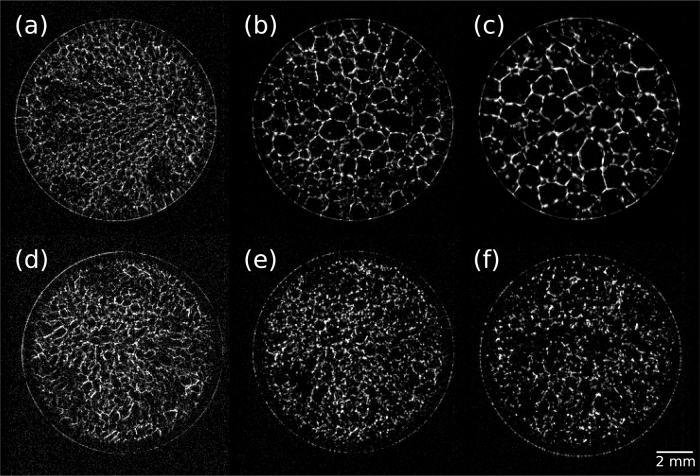
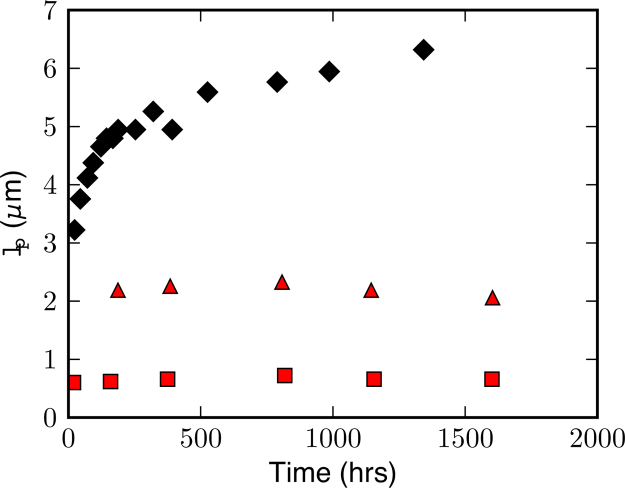
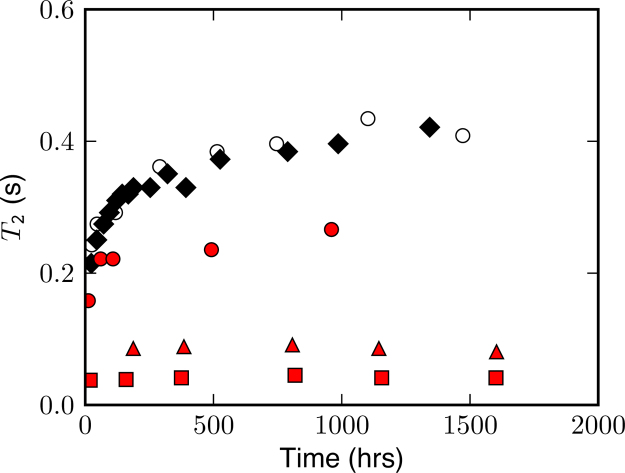
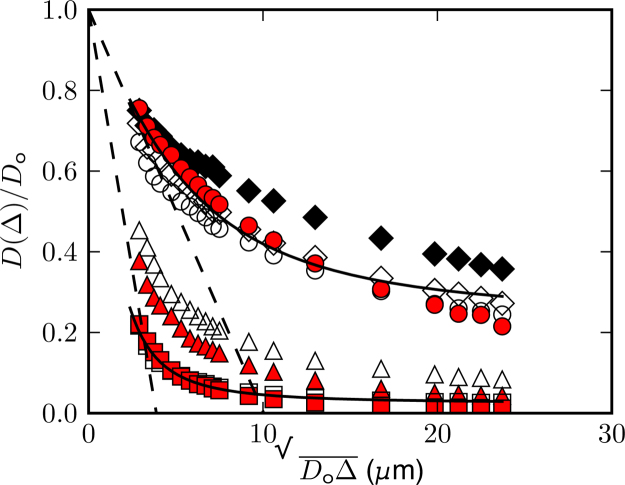
Liquid water present in polycrystalline ice at the interstices between ice crystals results in a network of liquid-filled veins and nodes within a solid ice matrix, making ice a low porosity porous media. Here we used nuclear magnetic resonance (NMR) relaxation and time dependent self-diffusion measurements developed for porous media applications to monitor three dimensional changes to the vein network in ices with and without a bacterial ice binding protein (IBP). Shorter effective diffusion distances were detected as a function of increased irreversible ice binding activity, indicating inhibition of ice recrystallization and persistent small crystal structure. The modification of ice structure by the IBP demonstrates a potential mechanism for the microorganism to enhance survivability in ice. These results highlight the potential of NMR techniques in evaluation of the impact of IBPs on vein network structure and recrystallization processes; information useful for continued development of ice-interacting proteins for biotechnology applications.
冰晶间隙中多晶冰内存在的液态水,在固体冰基质中形成了一个充满液体的脉管和节点网络,使冰成为一种低孔隙率的多孔介质。在这里,我们使用了为多孔介质应用开发的核磁共振(NMR)弛豫和随时间变化的自扩散测量方法,来监测有和没有细菌冰结合蛋白(IBP)的冰中脉管网络的三维变化。随着不可逆冰结合活性的增加,检测到有效扩散距离变短,这表明冰重结晶受到抑制,且晶体结构持续保持较小。IBP对冰结构的改变证明了微生物增强在冰中生存能力的一种潜在机制。这些结果突出了NMR技术在评估IBP对脉管网络结构和重结晶过程影响方面的潜力;这些信息对于持续开发用于生物技术应用的冰相互作用蛋白很有用。