Raiesi Omid, Siavash Mansour, Mohammadi Faezeh, Chabavizadeh Javaher, Mahaki Behzad, Maherolnaghsh Mehrnoush, Dehghan Parvin
Department of Mycology and Parasitology, School of Medicine, Isfahan University of Medical Sciences, Isfahan, Iran.
Department of Internal Medicine, School of Medicine, Isfahan University of Medical Sciences, Isfahan, Iran.
Adv Biomed Res. 2017 Jun 6;6:71. doi: 10.4103/2277-9175.191003. eCollection 2017.
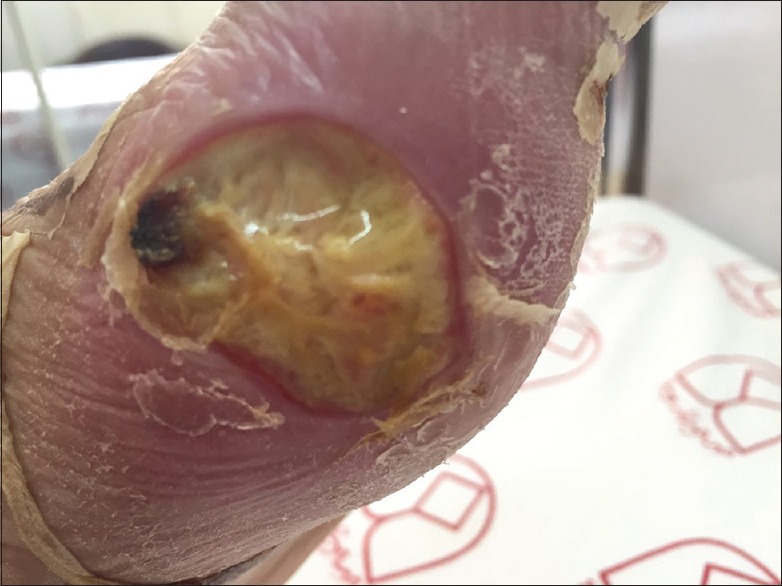
Diabetic patients are more susceptible to cutaneous fungal infections. The higher blood sugar levels cause increasing the cutaneous fungal infections in these patients. The main objective of this study was to find the frequency of fungal infections among cutaneous lesions of diabetic patients and to investigate azole antifungal agent susceptibility of the isolates.
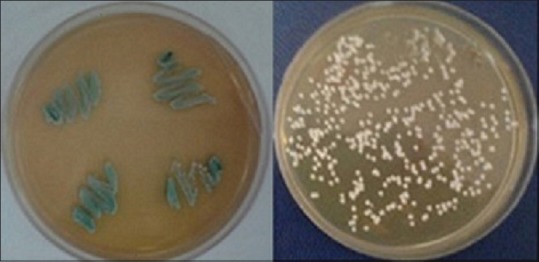
In this study, type 1diabetes ( = 78) and type 2 diabetes ( = 44) comprised 47 cases (38.5%) with diabetic foot ulcers and 75 cases (61.5%) with skin and nail lesions were studied. Fungal infection was confirmed by direct examination and culture methods. Antifungal susceptibility testing by broth microdilution method was performed according to the CLSI M27-A and M38-A references.
Out of 122 diabetic patients, thirty (24.5%) were affected with fungal infections. Frequency of fungal infection was 19.1% in patients with diabetic foot ulcer and 28% of patients with skin and nail lesions. and were the most common species isolated from thirty patients with fungal infection, respectively. Susceptibility testing carried out on 18 representative isolates (13 , five ) revealed that 12 isolates (10 and two isolates) (66.6%) were resistant (minimum inhibitory concentration [MIC] ≥64 mg/ml) to fluconazole (FCZ). Likewise, eight isolates (80%) of spp. were resistant (MIC ≥4 mg/ml), to itraconazole.
Our finding expands current knowledge about the frequency of fungal infections in diabetic patients. We noted the high prevalence of FCZ-resistant spp., particularly in diabetic foot ulcers. More attention is important in diabetic centers about this neglected issue.
糖尿病患者更容易发生皮肤真菌感染。较高的血糖水平导致这些患者的皮肤真菌感染增加。本研究的主要目的是确定糖尿病患者皮肤病变中真菌感染的频率,并调查分离菌株对唑类抗真菌药物的敏感性。
在本研究中,研究了1型糖尿病患者(n = 78)和2型糖尿病患者(n = 44),其中47例(38.5%)患有糖尿病足溃疡,75例(61.5%)患有皮肤和指甲病变。通过直接检查和培养方法确诊真菌感染。根据CLSI M27 - A和M38 - A参考文献,采用肉汤微量稀释法进行抗真菌药敏试验。
在122例糖尿病患者中,30例(24.5%)受到真菌感染。糖尿病足溃疡患者的真菌感染率为19.1%,皮肤和指甲病变患者的真菌感染率为28%。从30例真菌感染患者中分离出的最常见菌种分别是[具体菌种1]和[具体菌种2]。对18株代表性分离株(13株[具体菌种1]和5株[具体菌种2])进行的药敏试验表明,12株分离株(10株[具体菌种1]和2株[具体菌种2]分离株)(66.6%)对氟康唑(FCZ)耐药(最低抑菌浓度[MIC]≥64mg/ml)。同样,80%的[具体菌种2]分离株对伊曲康唑耐药(MIC≥4mg/ml)。
我们的研究结果扩展了目前关于糖尿病患者真菌感染频率的知识。我们注意到耐氟康唑的[具体菌种1]的高患病率,特别是在糖尿病足溃疡中。糖尿病中心对这个被忽视的问题给予更多关注很重要。