Jaggar Minal, Weisstaub Noelia, Gingrich Jay A, Vaidya Vidita A
Department of Biological Sciences, Tata Institute of Fundamental Research, Mumbai, India.
Department of Physiology, Faculty of Medicine, University of Buenos Aires, Argentina.
Neurobiol Stress. 2017 Jun 5;7:89-102. doi: 10.1016/j.ynstr.2017.06.001. eCollection 2017 Dec.
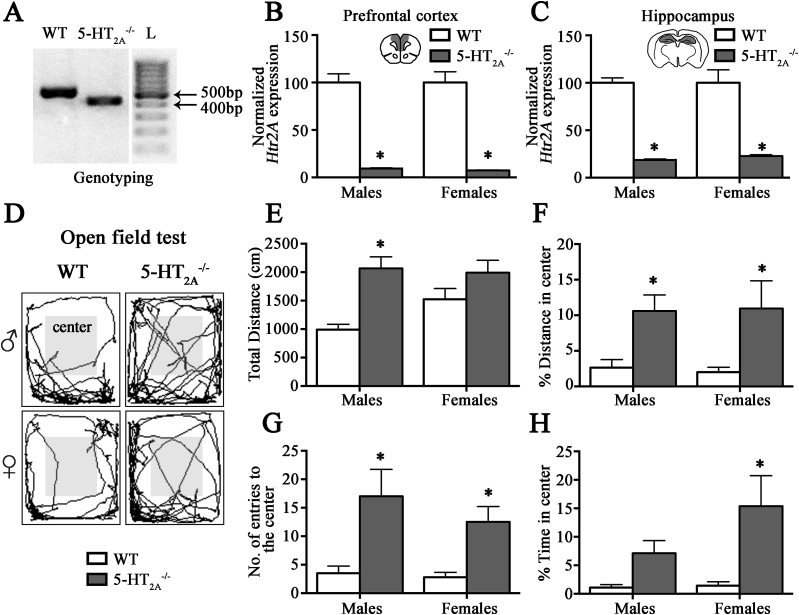
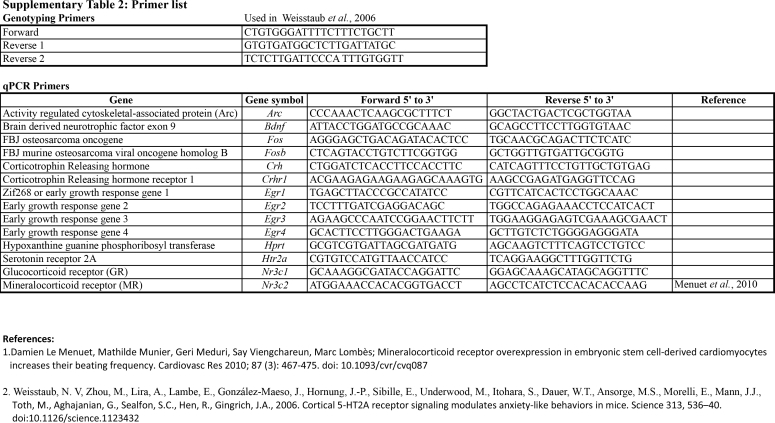
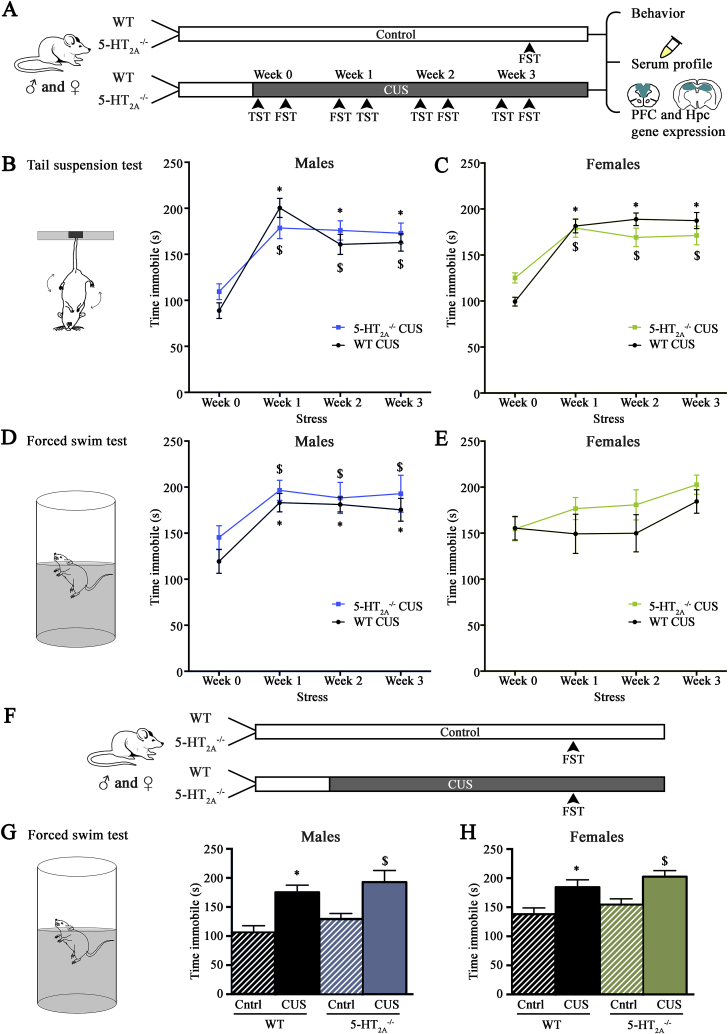
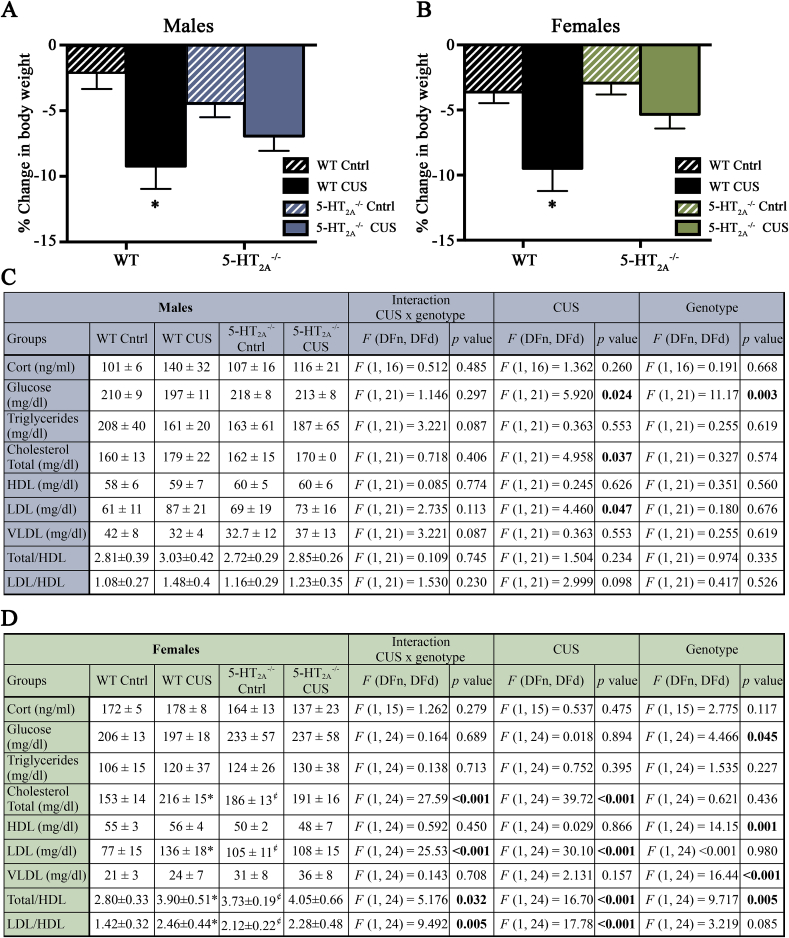
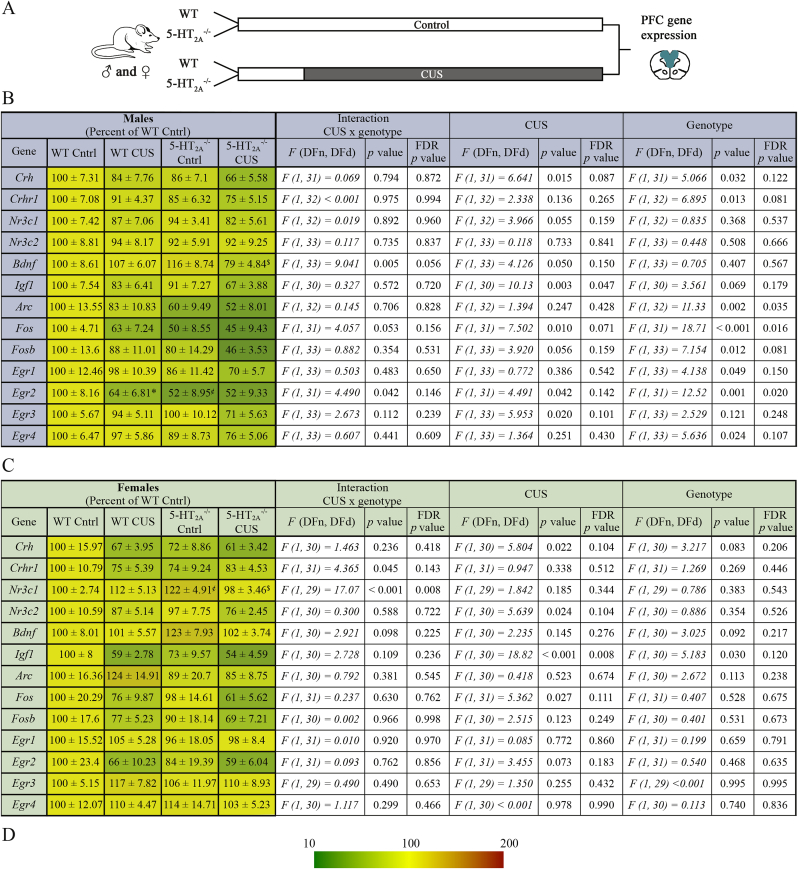
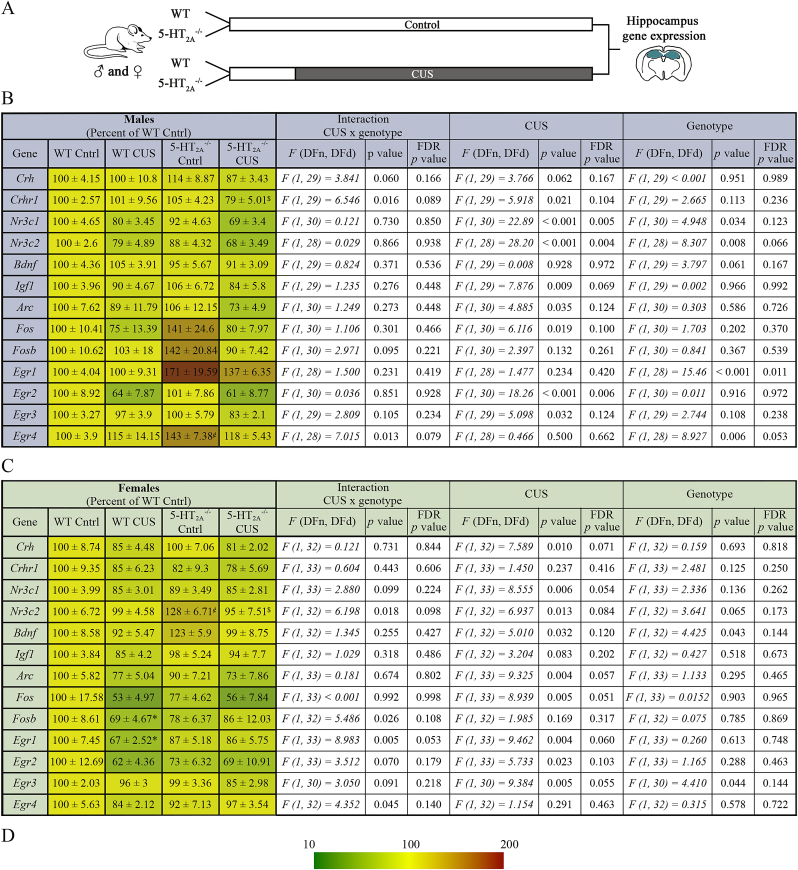
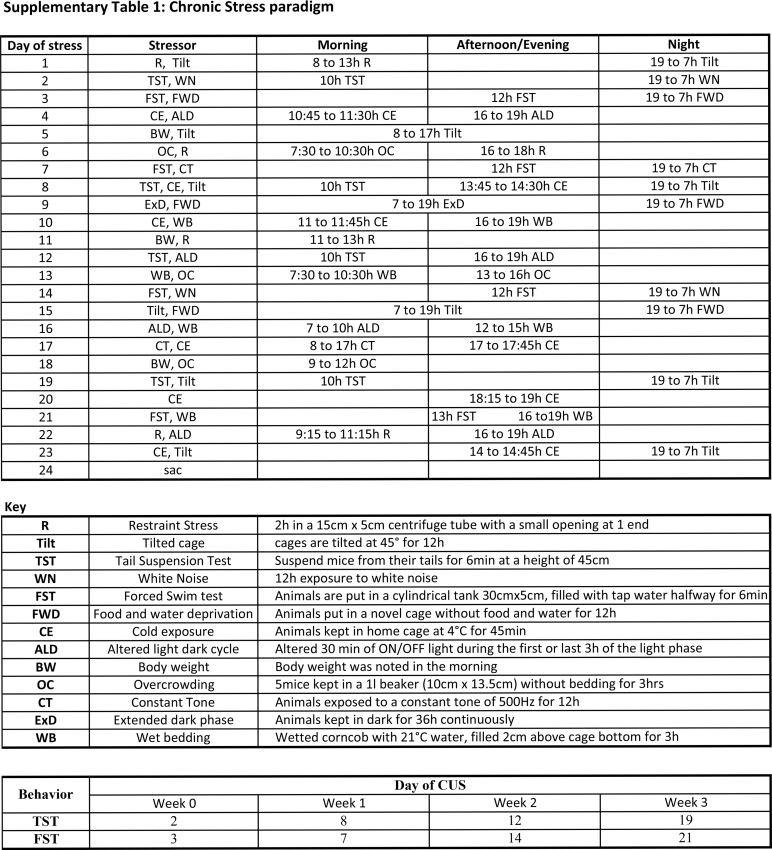
Chronic stress enhances risk for psychiatric disorders, and in animal models is known to evoke depression-like behavior accompanied by perturbed neurohormonal, metabolic, neuroarchitectural and transcriptional changes. Serotonergic neurotransmission, including serotonin (5-HT) receptors, have been implicated in mediating specific aspects of stress-induced responses. Here we investigated the influence of chronic unpredictable stress (CUS) on depression-like behavior, serum metabolic measures, and gene expression in stress-associated neurocircuitry of the prefrontal cortex (PFC) and hippocampus in 5-HT receptor knockout (5-[Formula: see text]) and wild-type mice of both sexes. While 5-[Formula: see text] male and female mice exhibited a baseline reduced anxiety-like state, this did not alter the onset or severity of behavioral despair during and at the cessation of CUS, indicating that these mice can develop stress-evoked depressive behavior. Analysis of metabolic parameters in serum revealed a CUS-evoked dyslipidemia, which was abrogated in 5-[Formula: see text] female mice with a hyperlipidemic baseline phenotype. 5-[Formula: see text] male mice in contrast did not exhibit such a baseline shift in their serum lipid profile. Specific stress-responsive genes (, , ), trophic factors (, ) and immediate early genes (IEGs) (, , , ) in the PFC and hippocampus were altered in 5-[Formula: see text] mice both under baseline and CUS conditions. Our results support a role for the 5-HT receptor in specific metabolic and transcriptional, but not behavioral, consequences of CUS, and highlight that the contribution of the 5-HT receptor to stress-evoked changes is sexually dimorphic.
慢性应激会增加患精神疾病的风险,在动物模型中,已知会引发类似抑郁的行为,并伴有神经激素、代谢、神经结构和转录变化紊乱。包括5-羟色胺(5-HT)受体在内的血清素能神经传递与应激诱导反应的特定方面有关。在此,我们研究了慢性不可预测应激(CUS)对5-HT受体敲除(5- [公式:见正文])和野生型雌雄小鼠前额叶皮质(PFC)和海马体应激相关神经回路中类似抑郁行为、血清代谢指标及基因表达的影响。虽然5- [公式:见正文] 雌雄小鼠表现出基线焦虑样状态降低,但这并未改变CUS期间及结束时行为绝望的发作或严重程度,表明这些小鼠会出现应激诱发的抑郁行为。血清代谢参数分析显示CUS诱发了血脂异常,在具有高脂血症基线表型的5- [公式:见正文] 雌性小鼠中这种异常被消除。相比之下,5- [公式:见正文] 雄性小鼠血清脂质谱未表现出这种基线变化。在基线和CUS条件下,5- [公式:见正文] 小鼠前额叶皮质和海马体中的特定应激反应基因(,,)、营养因子(,)和即刻早期基因(IEGs)(,,,)均发生了改变。我们的结果支持5-HT受体在CUS的特定代谢和转录而非行为后果中起作用,并强调5-HT受体对应激诱发变化的贡献具有性别差异。