Zhang Aixia, Gu Xiaohong, Wang Xiuping, Wang Lei, Zeng Lihua, Fan Xuemei, Jiang Chen, Fu Ziyi, Cui Xianwei, Ji Chenbo, Qu Hongming, Guo Xirong
Department of Nursing, Affiliated Nanjing Maternal and Child Health Hospital, Nanjing Medical University, Nanjing , Jiangsu 210004, P.R. China.
Department of Pediatrics, Affiliated Wuxi Children's Hospital, Nanjing Medical University, Wuxi, Jiangsu 210004, P.R. China.
Mol Med Rep. 2017 Aug;16(2):1321-1327. doi: 10.3892/mmr.2017.6761. Epub 2017 Jun 13.
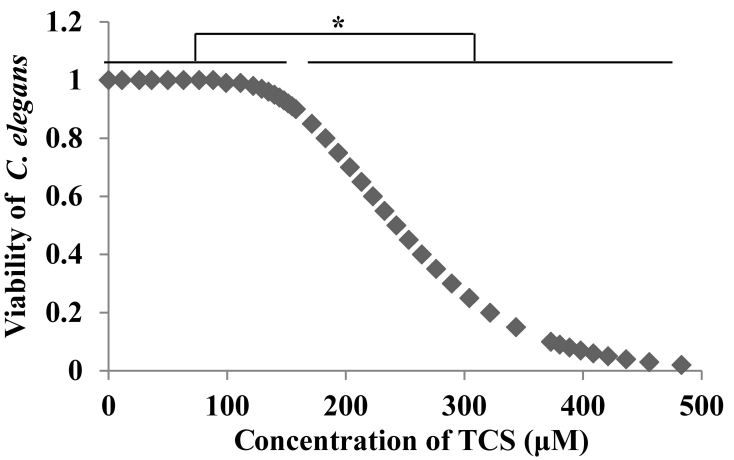
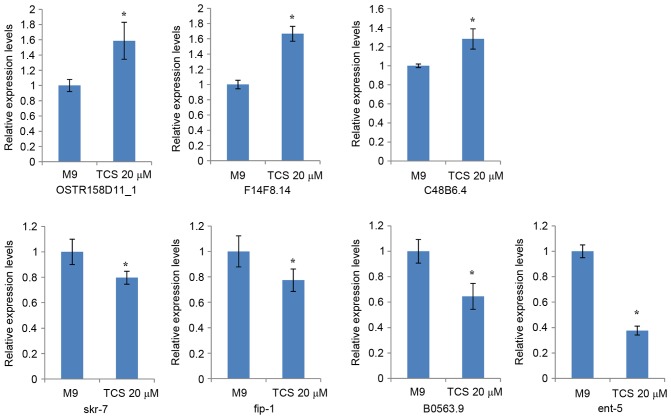
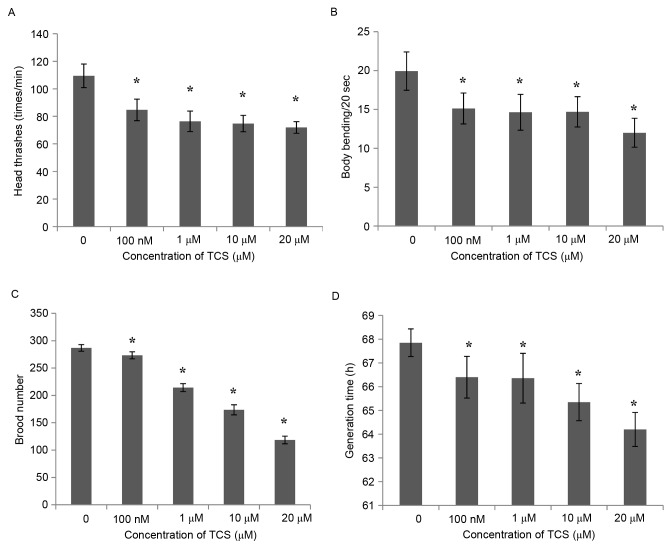
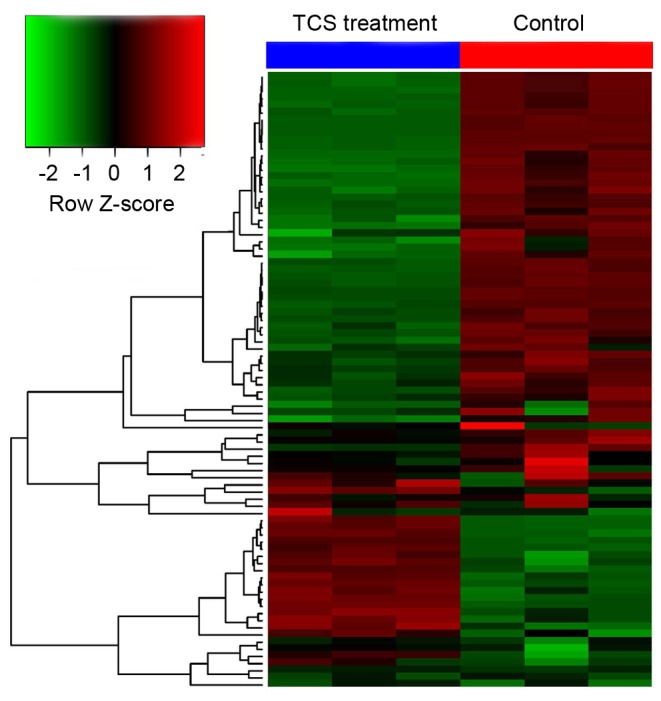
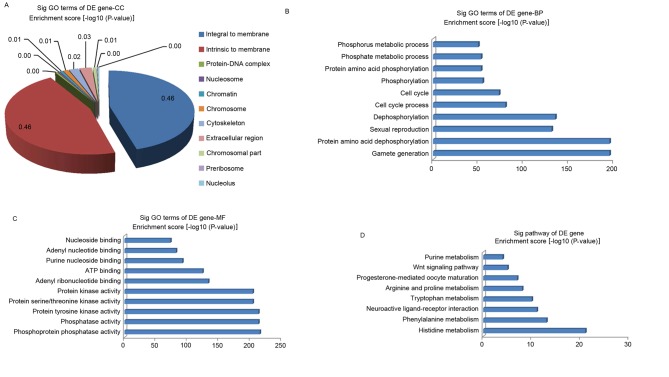
Triclosan (TCS) is widely used as broad-spectrum antibacterial agent. However, it may threaten the health of human offspring if the mother is exposed to TCS during pregnancy. The present study aimed to identify potential mechanisms behind the toxic effect of TCS on the offspring of Caenorhabditis elegans (C. elegans), using this nematode as a suitable animal model. The results of the current study demonstrated that the locomotory behavior and reproductive capacity of C. elegans offspring was severely affected by prenatal exposure to different concentrations of TCS. A high‑throughput gene microarray was performed to investigate molecular alterations in C. elegans offspring following TCS exposure during pregnancy. Microarray results indicated that 113 genes were differentially expressed following TCS treatment compared with the control group. Gene ontology analysis demonstrated that these dysregulated genes were primarily associated with neuron development, muscular strength and reproduction. Pathway analysis results demonstrated that differentially expressed genes participated in several signaling pathways, including arginine, proline, and purine metabolism, progesterone‑mediated oocyte maturation and neuroactive ligand‑receptor interaction. Finally, 7 TCS toxicity-associated genes were confirmed by reverse transcription‑quantitative polymerase chain reaction. The present study indicates that TCS exposure during pregnancy may disturb the locomotory behavior and reproductive capacity of C. elegans offspring, primarily through 7 TCS toxicity‑associated genes, which merits further study from an environmental health perspective.
三氯生(TCS)作为一种广谱抗菌剂被广泛使用。然而,如果母亲在孕期接触三氯生,可能会威胁人类后代的健康。本研究旨在利用秀丽隐杆线虫(简称线虫)这一合适的动物模型,确定三氯生对秀丽隐杆线虫后代产生毒性作用的潜在机制。当前研究结果表明,产前接触不同浓度的三氯生会严重影响秀丽隐杆线虫后代的运动行为和生殖能力。进行了高通量基因微阵列分析,以研究孕期接触三氯生后秀丽隐杆线虫后代的分子变化。微阵列结果表明,与对照组相比,三氯生处理后有113个基因表达存在差异。基因本体分析表明,这些失调的基因主要与神经元发育、肌肉力量和生殖有关。通路分析结果表明,差异表达基因参与了多个信号通路,包括精氨酸、脯氨酸和嘌呤代谢、孕酮介导的卵母细胞成熟以及神经活性配体-受体相互作用。最后,通过逆转录-定量聚合酶链反应确认了7个与三氯生毒性相关的基因。本研究表明,孕期接触三氯生可能会干扰秀丽隐杆线虫后代的运动行为和生殖能力,主要通过7个与三氯生毒性相关的基因,从环境卫生角度来看,这值得进一步研究。