Rathjen Thomas, Yan Xin, Kononenko Natalia L, Ku Min-Chi, Song Kun, Ferrarese Leiron, Tarallo Valentina, Puchkov Dmytro, Kochlamazashvili Gaga, Brachs Sebastian, Varela Luis, Szigeti-Buck Klara, Yi Chun-Xia, Schriever Sonja C, Tattikota Sudhir Gopal, Carlo Anne Sophie, Moroni Mirko, Siemens Jan, Heuser Arnd, van der Weyden Louise, Birkenfeld Andreas L, Niendorf Thoralf, Poulet James F A, Horvath Tamas L, Tschöp Matthias H, Heinig Matthias, Trajkovski Mirko, Haucke Volker, Poy Matthew N
Max Delbrück Center for Molecular Medicine, Berlin, Germany.
Leibniz Institute for Molecular Pharmacology, Berlin, Germany.
Nat Neurosci. 2017 Aug;20(8):1096-1103. doi: 10.1038/nn.4590. Epub 2017 Jun 19.
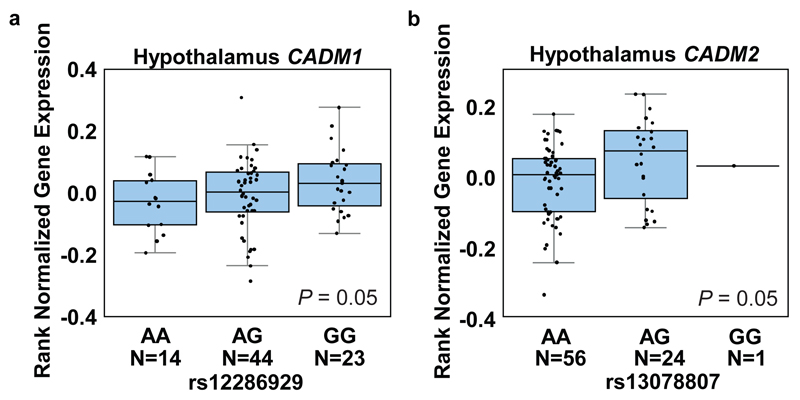
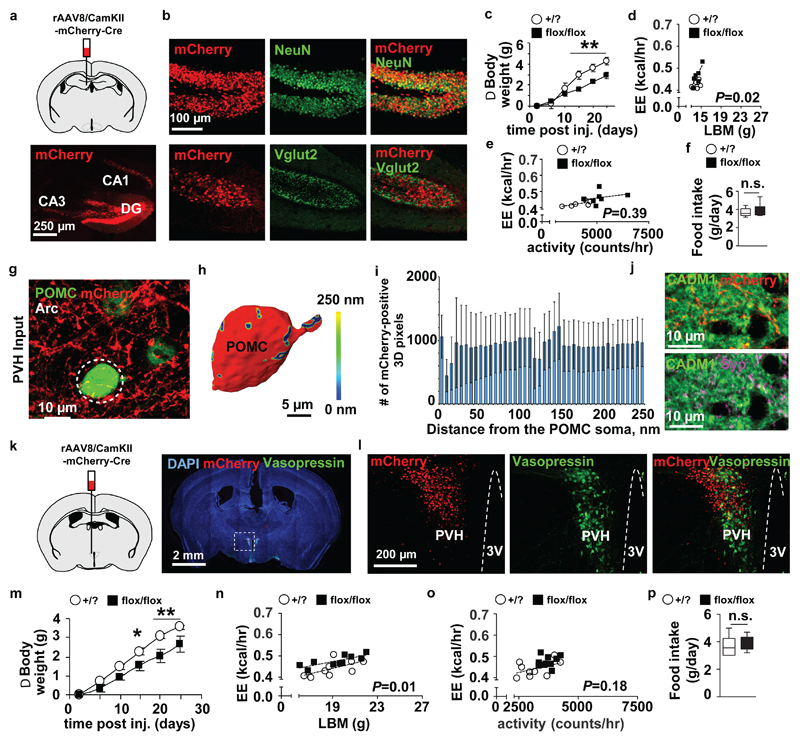
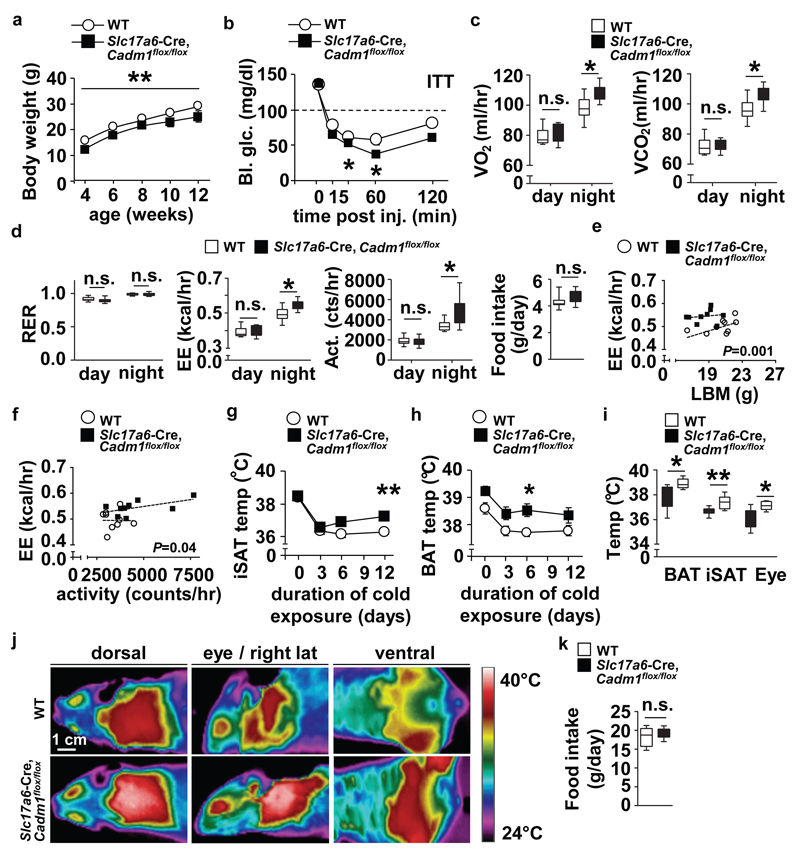
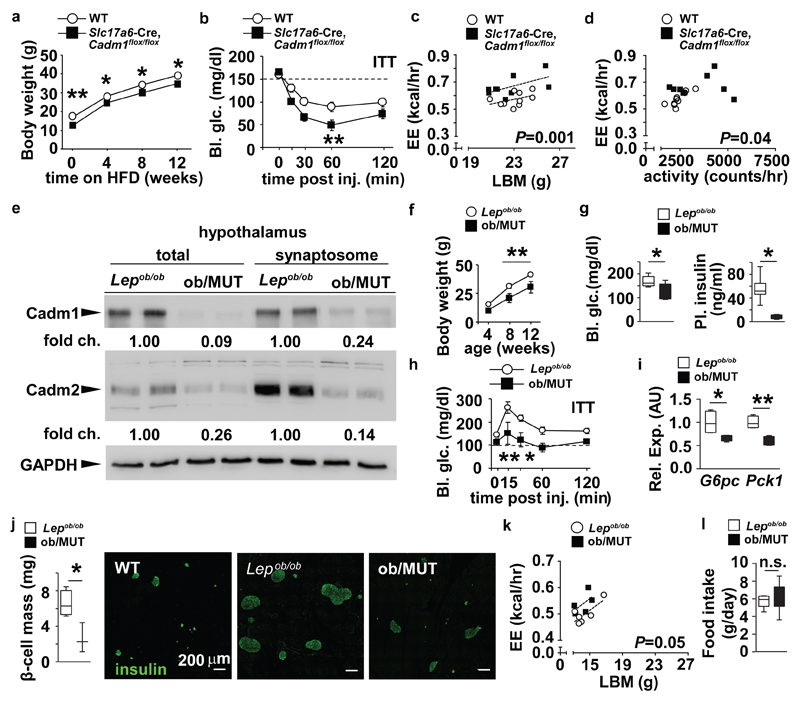
Susceptibility to obesity is linked to genes regulating neurotransmission, pancreatic beta-cell function and energy homeostasis. Genome-wide association studies have identified associations between body mass index and two loci near cell adhesion molecule 1 (CADM1) and cell adhesion molecule 2 (CADM2), which encode membrane proteins that mediate synaptic assembly. We found that these respective risk variants associate with increased CADM1 and CADM2 expression in the hypothalamus of human subjects. Expression of both genes was elevated in obese mice, and induction of Cadm1 in excitatory neurons facilitated weight gain while exacerbating energy expenditure. Loss of Cadm1 protected mice from obesity, and tract-tracing analysis revealed Cadm1-positive innervation of POMC neurons via afferent projections originating from beyond the arcuate nucleus. Reducing Cadm1 expression in the hypothalamus and hippocampus promoted a negative energy balance and weight loss. These data identify essential roles for Cadm1-mediated neuronal input in weight regulation and provide insight into the central pathways contributing to human obesity.
肥胖易感性与调节神经传递、胰腺β细胞功能和能量稳态的基因有关。全基因组关联研究已经确定了体重指数与细胞粘附分子1(CADM1)和细胞粘附分子2(CADM2)附近的两个基因座之间的关联,这两个基因座编码介导突触组装的膜蛋白。我们发现,这些相应的风险变异与人类受试者下丘脑CADM1和CADM2表达增加有关。肥胖小鼠中这两个基因的表达均升高,在兴奋性神经元中诱导Cadm1会促进体重增加,同时加剧能量消耗。缺失Cadm1可保护小鼠免于肥胖,束路追踪分析显示,源自弓状核以外的传入投射对POMC神经元有Cadm1阳性神经支配。降低下丘脑和海马体中Cadm1的表达可促进负能量平衡和体重减轻。这些数据确定了Cadm1介导的神经元输入在体重调节中的重要作用,并为导致人类肥胖的中枢途径提供了见解。