Merk Karin, Breinig Marco, Böttcher Romy, Krebs Stefan, Blum Helmut, Boutros Michael, Förstemann Klaus
Gene Center and Dept. of Biochemistry, Ludwig-Maximilians-Universität München, München, Germany.
Division Signaling and Functional Genomics, German Cancer Research Center (DKFZ) and Heidelberg University, Im Neuenheimer Feld 580, Heidelberg, Germany.
PLoS Genet. 2017 Jun 19;13(6):e1006861. doi: 10.1371/journal.pgen.1006861. eCollection 2017 Jun.
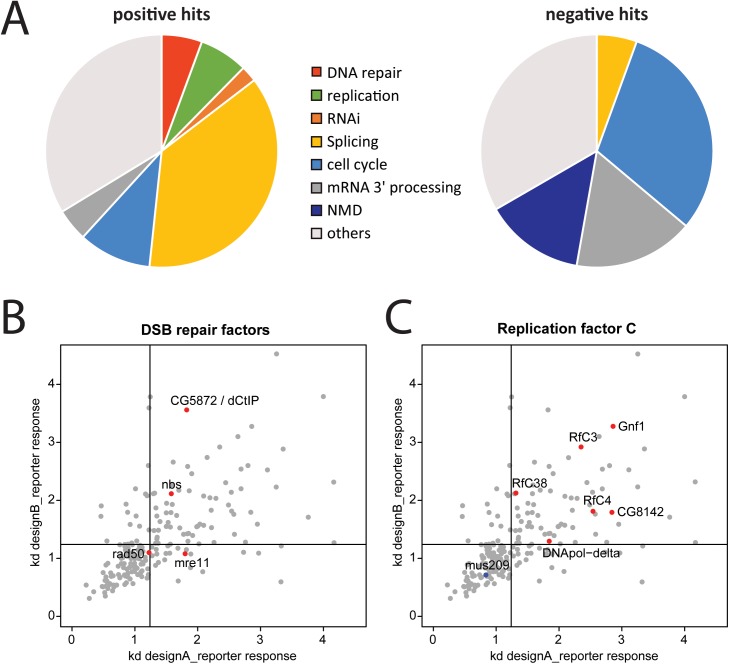
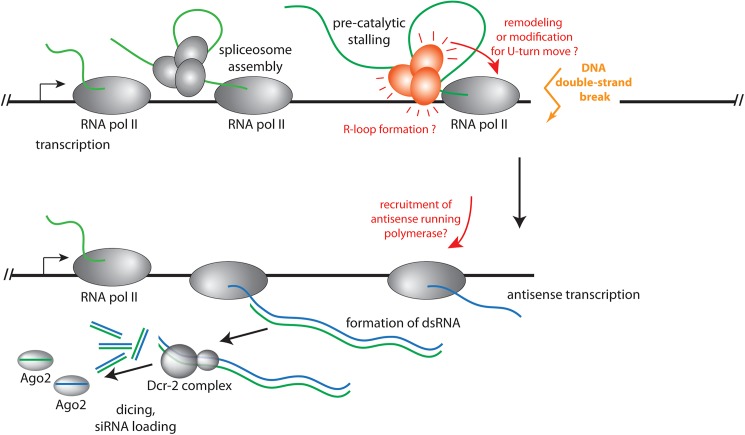
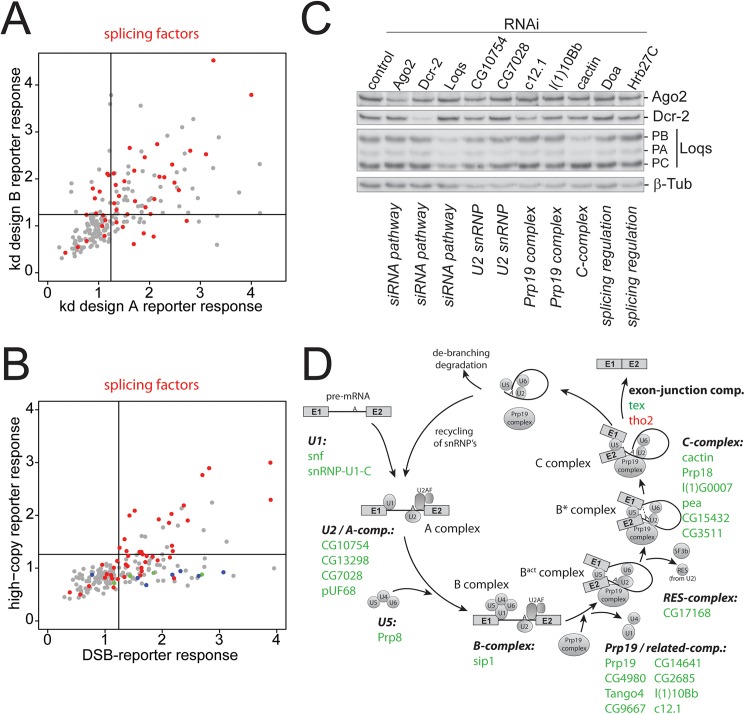
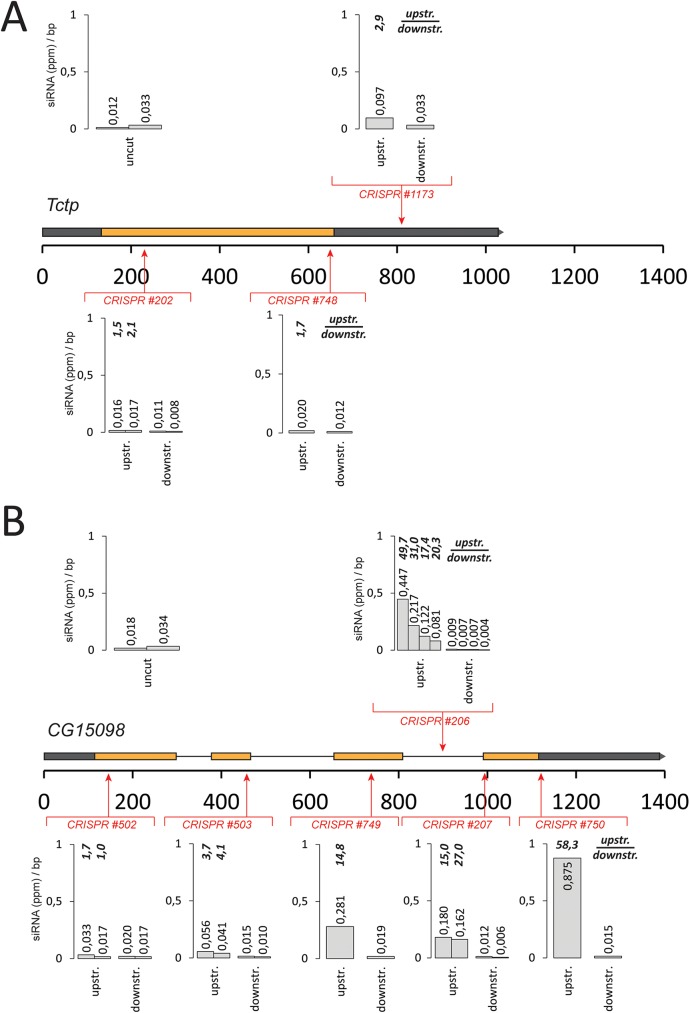
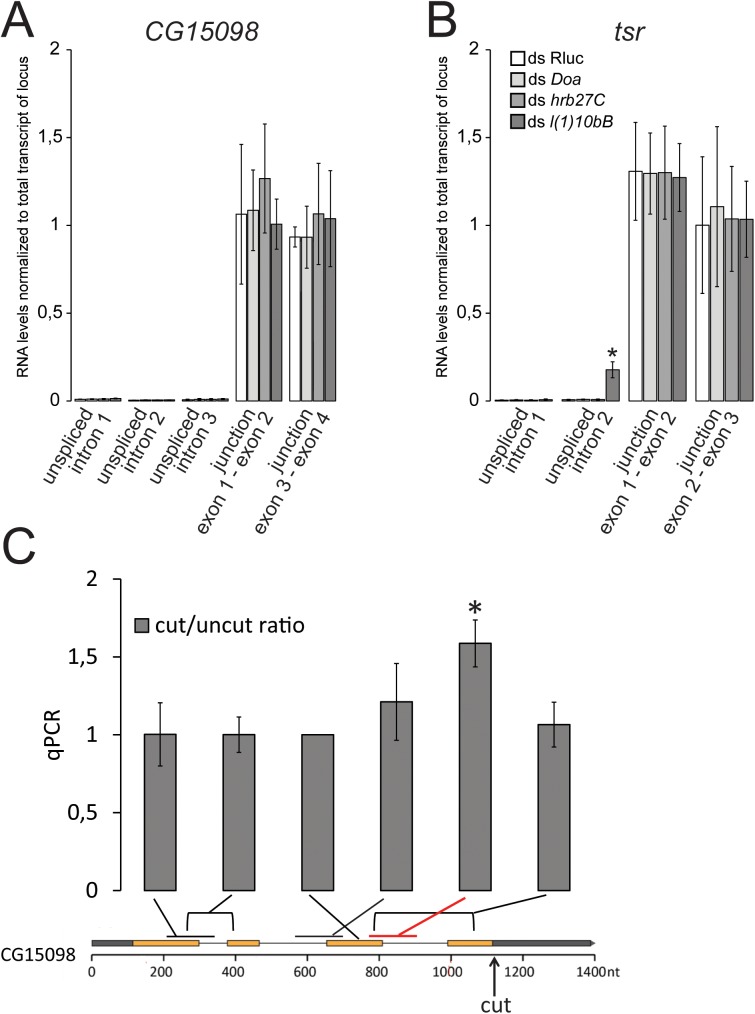
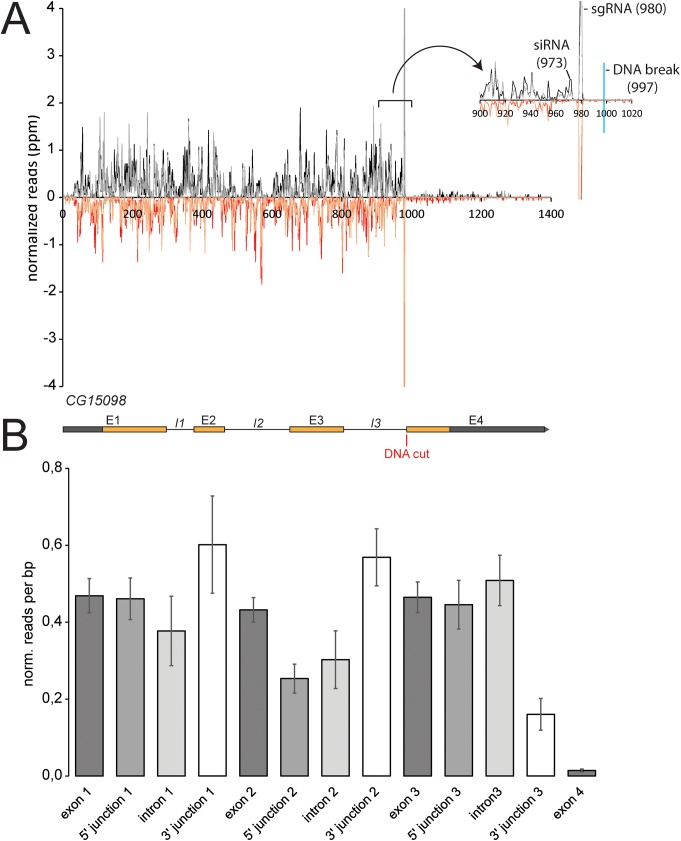
DNA double-strand breaks trigger the production of locus-derived siRNAs in fruit flies, human cells and plants. At least in flies, their biogenesis depends on active transcription running towards the break. Since siRNAs derive from a double-stranded RNA precursor, a major question is how broken DNA ends can generate matching sense and antisense transcripts. We performed a genome-wide RNAi-screen in cultured Drosophila cells, which revealed that in addition to DNA repair factors, many spliceosome components are required for efficient siRNA generation. We validated this observation through site-specific DNA cleavage with CRISPR-cas9 followed by deep sequencing of small RNAs. DNA breaks in intron-less genes or upstream of a gene's first intron did not efficiently trigger siRNA production. When DNA double-strand breaks were induced downstream of an intron, however, this led to robust siRNA generation. Furthermore, a downstream break slowed down splicing of the upstream intron and a detailed analysis of siRNA coverage at the targeted locus revealed that unspliced pre-mRNA contributes the sense strand to the siRNA precursor. Since splicing factors are stimulating the response but unspliced transcripts are entering the siRNA biogenesis, the spliceosome is apparently stalled in a pre-catalytic state and serves as a signaling hub. We conclude that convergent transcription at DNA breaks is stimulated by a splicing dependent control process. The resulting double-stranded RNA is converted into siRNAs that instruct the degradation of cognate mRNAs. In addition to a potential role in DNA repair, the break-induced transcription may thus be a means to cull improper RNAs from the transcriptome of Drosophila melanogaster. Since the splicing factors identified in our screen also stimulated siRNA production from high copy transgenes, it is possible that this surveillance mechanism serves in genome defense beyond DNA double-strand breaks.
DNA双链断裂会在果蝇、人类细胞和植物中引发基因座衍生的小干扰RNA(siRNA)的产生。至少在果蝇中,它们的生物合成依赖于朝着断裂处进行的活跃转录。由于siRNA来源于双链RNA前体,一个主要问题是断裂的DNA末端如何产生匹配的正义和反义转录本。我们在培养的果蝇细胞中进行了全基因组RNA干扰筛选,结果表明,除了DNA修复因子外,许多剪接体成分对于高效产生siRNA也是必需的。我们通过使用CRISPR-Cas9进行位点特异性DNA切割,随后对小RNA进行深度测序,验证了这一观察结果。无内含子基因中的DNA断裂或基因第一个内含子上游的DNA断裂不能有效地触发siRNA的产生。然而,当在一个内含子下游诱导DNA双链断裂时,这会导致大量siRNA的产生。此外,下游断裂会减缓上游内含子的剪接,对靶向基因座处siRNA覆盖范围的详细分析表明,未剪接的前体mRNA为siRNA前体提供了正义链。由于剪接因子刺激了这种反应,但未剪接的转录本进入了siRNA的生物合成过程,剪接体显然停滞在催化前状态并充当信号枢纽。我们得出结论,DNA断裂处的汇聚转录受到剪接依赖性控制过程的刺激。产生的双链RNA被转化为siRNA,指导同源mRNA的降解。除了在DNA修复中的潜在作用外,断裂诱导的转录可能是从黑腹果蝇的转录组中剔除不合适RNA的一种手段。由于我们筛选中鉴定出的剪接因子也刺激了来自高拷贝转基因的siRNA产生,这种监测机制有可能在DNA双链断裂之外的基因组防御中发挥作用。