Wilson Michael R, Suan Dan, Duggins Andrew, Schubert Ryan D, Khan Lillian M, Sample Hannah A, Zorn Kelsey C, Rodrigues Hoffman Aline, Blick Anna, Shingde Meena, DeRisi Joseph L
Weill Institute for Neurosciences, University of California, San Francisco, San Francisco, CA.
Department of Neurology, University of California, San Francisco, San Francisco, CA.
Ann Neurol. 2017 Jul;82(1):105-114. doi: 10.1002/ana.24982.
Immunodeficient patients are particularly vulnerable to neuroinvasive infections that can be challenging to diagnose. Metagenomic next generation sequencing can identify unusual or novel microbes and is therefore well suited for investigating the etiology of chronic meningoencephalitis in immunodeficient patients.
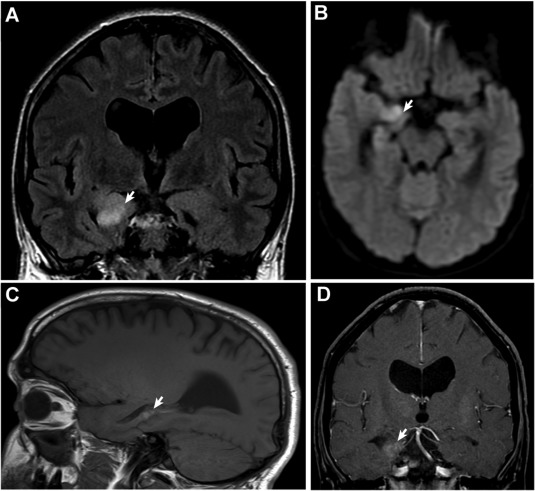
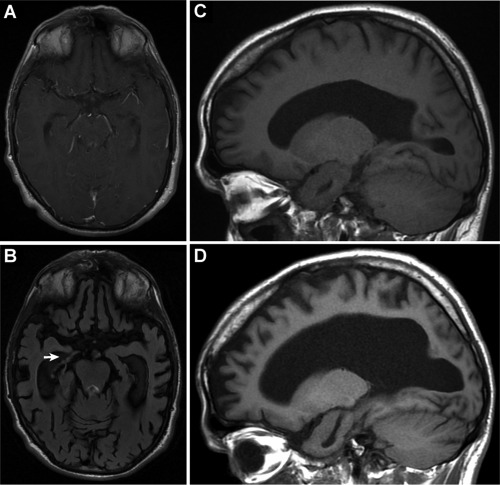
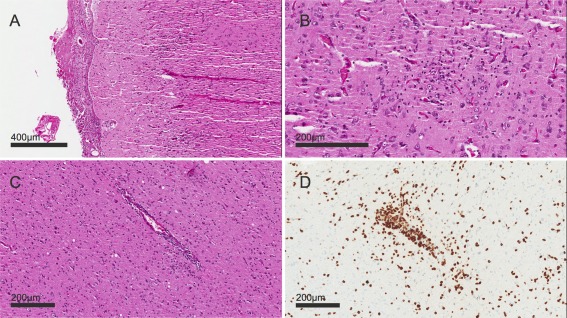
We present the case of a 34-year-old man with X-linked agammaglobulinemia from Australia suffering from 3 years of meningoencephalitis that defied an etiologic diagnosis despite extensive conventional testing, including a brain biopsy. Metagenomic next generation sequencing of his cerebrospinal fluid and brain biopsy tissue was performed to identify a causative pathogen.
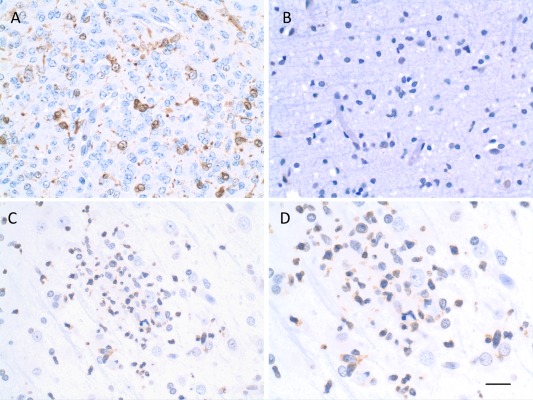
Sequences aligning to multiple Cache Valley virus genes were identified via metagenomic next generation sequencing. Reverse transcription polymerase chain reaction and immunohistochemistry subsequently confirmed the presence of Cache Valley virus in the brain biopsy tissue.
Cache Valley virus, a mosquito-borne orthobunyavirus, has only been identified in 3 immunocompetent North American patients with acute neuroinvasive disease. The reported severity ranges from a self-limiting meningitis to a rapidly fatal meningoencephalitis with multiorgan failure. The virus has never been known to cause a chronic systemic or neurologic infection in humans. Cache Valley virus has also never previously been detected on the Australian continent. Our research subject traveled to North and South Carolina and Michigan in the weeks prior to the onset of his illness. This report demonstrates that metagenomic next generation sequencing allows for unbiased pathogen identification, the early detection of emerging viruses as they spread to new locales, and the discovery of novel disease phenotypes. Ann Neurol 2017;82:105-114.
免疫缺陷患者特别容易受到神经侵袭性感染,这类感染的诊断可能具有挑战性。宏基因组下一代测序能够识别不常见或新型微生物,因此非常适合用于调查免疫缺陷患者慢性脑膜脑炎的病因。
我们报告了一名来自澳大利亚的34岁患有X连锁无丙种球蛋白血症的男性病例,他患有3年的脑膜脑炎,尽管进行了包括脑活检在内的广泛传统检测,但仍无法做出病因诊断。对其脑脊液和脑活检组织进行宏基因组下一代测序,以确定致病病原体。
通过宏基因组下一代测序鉴定出与多种卡奇谷病毒基因匹配的序列。逆转录聚合酶链反应和免疫组织化学随后证实脑活检组织中存在卡奇谷病毒。
卡奇谷病毒是一种由蚊子传播的正布尼亚病毒,仅在3例患有急性神经侵袭性疾病的北美免疫功能正常患者中被发现。报告的严重程度范围从自限性脑膜炎到伴有多器官衰竭的迅速致命的脑膜脑炎。该病毒从未被认为会在人类中引起慢性全身性或神经系统感染。卡奇谷病毒此前也从未在澳大利亚大陆被检测到。我们的研究对象在发病前几周前往了北卡罗来纳州、南卡罗来纳州和密歇根州。本报告表明,宏基因组下一代测序能够实现无偏见的病原体鉴定,在新兴病毒传播到新地区时进行早期检测,并发现新的疾病表型。《神经病学纪事》2017年;82:105 - 114。