Habyarimana Faustin, Zewotir Temesgen, Ramroop Shaun
School of Mathematics, Statistics and Computer Sciences, University of KwaZulu-Natal, Pietermaritzburg Campus, Private Bag X01, Scottsville 3209, South Africa.
School of Mathematics, Statistics and Computer Sciences, University of KwaZulu-Natal, Westville Campus, Durban 4000, South Africa.
Int J Environ Res Public Health. 2017 Jun 17;14(6):652. doi: 10.3390/ijerph14060652.
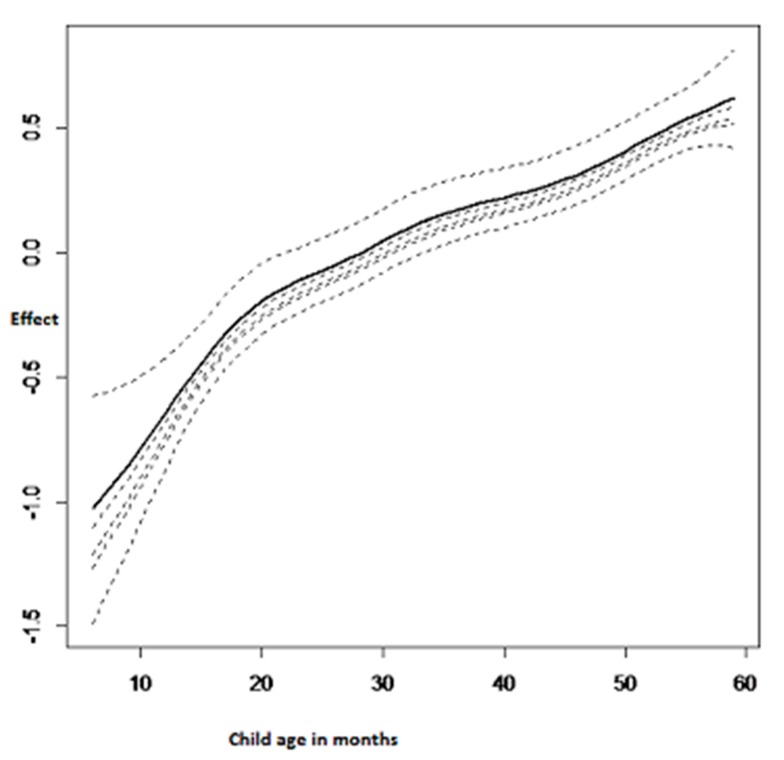
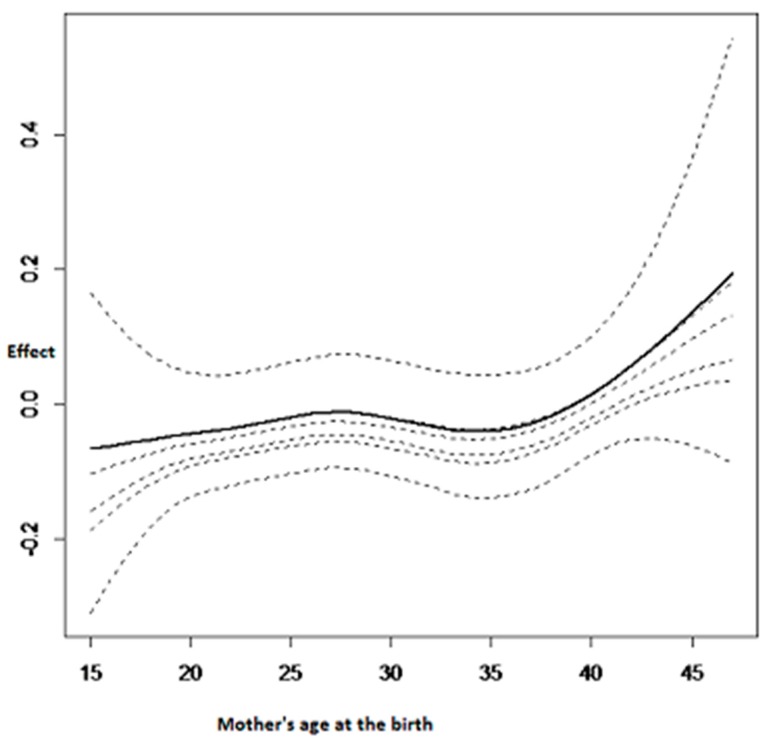
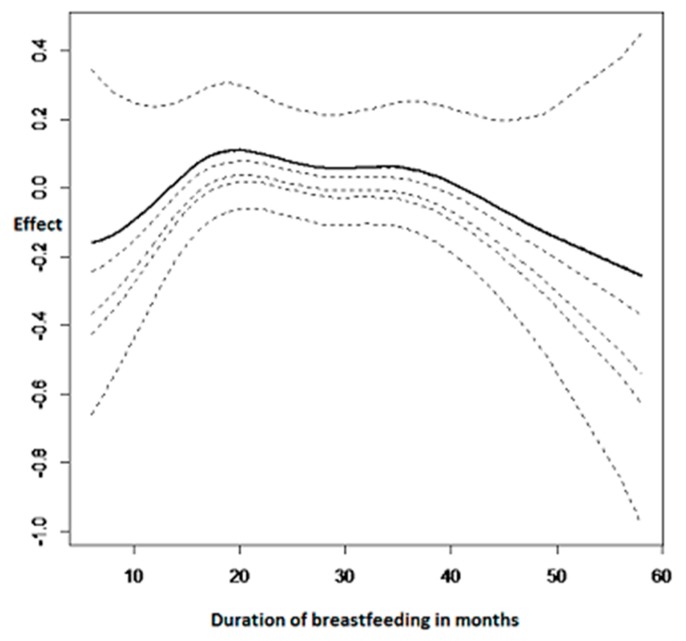
Childhood anemia is among the most significant health problems faced by public health departments in developing countries. This study aims at assessing the determinants and possible spatial effects associated with childhood anemia in Rwanda. The 2014/2015 Rwanda Demographic and Health Survey (RDHS) data was used. The analysis was done using the structured spatial additive quantile regression model. The findings of this study revealed that the child's age; the duration of breastfeeding; gender of the child; the nutritional status of the child (whether underweight and/or wasting); whether the child had a fever; had a cough in the two weeks prior to the survey or not; whether the child received vitamin A supplementation in the six weeks before the survey or not; the household wealth index; literacy of the mother; mother's anemia status; mother's age at the birth are all significant factors associated with childhood anemia in Rwanda. Furthermore, significant structured spatial location effects on childhood anemia was found.
儿童贫血是发展中国家公共卫生部门面临的最重大健康问题之一。本研究旨在评估卢旺达儿童贫血的决定因素及可能的空间效应。使用了2014/2015年卢旺达人口与健康调查(RDHS)数据。分析采用结构化空间加性分位数回归模型。本研究结果表明,儿童的年龄;母乳喂养时长;儿童性别;儿童的营养状况(是否体重不足和/或消瘦);儿童是否发烧;在调查前两周内是否咳嗽;在调查前六周内是否接受过维生素A补充剂;家庭财富指数;母亲的识字率;母亲的贫血状况;母亲生育时的年龄,都是卢旺达儿童贫血的显著相关因素。此外,还发现了对儿童贫血有显著影响的结构化空间位置效应。