Xia Fangfang, Xia Yun, Chen Sisi, Chen Lulu, Zhu Weijuan, Chen Yuanqing, Papadimos Thomas J, Xu Xuzhong, Liu Le
Department of Anesthesiology, the First Affiliated Hospital of Wenzhou Medical University, Zhejiang, China.
BMC Anesthesiol. 2017 Jun 19;17(1):83. doi: 10.1186/s12871-017-0375-6.
Limb ischemia/reperfusion causes inflammation and elicits oxidative stress that may lead to local tissue damage and remote organ such as lung injury. This study investigates pulmonary function after limb ischemia/reperfusion and the protective effect of a lipid emulsion (Intralipid).
Twenty-four rats were divided into three groups: sham operation group (group S), ischemia/reperfusion group (group IR), and lipid emulsion treatment group (group LE). limb ischemia/reperfusion was induced through occlusion of the infrarenal abdominal aorta for 3 h. The microvascular clamp was removed carefully and reperfusion was provided for 3 h.
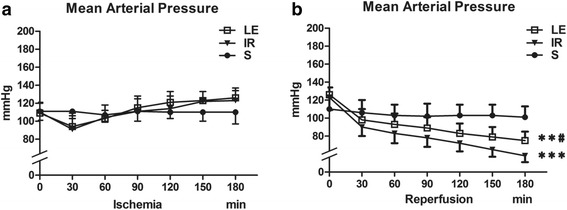
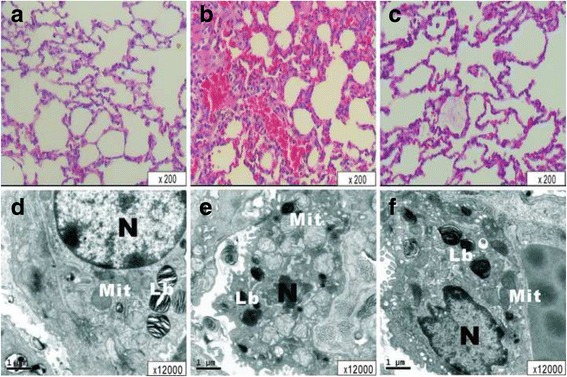
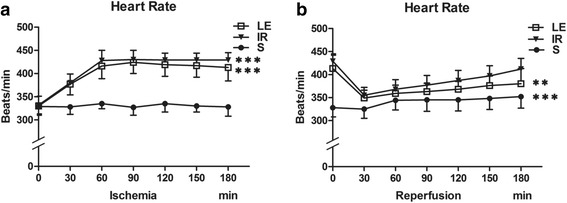
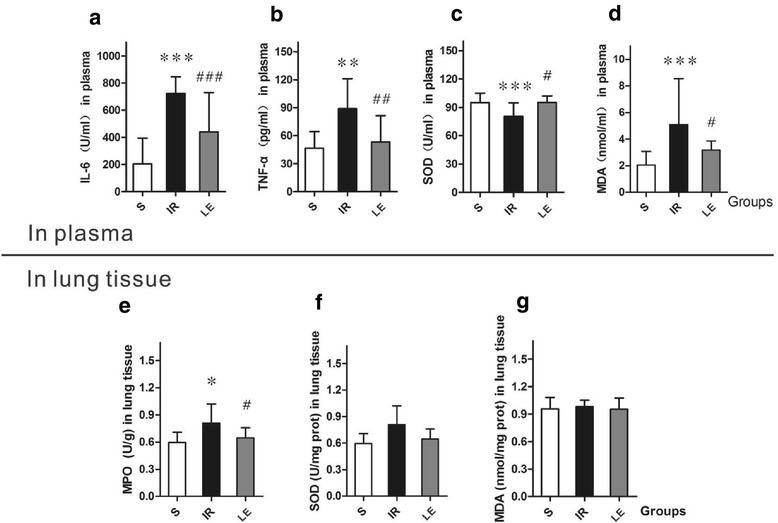
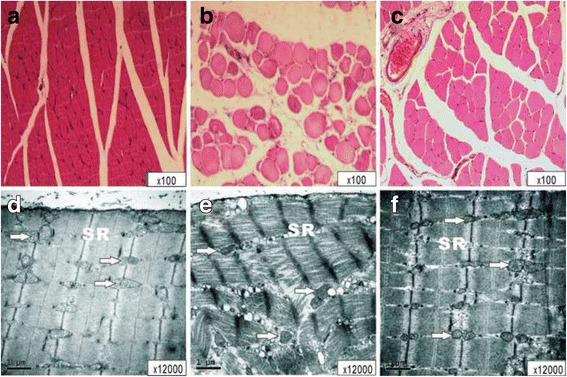
The mean arterial pressure in group LE was higher than group IR during the reperfusion period (P = 0.024). The heart rate of both group LE and IR are significantly higher than group S during the ischemia period(P < 0.001, P < 0.001, respectively). The arterial oxygen pressure of group LE was significantly higher than group IR (P = 0.003), the arterial carbon dioxide pressure of group LE were lower than that of group IR (P = 0.005). The concentration of plasma interleukin-6, tumor necrosis factor-α and malondialdehyde in group LE were significantly lower than group IR (P < 0.001, P = 0.009 and 0.029, respectively). The plasma superoxide dismutase activity in group LE was significantly higher than group IR (P = 0.029). The myeloperoxidase activity in lung tissues of group LE was significantly less than group IR (P = 0.046). Both muscle and lung in group IR were damaged seriously, whereas lipid emulsion (Intralipid) effectively reversed the damage. In summary, Intralipid administration resulted in several beneficial effects as compared to group IR, such as the pulmonary gas exchange and inflammatory.
The ischemic/reperfusion injury of limb muscles with resultant inflammatory damage to lung tissue can be mitigated by administration of a lipid emulsion (Intralipid, 20%, 5 ml/kg). The mechanisms attenuating such a physiological may be attributed to reduction of the degree of limb injury through a decrease in the release of local inflammatory mediators, a reduction of lipid peroxidation, and a blunting of the subsequent remote inflammatory response.
肢体缺血/再灌注会引发炎症并导致氧化应激,这可能会导致局部组织损伤以及诸如肺损伤等远隔器官损伤。本研究调查肢体缺血/再灌注后的肺功能以及脂质乳剂(英脱利匹特)的保护作用。
将24只大鼠分为三组:假手术组(S组)、缺血/再灌注组(IR组)和脂质乳剂治疗组(LE组)。通过阻断肾下腹主动脉3小时诱导肢体缺血/再灌注。小心移除微血管夹并给予3小时再灌注。
再灌注期间LE组的平均动脉压高于IR组(P = 0.024)。缺血期间LE组和IR组的心率均显著高于S组(分别为P < 0.001,P < 0.001)。LE组的动脉血氧分压显著高于IR组(P = 0.003),LE组的动脉血二氧化碳分压低于IR组(P = 0.005)。LE组血浆白细胞介素-6、肿瘤坏死因子-α和丙二醛浓度显著低于IR组(分别为P < 0.001,P = 0.009和0.029)。LE组血浆超氧化物歧化酶活性显著高于IR组(P = 0.029)。LE组肺组织中的髓过氧化物酶活性显著低于IR组(P = 0.046)。IR组的肌肉和肺均受到严重损伤,而脂质乳剂(英脱利匹特)有效逆转了这种损伤。总之,与IR组相比,给予英脱利匹特产生了多种有益作用,如肺气体交换和炎症方面。
给予脂质乳剂(20%英脱利匹特,5 ml/kg)可减轻肢体肌肉的缺血/再灌注损伤以及由此导致的对肺组织的炎性损伤。减轻这种生理损伤的机制可能归因于通过减少局部炎性介质的释放、降低脂质过氧化以及减弱随后的远隔炎症反应来减轻肢体损伤程度。