Xu Yan, Zhu Lijing, Liu Baorui, Ru Tong, Wang Huanhuan, He Jian, Liu Song, Yang Xiaofeng, Zhou Zhengyang, Liu Tian
Department of Radiology, Nanjing Drum Tower Hospital, The Affiliated Hospital of Nanjing University Medical School, Nanjing, 210008, China.
Department of Obstetrics and Gynecology, Nanjing Drum Tower Hospital, The Affiliated Hospital of Nanjing University Medical School, Nanjing, 210008, China.
BMC Cancer. 2017 Jun 19;17(1):427. doi: 10.1186/s12885-017-3411-5.
To investigate the feasibility of strain elastography imaging in early detecting and predicting treatment response in patients receiving concurrent chemo-radiotherapy (CCRT) for locally advanced cervical cancer.
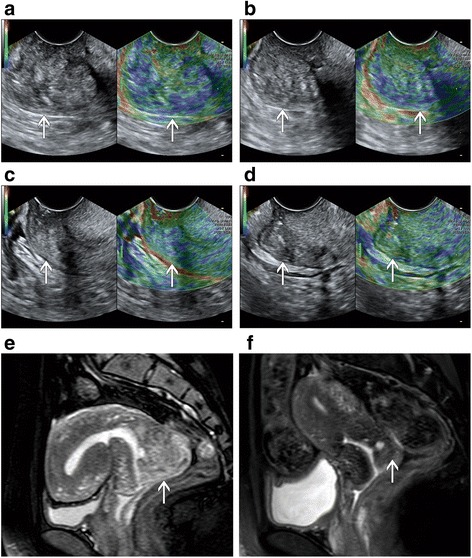
Between January 2015 and June 2016, 47 patients with locally advanced cervical cancer were enrolled in a feasibility study approved by the institutional review board. All patients underwent CCRT and received strain elastography examinations at 4 time points: pre-therapy (baseline), 1 week and 2 weeks during, as well as immediately post CCRT. Treatment response was evaluated by MRI at the time of diagnosis and immediately after CCRT. Based on the MRI findings, the treatment outcome was characterized as complete response (CR), partial response (PR), stable disease (SD) and progressive disease (PD). Strain ratio of the normal parametrial tissue vs. cervical tumor was calculated and compared with the clinical outcome.
Out of the 47 patients, 36 patients who completed all 4 examinations were included in the analyses: 25 were classified as CR, 11 as PR, and 0 in the SD/PD groups. Strain ratios were significantly different among the time points in both the CR group (F = 87.004, p < 0.001) and PR group (F = 38.317, p < 0.001). Strain ratios were significantly difference between the CR and PR groups (F = 7.203 p = 0.011). Strain ratios between the CR group and PR group were significantly different at 1 week after treatment initiation (p < 0.05). Compared to the baseline, a significant decrease in the CR group was observed at week 1, week 2 and post treatment (all p < 0.001), while a significant decrease in the PR group was shown in week 2 and post treatment (both p < 0.05), but not at week 1 during CCRT (p = 0.084).
We have conducted a prospective longitudinal study to evaluate tumor response in women receiving CCRT for cervical cancers. This study has demonstrated the potential of strain elastography imaging in monitoring and early predicting tumor response induced by CCRT.
探讨应变弹性成像在局部晚期宫颈癌同步放化疗(CCRT)患者早期检测及预测治疗反应中的可行性。
2015年1月至2016年6月,47例局部晚期宫颈癌患者纳入一项经机构审查委员会批准的可行性研究。所有患者均接受CCRT,并在4个时间点接受应变弹性成像检查:治疗前(基线)、治疗期间第1周和第2周以及CCRT结束后立即检查。在诊断时及CCRT结束后立即通过MRI评估治疗反应。根据MRI结果,将治疗结果分为完全缓解(CR)、部分缓解(PR)、疾病稳定(SD)和疾病进展(PD)。计算正常宫旁组织与宫颈肿瘤的应变比,并与临床结果进行比较。
47例患者中,36例完成全部4次检查的患者纳入分析:25例为CR,11例为PR,SD/PD组为0例。CR组(F = 87.004,p < 0.001)和PR组(F = 38.317,p < 0.001)在各时间点的应变比均有显著差异。CR组和PR组之间的应变比有显著差异(F = 7.203,p = 0.011)。治疗开始后1周,CR组和PR组之间的应变比有显著差异(p < 0.05)。与基线相比,CR组在第1周、第2周和治疗后均有显著下降(均p < 0.001),而PR组在第2周和治疗后有显著下降(均p < 0.05),但在CCRT期间第1周无显著下降(p = 0.084)。
我们进行了一项前瞻性纵向研究,以评估接受CCRT治疗宫颈癌的女性的肿瘤反应。本研究证明了应变弹性成像在监测和早期预测CCRT诱导的肿瘤反应方面的潜力。