Zhang Jing, Zhao Mengjun, Yu Die, Yin Jingang, Zhang Hao, Huang Xing
Key Laboratory of Agricultural Environmental Microbiology, Ministry of Agriculture, College of Life Sciences, Nanjing Agricultural University, Nanjing, 210095, China.
Institute of Agricultural Resources and Environment, Jiangsu Academy of Agricultural Sciences, Nanjing, 210014, China.
Microb Cell Fact. 2017 Jun 19;16(1):112. doi: 10.1186/s12934-017-0727-4.
Lactofen, a member of the diphenylether herbicides, has high activity and is commonly used to control broadleaf weeds. As a post-emergent herbicide, it is directly released to the environment, and easily caused the pollution. This herbicide is degraded in soil mainly by microbial activity, but the functional enzyme involved in the biodegradation of lactofen is still not clear now.
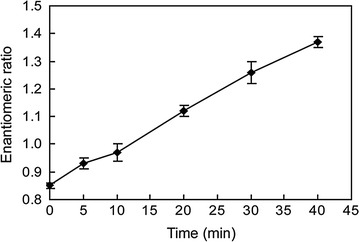
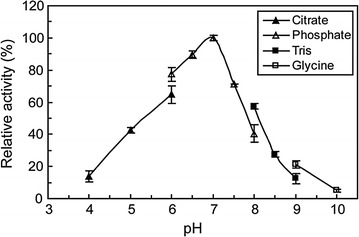
A novel esterase gene lacH, involved in the degradation of lactofen, was cloned from the strain Brevundimonas sp. LY-2. The gene contained an open reading frame of 921 bp, and a putative signal peptide at the N-terminal was identified with the most likely cleavage site between Ala 28 and Ala 29. The encoded protein, LacH, could catalyze the hydrolysis of lactofen to form acifluorfen. Phylogenetic analysis showed that LacH belong to family V of bacterial lipolytic enzymes. Biochemical characterization analysis showed that LacH was a neutral esterase with an optimal pH of 7.0 and an optimal temperature of 40 °C toward lactofen. Besides, the activity of LacH was strongly inhibited by Hg and Zn. LacH preferred short chain p-nitrophenyl esters (C-C), exhibited maximum activity toward p-nitrophenyl acetate. Furthermore, the enantioselectivity of LacH during lactofen hydrolysis was also studied, and the results show that R-(-)-lactofen was degraded faster than S-(+)-lactofen, indicating the occurrence of enantioselectivity in the enzymatic reaction.
Our studies characterized a novel esterase involved in the biodegradation of diphenylether herbicide lactofen. The esterase showed enantioselectivity during lactofen degradation, which revealed the occurrence of enzyme-mediated enantioselective degradation of chiral herbicides.
乳氟禾草灵是二苯醚类除草剂的一种,活性高,常用于防除阔叶杂草。作为一种苗后除草剂,它直接释放到环境中,容易造成污染。这种除草剂在土壤中主要通过微生物活动降解,但目前参与乳氟禾草灵生物降解的功能酶仍不清楚。
从短波单胞菌属菌株LY-2中克隆到一个参与乳氟禾草灵降解的新酯酶基因lacH。该基因含有一个921 bp的开放阅读框,在N端鉴定出一个推定的信号肽,最可能的切割位点在丙氨酸28和丙氨酸29之间。编码的蛋白LacH可催化乳氟禾草灵水解形成三氟羧草醚。系统发育分析表明,LacH属于细菌脂肪分解酶家族V。生化特性分析表明,LacH是一种中性酯酶,对乳氟禾草灵的最适pH为7.0,最适温度为40℃。此外,LacH的活性受到汞和锌的强烈抑制。LacH偏好短链对硝基苯酯(C-C),对乙酸对硝基苯酯表现出最大活性。此外,还研究了LacH在乳氟禾草灵水解过程中的对映体选择性,结果表明R-(-)-乳氟禾草灵的降解速度比S-(+)-乳氟禾草灵快,表明酶促反应中存在对映体选择性。
我们的研究鉴定了一种参与二苯醚类除草剂乳氟禾草灵生物降解的新酯酶。该酯酶在乳氟禾草灵降解过程中表现出对映体选择性,揭示了手性除草剂酶介导的对映体选择性降解的发生。