School of life sciences, Sun Yat-sen University, Guangzhou 510275, P R China.
Microb Cell Fact. 2012 Mar 13;11:33. doi: 10.1186/1475-2859-11-33.
Pyrethroid pesticides are broad-spectrum pest control agents in agricultural production. Both agricultural and residential usage is continuing to grow, leading to the development of insecticide resistance in the pest and toxic effects on a number of nontarget organisms. Thus, it is necessary to hunt suitable enzymes including hydrolases for degrading pesticide residues, which is an efficient "green" solution to biodegrade polluting chemicals. Although many pyrethroid esterases have consistently been purified and characterized from various resources including metagenomes and organisms, the thermostable pyrethroid esterases have not been reported up to the present.
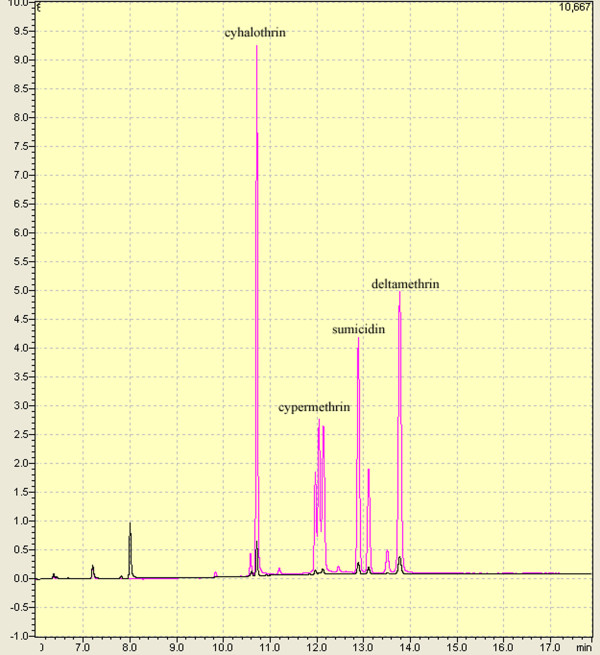
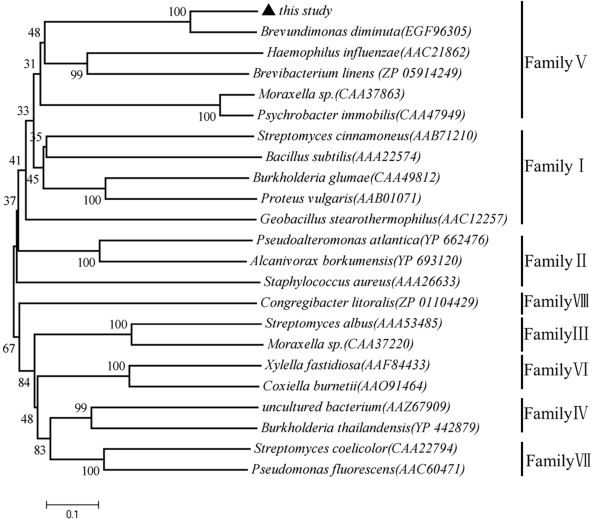
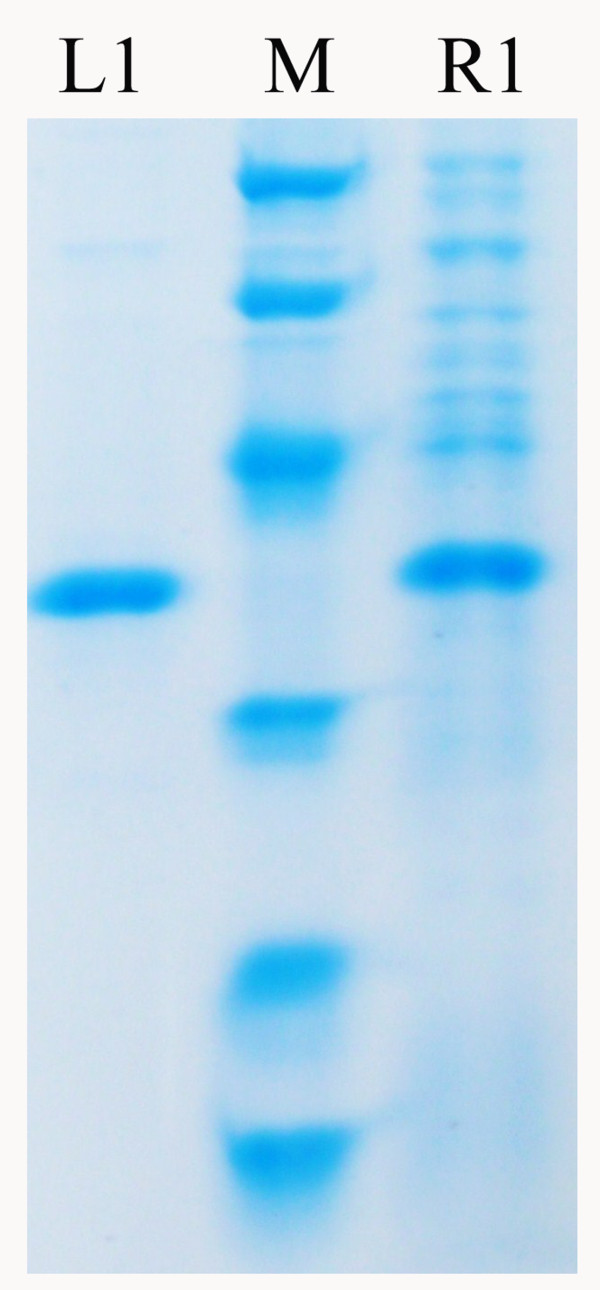
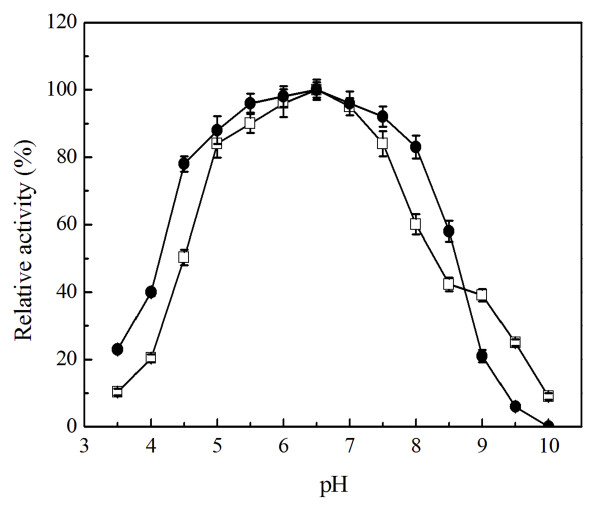
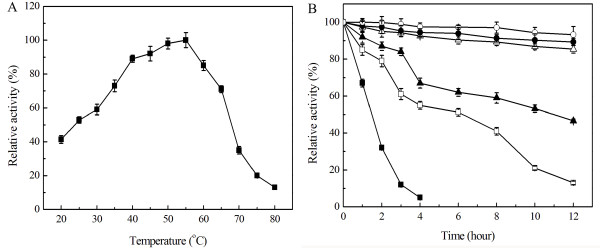
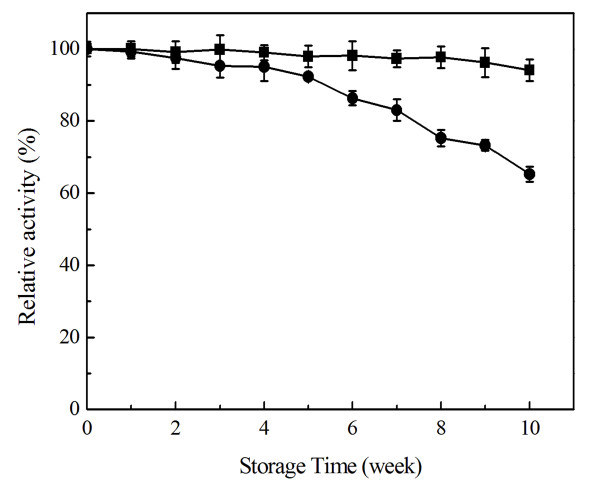
In this study, we identified a novel pyrethroid-hydrolyzing enzyme Sys410 belonging to familyV esterases/lipases with activity-based functional screening from Turban Basin metagenomic library. Sys410 contained 280 amino acids with a predicted molecular mass (Mr) of 30.8 kDa and was overexpressed in Escherichia coli BL21 (DE3) in soluble form. The optimum pH and temperature of the recombinant Sys410 were 6.5 and 55°C, respectively. The enzyme was stable in the pH range of 4.5-8.5 and at temperatures below 50°C. The activity of Sys410 decreased a little when stored at 4°C for 10 weeks, and the residual activity reached 94.1%. Even after incubation at 25°C for 10 weeks, it kept 68.3% of its activity. The recombinant Sys410 could hydrolyze a wide range of ρ-nitrophenyl esters, but its best substrate is ρ-nitrophenyl acetate with the highest activity (772.9 U/mg). The enzyme efficiently degraded cyhalothrin, cypermethrin, sumicidin, and deltamethrin under assay conditions of 37°C for 15 min, with exceeding 95% hydrolysis rate.
This is the first report to construct metagenomic libraries from Turban Basin to obtain the thermostable pyrethroid-hydrolyzing enzyme. The recombinant Sys410 with broad substrate specificities and high activity was the most thermostable one of the pyrethroid-hydrolyzing esterases studied before, which made it an ideal candidate for the detoxification of pyrethroids.
拟除虫菊酯类杀虫剂是农业生产中广泛使用的广谱杀虫剂。农业和住宅用途持续增长,导致害虫对杀虫剂产生抗药性,对许多非靶标生物产生毒性作用。因此,有必要寻找合适的酶,包括水解酶,用于降解农药残留,这是一种有效“绿色”的生物降解污染化学品的方法。尽管已经从包括宏基因组和生物在内的各种资源中不断纯化和表征了许多拟除虫菊酯酯酶,但到目前为止还没有报道耐热的拟除虫菊酯酯酶。
在本研究中,我们通过活性功能筛选从图尔班盆地宏基因组文库中鉴定出一种新型的拟除虫菊酯水解酶 Sys410,属于家族 V 酯酶/脂肪酶。Sys410 含有 280 个氨基酸,预测分子量(Mr)为 30.8 kDa,在大肠杆菌 BL21(DE3)中以可溶性形式过表达。重组 Sys410 的最适 pH 和温度分别为 6.5 和 55°C。该酶在 pH4.5-8.5 范围内稳定,在低于 50°C 的温度下稳定。Sys410 在 4°C 下储存 10 周时活性略有下降,残留活性达到 94.1%。即使在 25°C 孵育 10 周后,仍保持 68.3%的活性。重组 Sys410 可以水解广泛的 ρ-硝基苯酯,但它的最佳底物是 ρ-硝基苯乙酸,活性最高(772.9 U/mg)。该酶在 37°C 下 15 分钟的测定条件下,能有效降解氯氰菊酯、氯菊酯、苏密定和溴氰菊酯,水解率超过 95%。
这是首次从图尔班盆地构建宏基因组文库获得耐热拟除虫菊酯水解酶的报道。重组 Sys410 具有广泛的底物特异性和高活性,是之前研究过的拟除虫菊酯水解酯酶中最耐热的一种,是拟除虫菊酯解毒的理想候选酶。