Klein Hannah L
Department of Biochemistry and Molecular Pharmacology, New York University School of Medicine, New York, NY 10016, USA.
DNA Repair (Amst). 2017 Aug;56:26-32. doi: 10.1016/j.dnarep.2017.06.004. Epub 2017 Jun 9.
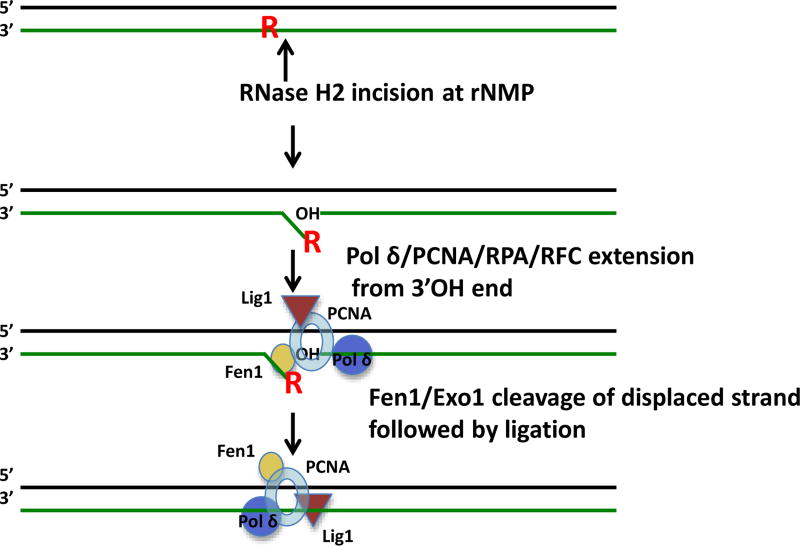
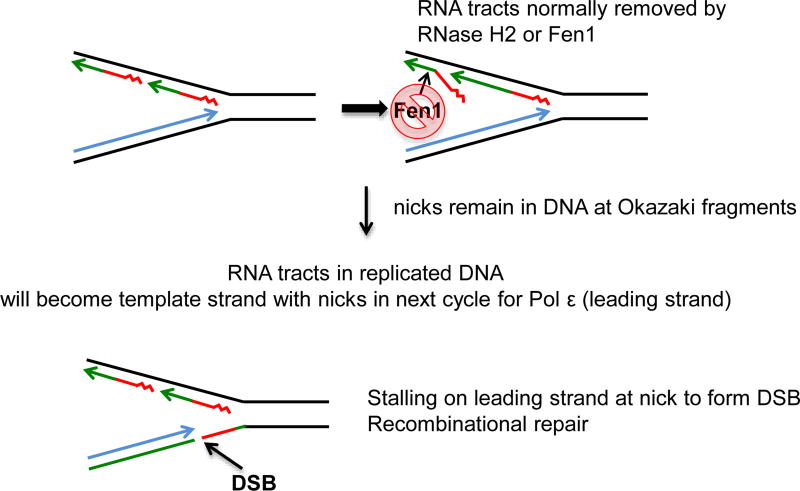
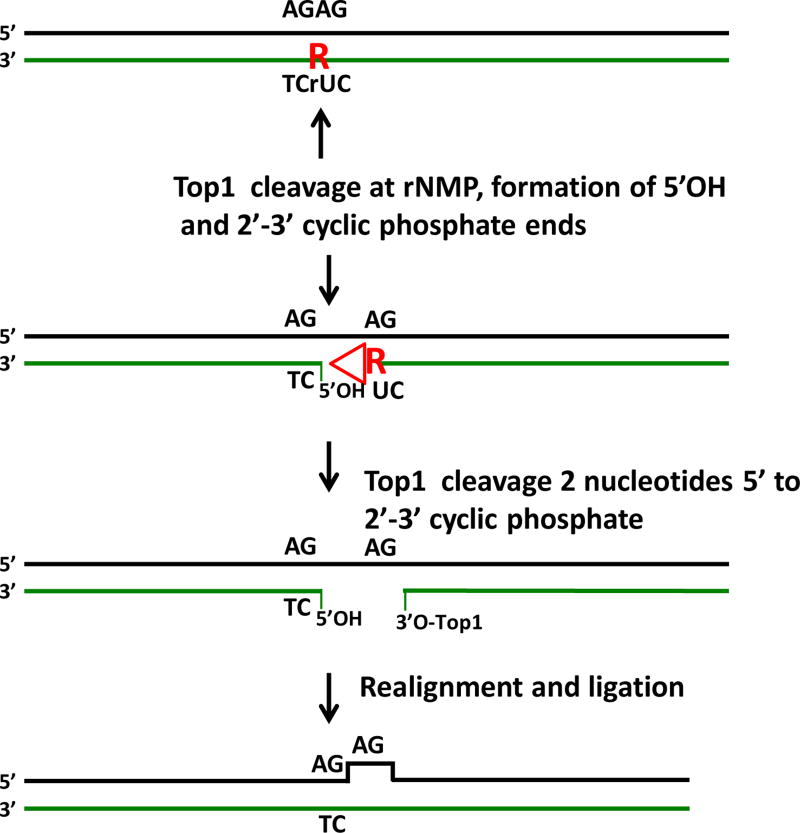
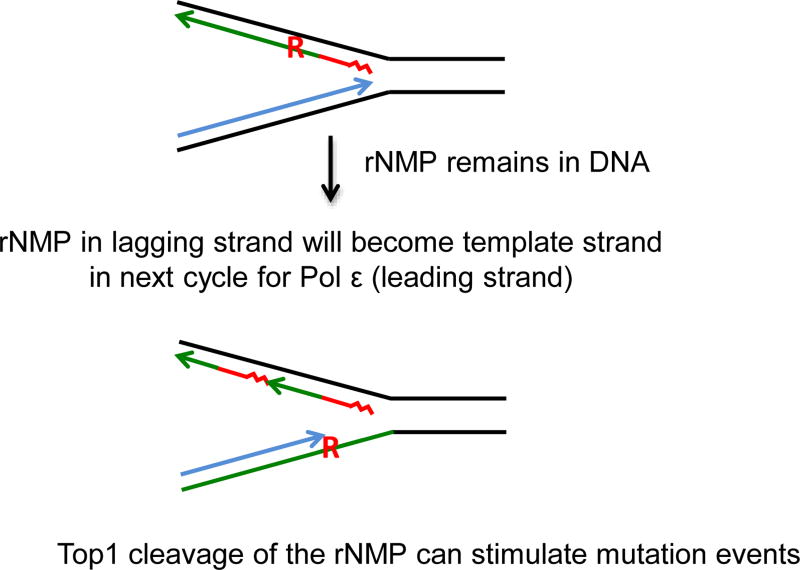
Genomic DNA is transiently contaminated with ribonucleotide residues during the process of DNA replication through misincorporation by the replicative DNA polymerases α, δ and ε, and by the normal replication process on the lagging strand, which uses RNA primers. These ribonucleotides are efficiently removed during replication by RNase H enzymes and the lagging strand synthesis machinery. However, when ribonucleotides remain in DNA they can distort the DNA helix, affect machineries for DNA replication, transcription and repair, and can stimulate genomic instabilities which are manifest as increased mutation, recombination and chromosome alterations. The genomic instabilities associated with embedded ribonucleotides are considered here, along with a discussion of the origin of the lesions that stimulate particular classes of instabilities.
在DNA复制过程中,基因组DNA会通过复制性DNA聚合酶α、δ和ε的错误掺入以及滞后链上使用RNA引物的正常复制过程,短暂地被核糖核苷酸残基污染。这些核糖核苷酸在复制过程中被核糖核酸酶H和滞后链合成机制有效地去除。然而,当核糖核苷酸残留在DNA中时,它们会扭曲DNA螺旋结构,影响DNA复制、转录和修复机制,并可能引发基因组不稳定,表现为突变增加、重组和染色体改变。本文将探讨与嵌入核糖核苷酸相关的基因组不稳定现象,并讨论引发特定类型不稳定的损伤的起源。