Reilly-O'Donnell Benedict, Robertson Gavin B, Karumbi Angela, McIntyre Connor, Bal Wojciech, Nishi Miyuki, Takeshima Hiroshi, Stewart Alan J, Pitt Samantha J
From the School of Medicine, University of St. Andrews, St. Andrews, KY16 9TF, Scotland, United Kingdom.
Department of Biophysics, Institute of Biochemistry and Biophysics, Polish Academy of Science, Warsaw, 02-106 Poland, and.
J Biol Chem. 2017 Aug 11;292(32):13361-13373. doi: 10.1074/jbc.M117.781708. Epub 2017 Jun 19.
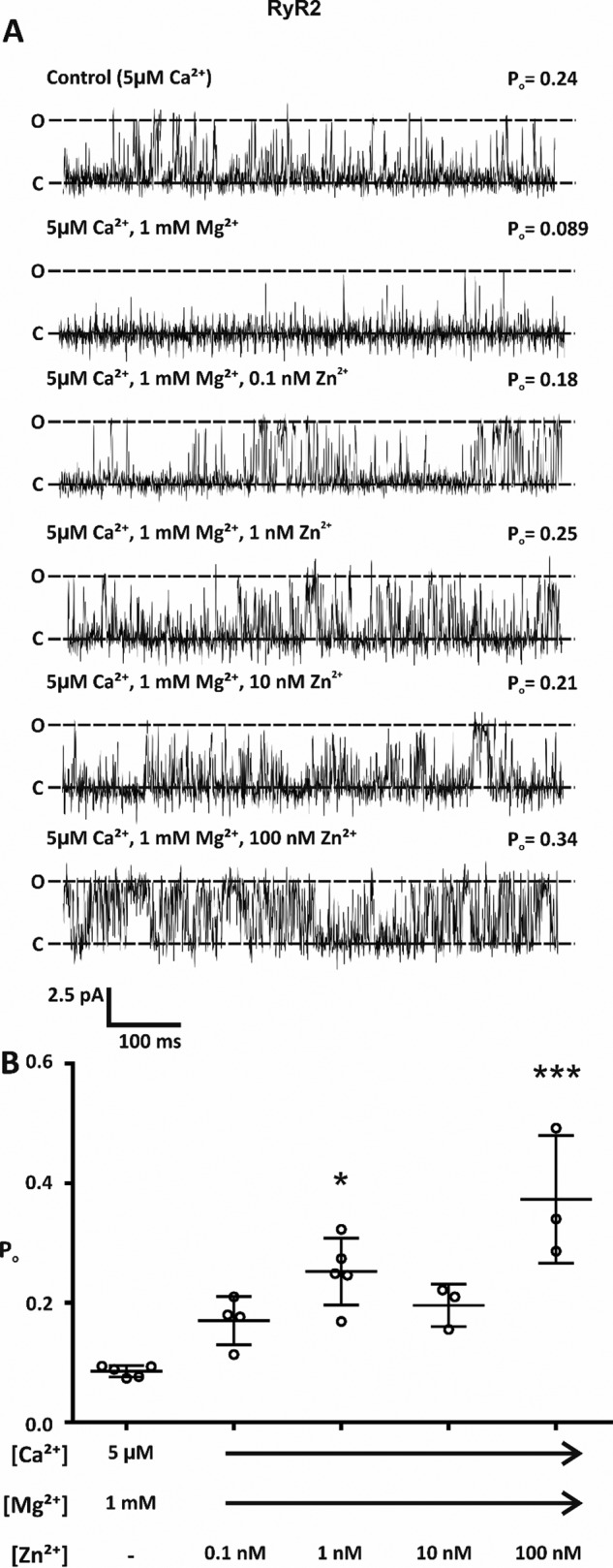
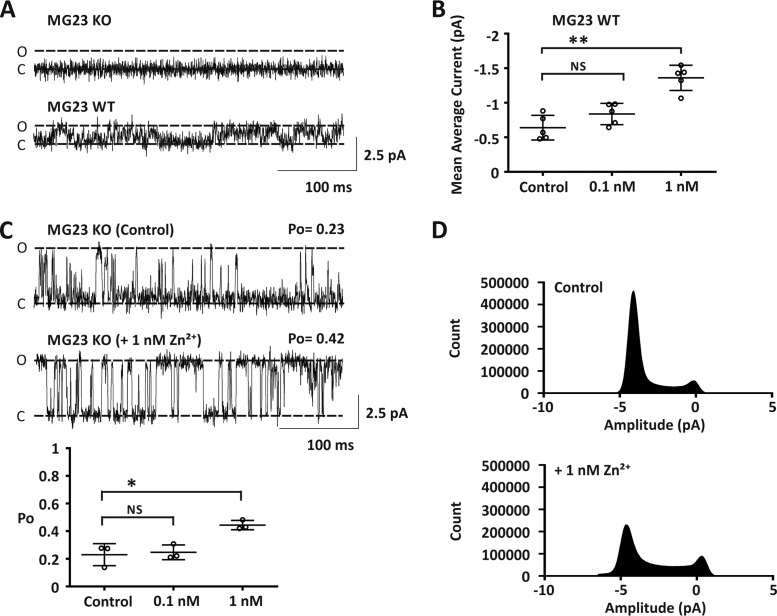
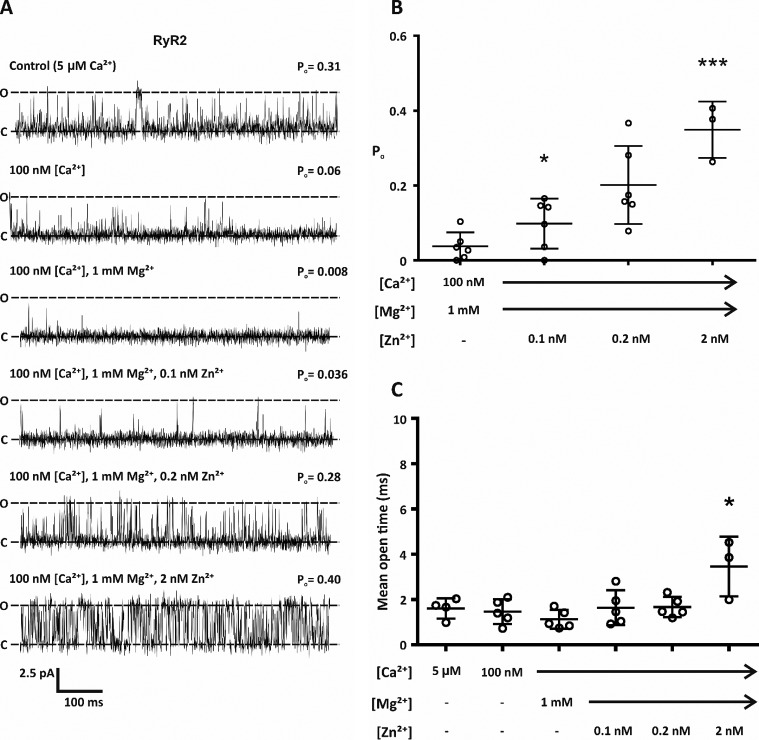
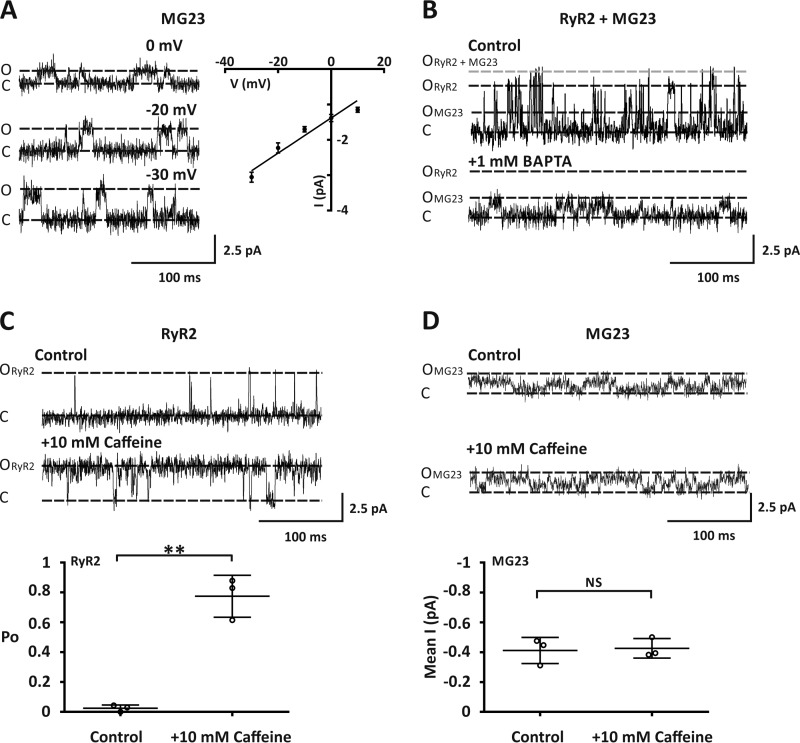
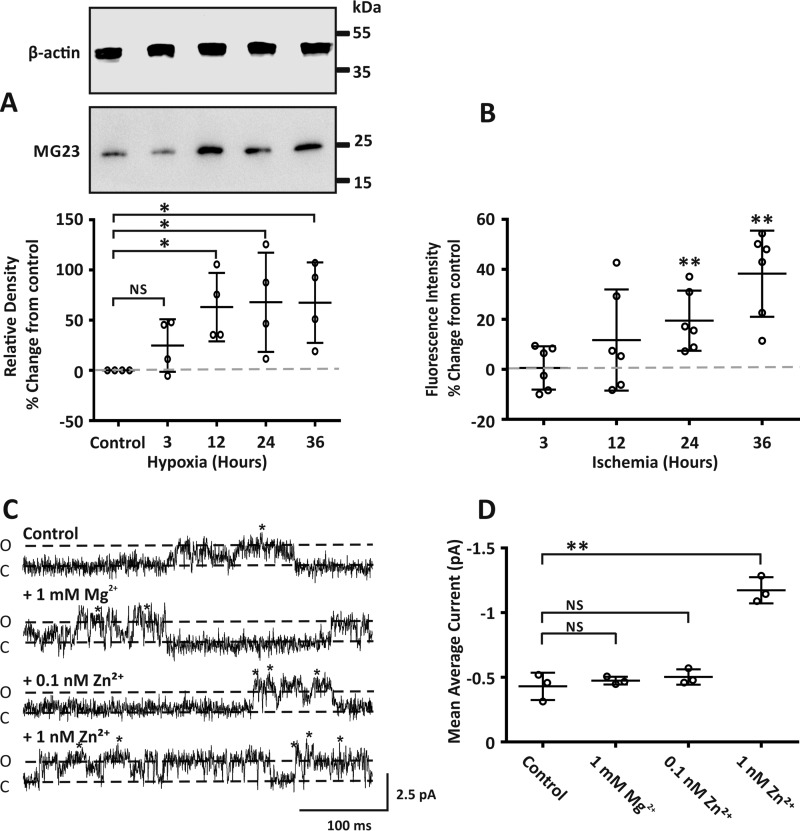
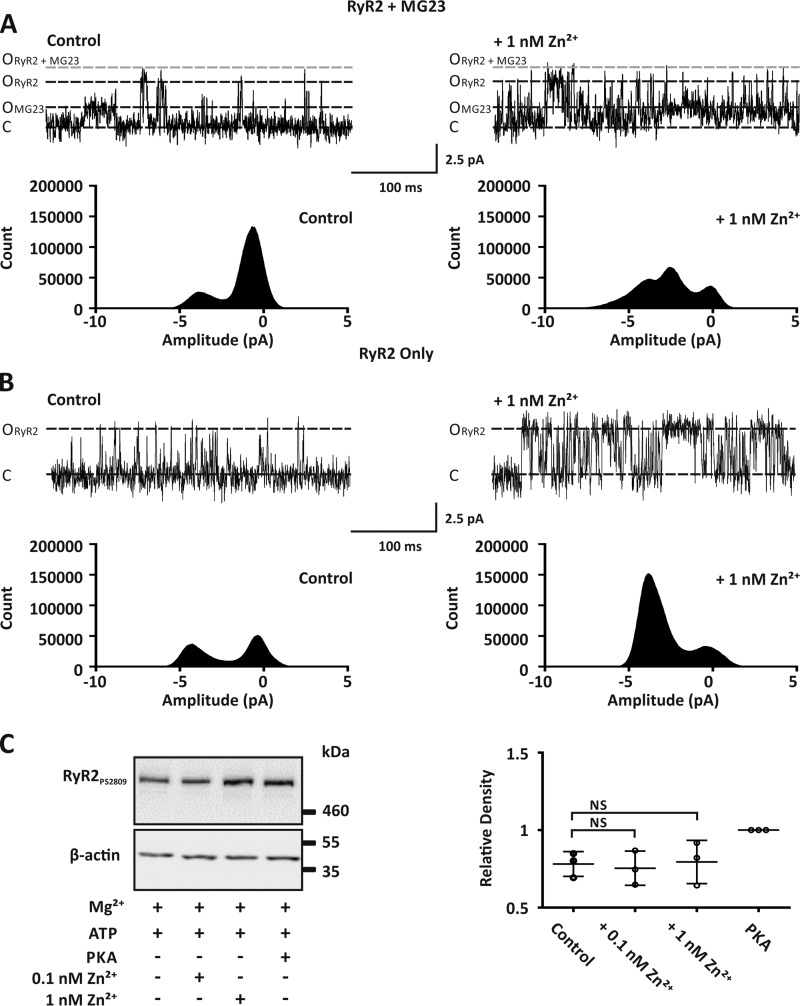
Aberrant Zn homeostasis is associated with dysregulated intracellular Ca release, resulting in chronic heart failure. In the failing heart a small population of cardiac ryanodine receptors (RyR2) displays sub-conductance-state gating leading to Ca leakage from sarcoplasmic reticulum (SR) stores, which impairs cardiac contractility. Previous evidence suggests contribution of RyR2-independent Ca leakage through an uncharacterized mechanism. We sought to examine the role of Zn in shaping intracellular Ca release in cardiac muscle. Cardiac SR vesicles prepared from sheep or mouse ventricular tissue were incorporated into phospholipid bilayers under voltage-clamp conditions, and the direct action of Zn on RyR2 channel function was examined. Under diastolic conditions, the addition of pathophysiological concentrations of Zn (≥2 nm) caused dysregulated RyR2-channel openings. Our data also revealed that RyR2 channels are not the only SR Ca-permeable channels regulated by Zn Elevating the cytosolic Zn concentration to 1 nm increased the activity of the transmembrane protein mitsugumin 23 (MG23). The current amplitude of the MG23 full-open state was consistent with that previously reported for RyR2 sub-conductance gating, suggesting that in heart failure in which Zn levels are elevated, RyR2 channels do not gate in a sub-conductance state, but rather MG23-gating becomes more apparent. We also show that in H9C2 cells exposed to ischemic conditions, intracellular Zn levels are elevated, coinciding with increased MG23 expression. In conclusion, these data suggest that dysregulated Zn homeostasis alters the function of both RyR2 and MG23 and that both ion channels play a key role in diastolic SR Ca leakage.
锌稳态异常与细胞内钙释放失调有关,进而导致慢性心力衰竭。在衰竭心脏中,一小部分心肌兰尼碱受体(RyR2)呈现亚电导状态门控,导致肌浆网(SR)储存的钙泄漏,从而损害心脏收缩力。先前的证据表明,存在一种通过未知机制的不依赖RyR2的钙泄漏。我们试图研究锌在调节心肌细胞内钙释放中的作用。将从绵羊或小鼠心室组织制备的心肌SR囊泡在电压钳条件下整合到磷脂双层中,研究锌对RyR2通道功能的直接作用。在舒张期条件下,添加病理生理浓度的锌(≥2纳米)会导致RyR2通道开放失调。我们的数据还显示,RyR2通道不是唯一受锌调节的SR钙通透通道。将胞质锌浓度提高到1纳米会增加跨膜蛋白三谷明23(MG23)的活性。MG23完全开放状态的电流幅度与先前报道的RyR2亚电导门控的电流幅度一致,这表明在锌水平升高的心力衰竭中,RyR2通道不会以亚电导状态门控,而是MG23门控变得更加明显。我们还表明,在暴露于缺血条件的H9C2细胞中,细胞内锌水平升高,同时MG23表达增加。总之,这些数据表明,锌稳态失调会改变RyR2和MG23的功能,并且这两种离子通道在舒张期SR钙泄漏中都起关键作用。