Center for Cancer Immunology Research, Department of Melanoma Medical Oncology, The University of Texas MD Anderson Cancer Center, Houston, Texas.
Department of Biochemistry and Molecular Biology, Korea University College of Medicine, Seoul, Republic of Korea.
Cancer Immunol Res. 2017 Aug;5(8):618-629. doi: 10.1158/2326-6066.CIR-17-0051. Epub 2017 Jun 19.
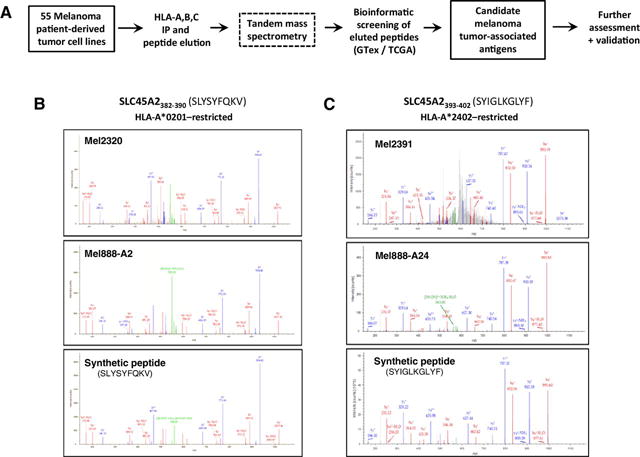
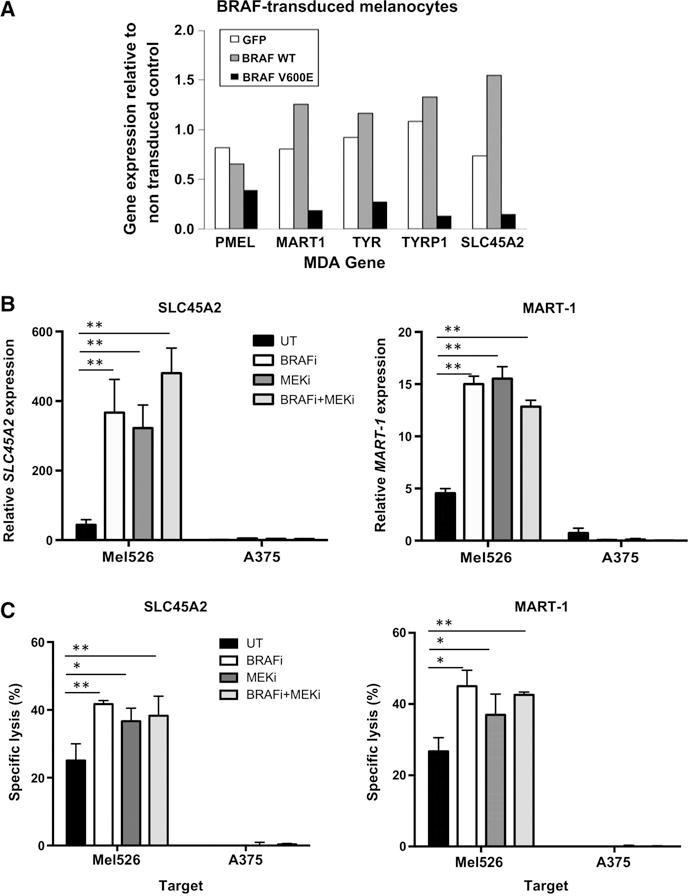
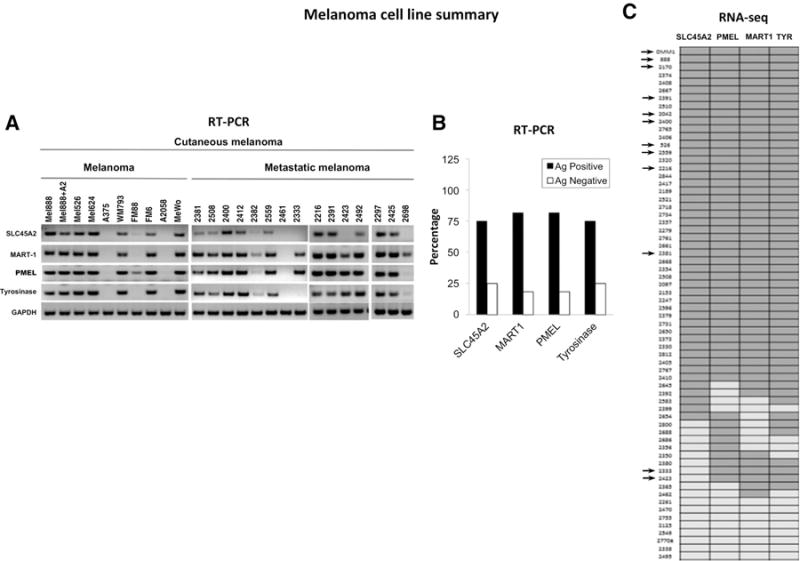
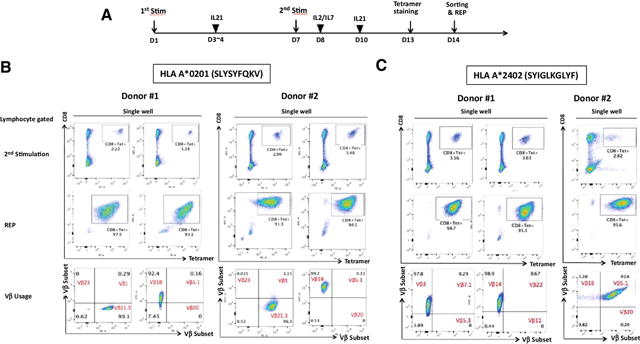
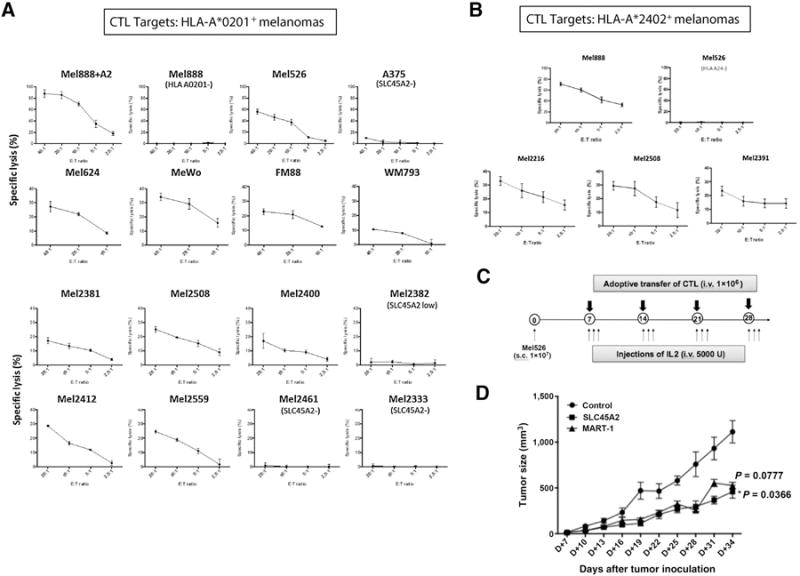
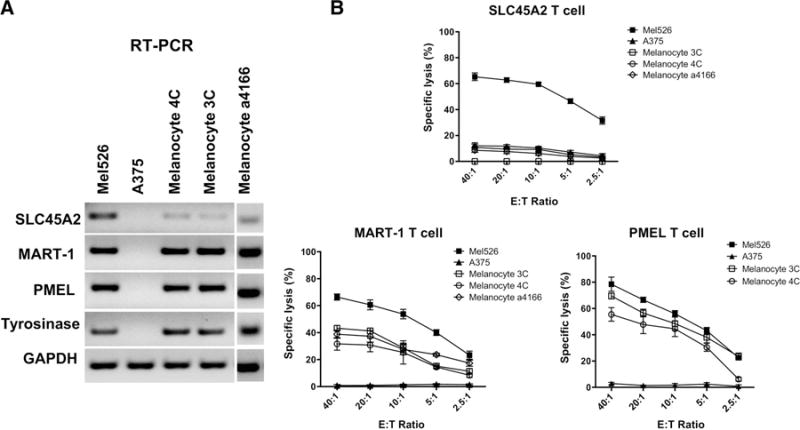
Cytotoxic T lymphocyte (CTL)-based immunotherapies have had remarkable success at generating objective clinical responses in patients with advanced metastatic melanoma. Although the melanocyte differentiation antigens (MDA) MART-1, PMEL, and tyrosinase were among the first melanoma tumor-associated antigens identified and targeted with immunotherapy, expression within normal melanocytes of the eye and inner ear can elicit serious autoimmune side effects, thus limiting their clinical potential as CTL targets. Using a tandem mass spectrometry (MS) approach to analyze the immunopeptidomes of 55 melanoma patient-derived cell lines, we identified a number of shared HLA class I-bound peptides derived from the melanocyte-specific transporter protein SLC45A2. Antigen-specific CTLs generated against HLA-A0201- and HLA-A2402-restricted SLC45A2 peptides effectively killed a majority of HLA-matched cutaneous, uveal, and mucosal melanoma cell lines tested (18/25). CTLs specific for SLC45A2 showed significantly reduced recognition of HLA-matched primary melanocytes that were, conversely, robustly killed by MART1- and PMEL-specific T cells. Transcriptome analysis revealed that SLC45A2 mRNA expression in normal melanocytes was less than 2% that of other MDAs, therefore providing a more favorable melanoma-to-melanocyte expression ratio. Expression of SLC45A2 and CTL sensitivity could be further upregulated in BRAF(V600E)-mutant melanoma cells upon treatment with BRAF or MEK inhibitors, similarly to other MDAs. Taken together, our study demonstrates the feasibility of using tandem MS as a means of discovering shared immunogenic tumor-associated epitopes and identifies SLC45A2 as a promising immunotherapeutic target for melanoma with high tumor selectivity and reduced potential for autoimmune toxicity. .
细胞毒性 T 淋巴细胞 (CTL) 为基础的免疫疗法在产生晚期转移性黑色素瘤患者的客观临床反应方面取得了显著成功。虽然黑素细胞分化抗原 (MDA) MART-1、PMEL 和酪氨酸酶是首批被鉴定并通过免疫疗法靶向的黑色素瘤肿瘤相关抗原之一,但在眼睛和内耳的正常黑素细胞中表达会引起严重的自身免疫副作用,从而限制了它们作为 CTL 靶标的临床潜力。使用串联质谱 (MS) 方法分析 55 个黑色素瘤患者来源的细胞系的免疫肽组,我们鉴定了一些来自黑素细胞特异性转运蛋白 SLC45A2 的 HLA 类 I 结合肽。针对 HLA-A0201 和 HLA-A2402 限制性 SLC45A2 肽产生的抗原特异性 CTL 有效地杀死了大多数测试的 HLA 匹配的皮肤、葡萄膜和粘膜黑色素瘤细胞系 (18/25)。针对 SLC45A2 的 CTL 对 HLA 匹配的原代黑素细胞的识别明显降低,而 MART1 和 PMEL 特异性 T 细胞则强烈杀死这些黑素细胞。转录组分析显示,SLC45A2 mRNA 在正常黑素细胞中的表达低于其他 MDA 的 2%,因此提供了更有利的黑色素瘤与黑素细胞的表达比例。在 BRAF(V600E)突变黑色素瘤细胞中,BRAF 或 MEK 抑制剂的治疗可进一步上调 SLC45A2 的表达和 CTL 敏感性,类似于其他 MDA。总之,我们的研究证明了使用串联 MS 作为发现共享免疫原性肿瘤相关表位的一种手段的可行性,并确定 SLC45A2 是一种有前途的免疫治疗靶点,具有高肿瘤选择性和降低自身免疫毒性的潜力。