Cao Chuan, Cogni Rodrigo, Barbier Vincent, Jiggins Francis M
Department of Genetics, University of Cambridge, CB2 3EH, United Kingdom
Department of Genetics, University of Cambridge, CB2 3EH, United Kingdom.
Genetics. 2017 Aug;206(4):2159-2173. doi: 10.1534/genetics.117.201970. Epub 2017 Jun 19.
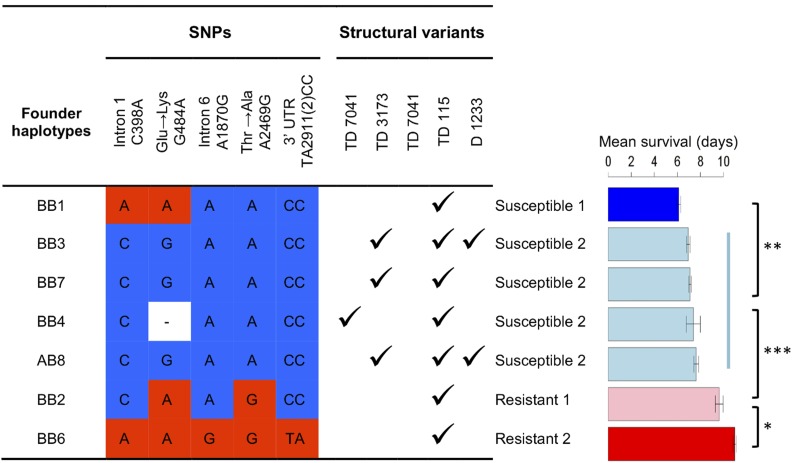
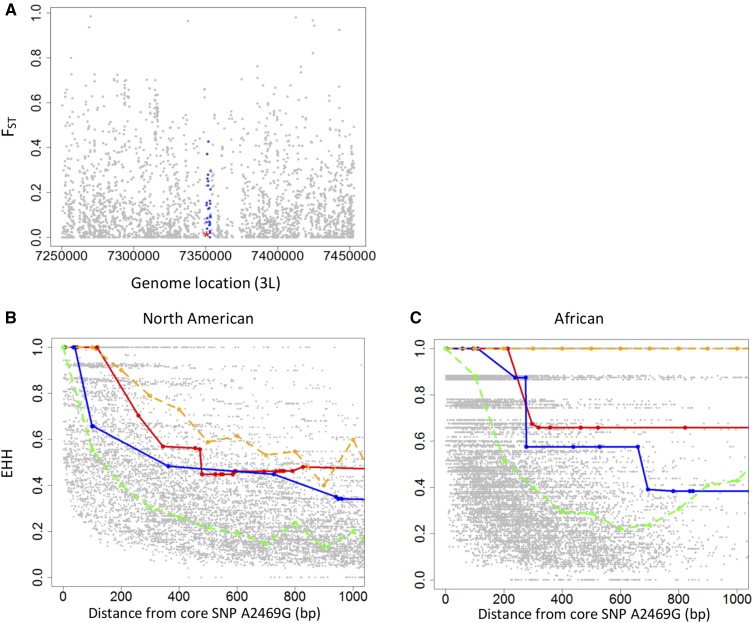
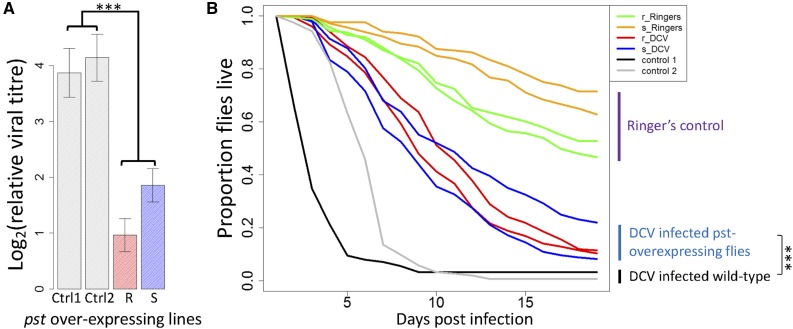
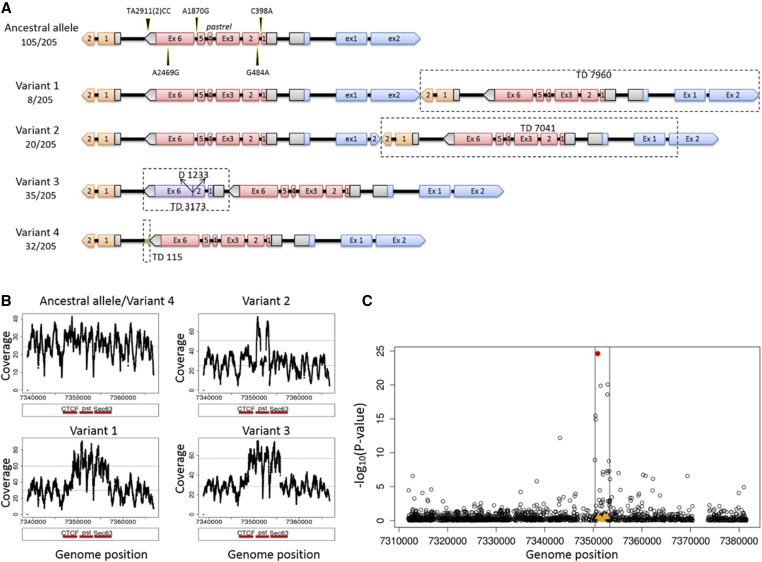
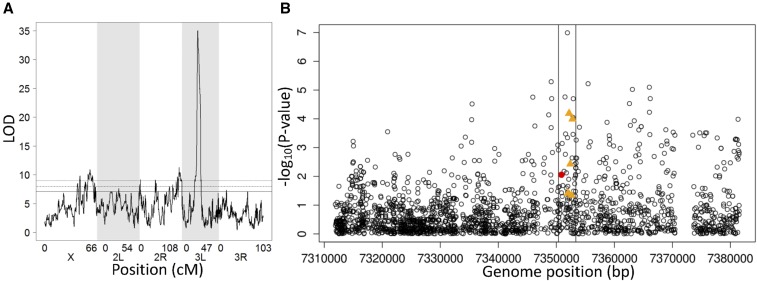
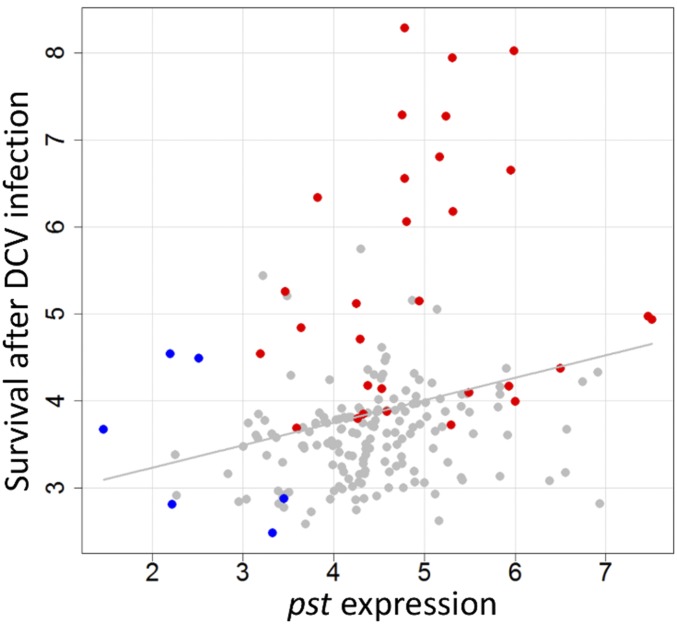
It is common to find that major-effect genes are an important cause of variation in susceptibility to infection. Here we have characterized natural variation in a gene called that explains over half of the genetic variance in susceptibility to the C virus (DCV) in populations of We found extensive allelic heterogeneity, with a sample of seven alleles of from around the world conferring four phenotypically distinct levels of resistance. By modifying candidate SNPs in transgenic flies, we show that the largest effect is caused by an amino acid polymorphism that arose when an ancestral threonine was mutated to alanine, greatly increasing resistance to DCV. Overexpression of the ancestral, susceptible allele provides strong protection against DCV; indicating that this mutation acted to improve an existing restriction factor. The locus also contains complex structural variation and -regulatory polymorphisms altering gene expression. We find that higher expression of is associated with increased survival after DCV infection. To understand why this variation is maintained in populations, we investigated genetic variation surrounding the amino acid variant that is causing flies to be resistant. We found no evidence of natural selection causing either recent changes in allele frequency or geographical variation in frequency, suggesting that this is an old polymorphism that has been maintained at a stable frequency. Overall, our data demonstrate how complex genetic variation at a single locus can control susceptibility to a virulent natural pathogen.
通常会发现主效基因是感染易感性变异的一个重要原因。在这里,我们对一个名为 的基因中的自然变异进行了表征,该基因解释了 种群中对 C 病毒(DCV)易感性的一半以上的遗传变异。我们发现了广泛的等位基因异质性,来自世界各地的七个 等位基因样本赋予了四种表型上不同的抗性水平。通过在转基因果蝇中修饰候选单核苷酸多态性(SNP),我们表明最大的效应是由一个氨基酸多态性引起的,该多态性是在一个祖先苏氨酸突变为丙氨酸时出现的,大大增加了对 DCV 的抗性。祖先的、易感等位基因的过表达提供了对 DCV 的强大保护;这表明这种突变起到了改善现有限制因子的作用。 基因座还包含复杂的结构变异和改变基因表达的调控多态性。我们发现 的高表达与 DCV 感染后的存活率增加有关。为了理解为什么这种变异在种群中得以维持,我们研究了导致果蝇产生抗性的氨基酸变异周围的遗传变异。我们没有发现自然选择导致近期等位基因频率变化或频率地理变异的证据,这表明这是一个以稳定频率维持的古老多态性。总体而言,我们的数据证明了单个基因座上的复杂遗传变异如何控制对一种有毒自然病原体的易感性。