Faculty of Infectious and Tropical Diseases, Department of Immunology and Infection, London School of Hygiene & Tropical Medicine, London, United Kingdom.
Pharmidex, London, United Kingdom.
Antimicrob Agents Chemother. 2017 Aug 24;61(9). doi: 10.1128/AAC.00497-17. Print 2017 Sep.
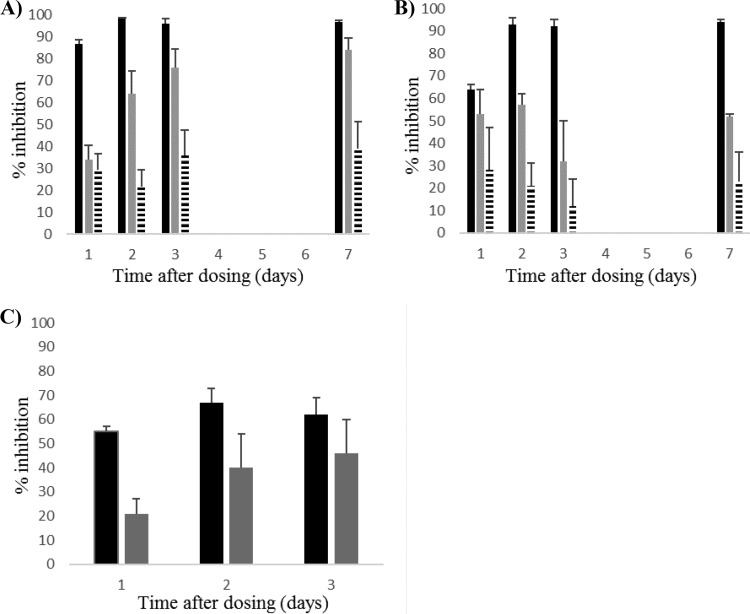
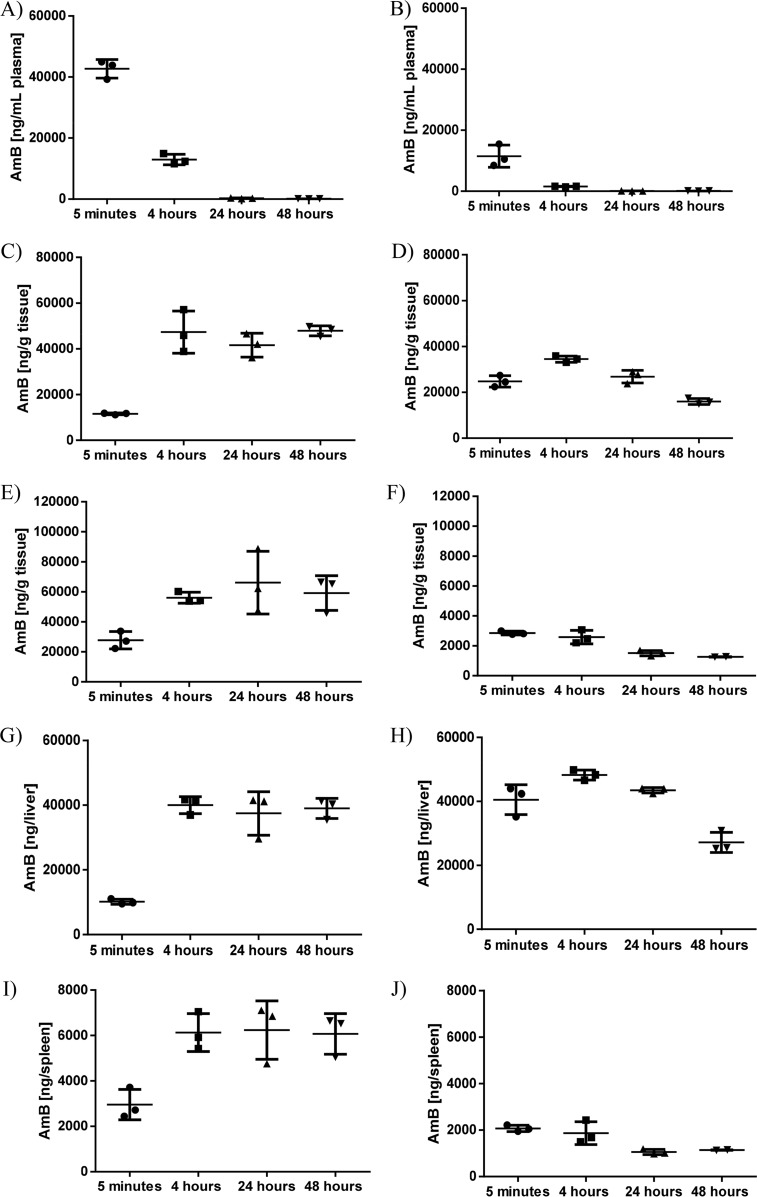
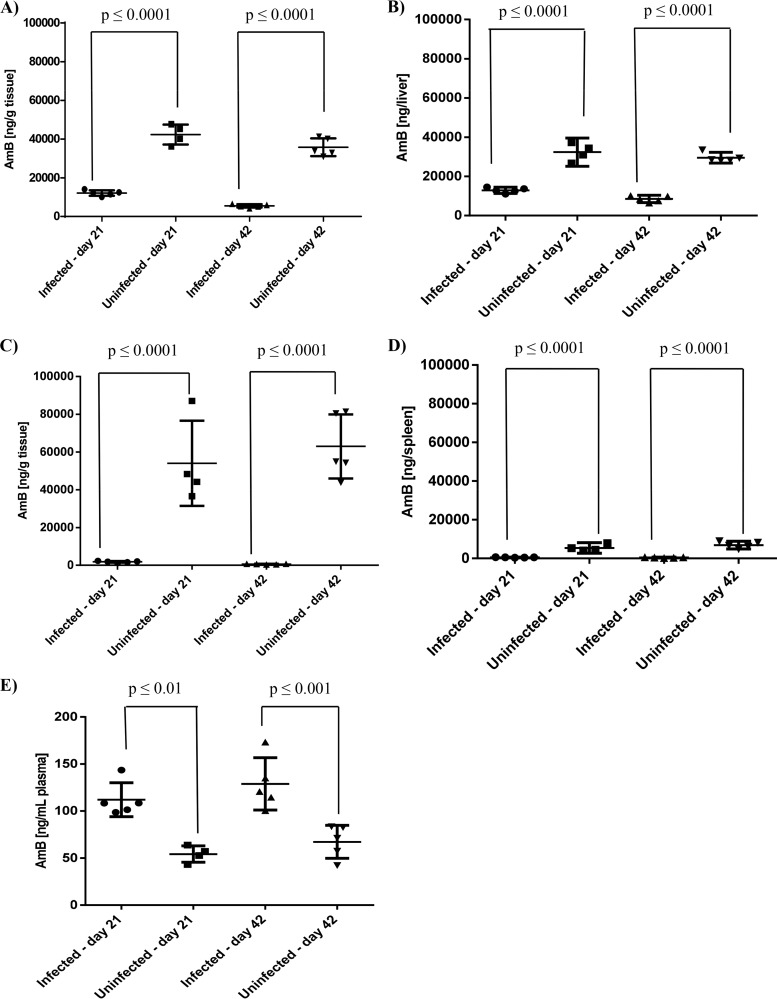
Visceral leishmaniasis is a neglected tropical disease that causes significant morbidity and mortality worldwide. Characterization of the pharmacokinetics and pharmacodynamics of antileishmanial drugs in preclinical models is important for drug development and use. Here we investigated the pharmacodynamics and drug distribution of liposomal amphotericin B (AmBisome) in -infected BALB/c mice at three different dose levels and two different time points after infection. We additionally compared drug levels in plasma, liver, and spleen in infected and uninfected BALB/c mice over time. At the highest administered dose of 10 mg/kg AmBisome, >90% parasite inhibition was observed within 2 days after drug administration, consistent with drug distribution from blood to tissue within 24 h and a fast rate of kill. Decreased drug potency was observed in the spleen when AmBisome was administered on day 35 after infection, compared to day 14 after infection. Amphotericin B concentrations and total drug amounts per organ were lower in liver and spleen when AmBisome was administered at the advanced stage of infection and compared to those in uninfected BALB/c mice. However, the magnitude of difference was lower when total drug amounts per organ were estimated. Differences were also noted in drug distribution to -infected livers and spleens. Taken together, our data suggest that organ enlargement and other pathophysiological factors cause infection- and organ-specific drug distribution and elimination after administration of single-dose AmBisome to -infected mice. Plasma drug levels were not reflective of changes in drug levels in tissues.
内脏利什曼病是一种被忽视的热带病,在全球范围内造成了很大的发病率和死亡率。在临床前模型中对抗利什曼病药物的药代动力学和药效学进行特征描述,对于药物开发和应用非常重要。在这里,我们研究了脂质体两性霉素 B(AmBisome)在感染后的 BALB/c 小鼠中的药效学和药物分布,在感染后不同的三个剂量水平和两个不同的时间点进行了研究。我们还比较了感染和未感染 BALB/c 小鼠在不同时间点血浆、肝脏和脾脏中的药物水平。在最高给予剂量 10 mg/kg 的 AmBisome 后,在药物给药后 2 天内观察到超过 90%的寄生虫抑制,这与 24 小时内药物从血液分布到组织以及快速杀灭一致。与感染后 14 天相比,在感染后 35 天给予 AmBisome 时,脾脏中的药物效力降低。当在感染的晚期给予 AmBisome 时,肝脏和脾脏中的两性霉素 B 浓度和每个器官的总药物量均低于未感染的 BALB/c 小鼠。但是,当估计每个器官的总药物量时,差异幅度较低。在感染的肝脏和脾脏中也观察到药物分布的差异。总的来说,我们的数据表明,在感染后的 BALB/c 小鼠中单次给予 AmBisome 后,器官增大和其他病理生理因素导致药物在感染组织和器官中的分布和消除具有感染和器官特异性。血浆药物水平不能反映组织中药物水平的变化。