National Engineering Laboratory for AIDS Vaccine, School of Life Sciences, Jilin University, Changchun, Jilin, China.
College of Biology and Food Engineering, Jilin Engineering Normal University, Changchun, Jilin, China.
Sci Rep. 2017 Jun 19;7(1):3786. doi: 10.1038/s41598-017-03719-4.
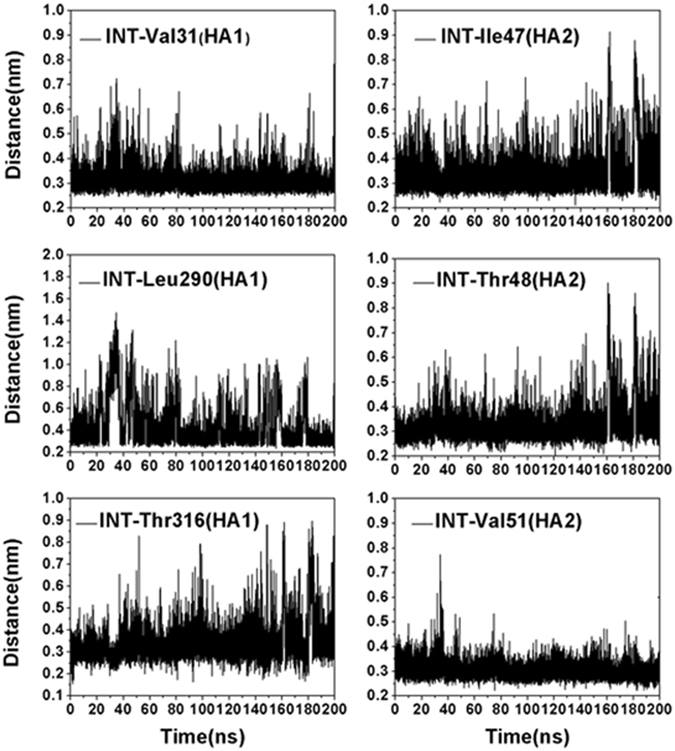
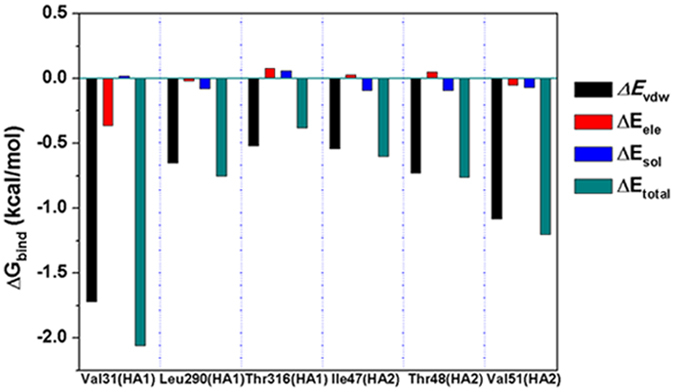
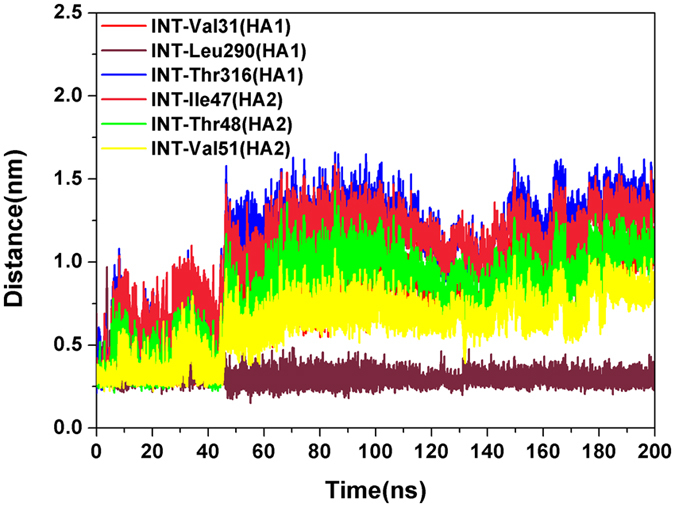
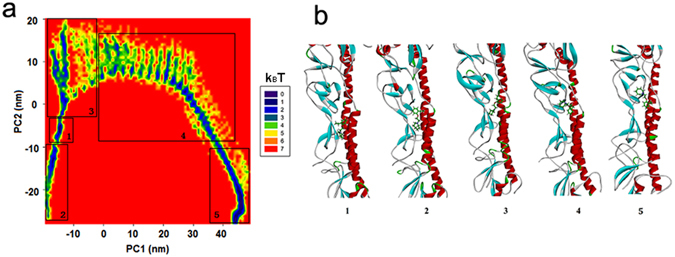
Influenza viruses are a major public health threat worldwide. The influenza hemagglutinin (HA) plays an essential role in the virus life cycle. Due to the high conservation of the HA stem region, it has become an especially attractive target for inhibitors for therapeutics. In this study, molecular simulation was applied to study the mechanism of a small molecule inhibitor (MBX2329) of influenza HA. Behaviors of the small molecule under neutral and acidic conditions were investigated, and an interesting dynamic binding mechanism was found. The results suggested that the binding of the inhibitor with HA under neutral conditions facilitates only its intake, while it interacts with HA under acidic conditions using a different mechanism at a new binding site. After a series of experiments, we believe that binding of the inhibitor can prevent the release of HA1 from HA2, further maintaining the rigidity of the HA2 loop and stabilizing the distance between the long helix and short helices. The investigated residues in the new binding site show high conservation, implying that the new binding pocket has the potential to be an effective drug target. The results of this study will provide a theoretical basis for the mechanism of new influenza virus inhibitors.
流感病毒是全球主要的公共卫生威胁。流感血凝素 (HA) 在病毒生命周期中起着至关重要的作用。由于 HA 茎区的高度保守性,它已成为治疗抑制剂的特别有吸引力的靶标。在这项研究中,应用分子模拟研究了流感 HA 的小分子抑制剂 (MBX2329) 的作用机制。研究了小分子在中性和酸性条件下的行为,发现了一种有趣的动态结合机制。结果表明,抑制剂与中性条件下的 HA 的结合仅促进其摄取,而在酸性条件下,它通过新的结合位点以不同的机制与 HA 相互作用。经过一系列实验,我们相信抑制剂的结合可以防止 HA1 从 HA2 中释放,从而进一步保持 HA2 环的刚性并稳定长螺旋和短螺旋之间的距离。新结合位点的研究残基显示出高度的保守性,这意味着新的结合口袋有可能成为有效的药物靶点。这项研究的结果将为新型流感病毒抑制剂的作用机制提供理论依据。