Xu Fei, Cui Wenqiang, Zhao Zhengxiao, Gong Weiyi, Wei Ying, Liu Jiaqi, Li Mihui, Li Qiuping, Yan Chen, Qiu Jian, Liu Baojun, Dong Jingcheng
Department of Integrative Medicine, Huashan Hospital, Fudan University, Shanghai, China.
Institutes of Integrative Medicine, Fudan University, Shanghai, China.
Evid Based Complement Alternat Med. 2017;2017:7187168. doi: 10.1155/2017/7187168. Epub 2017 May 28.
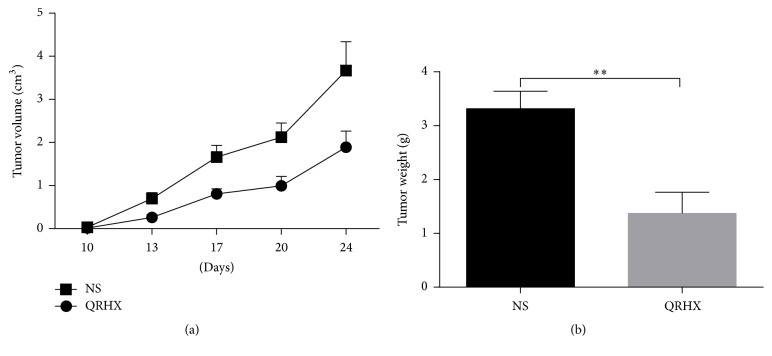
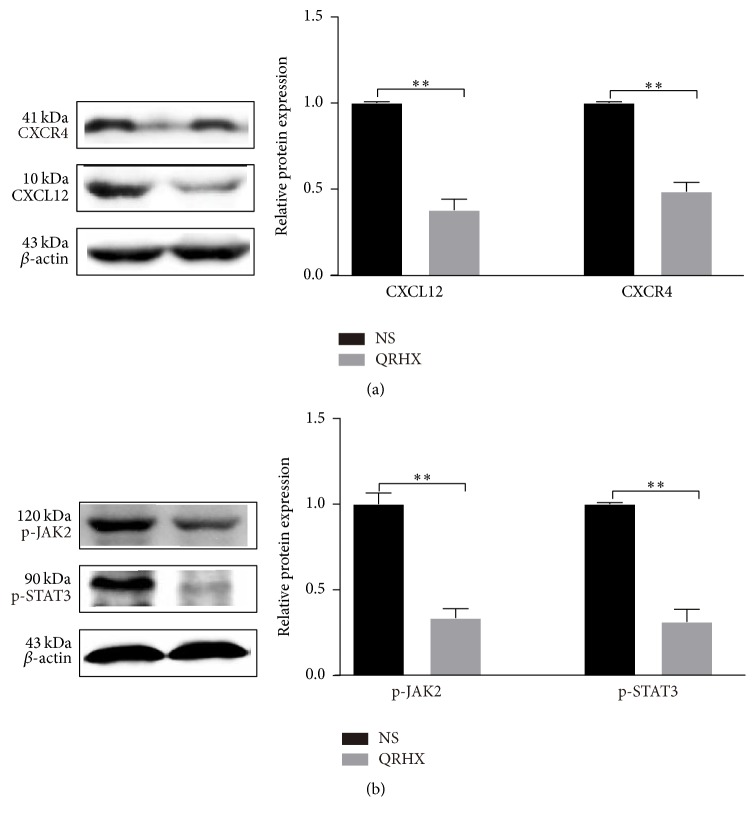
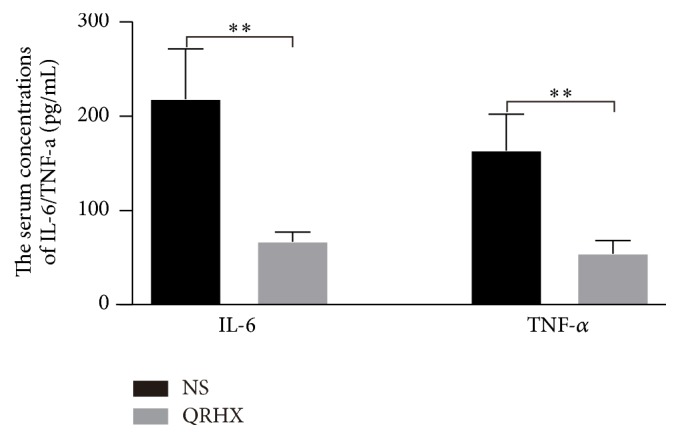
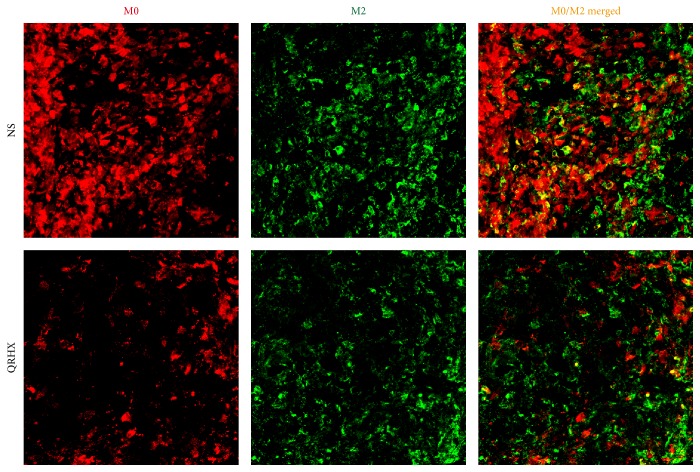
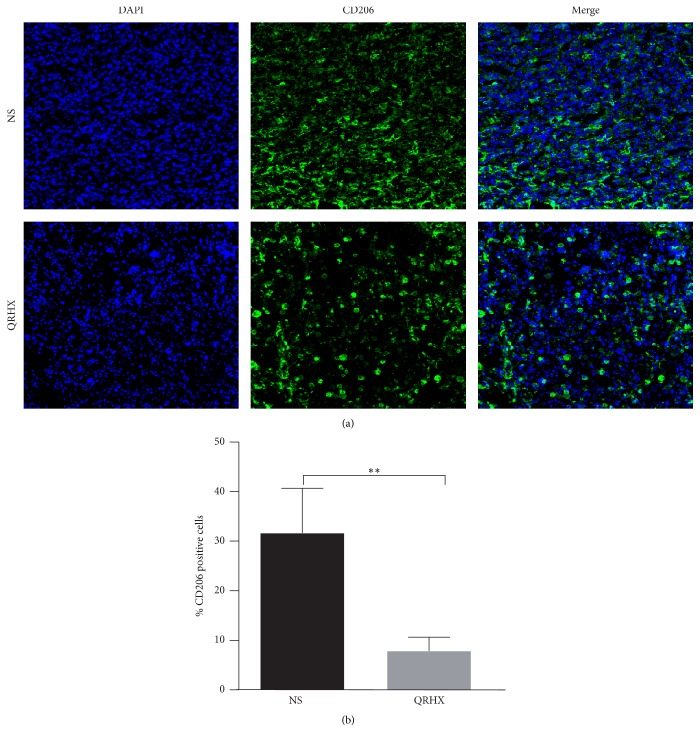
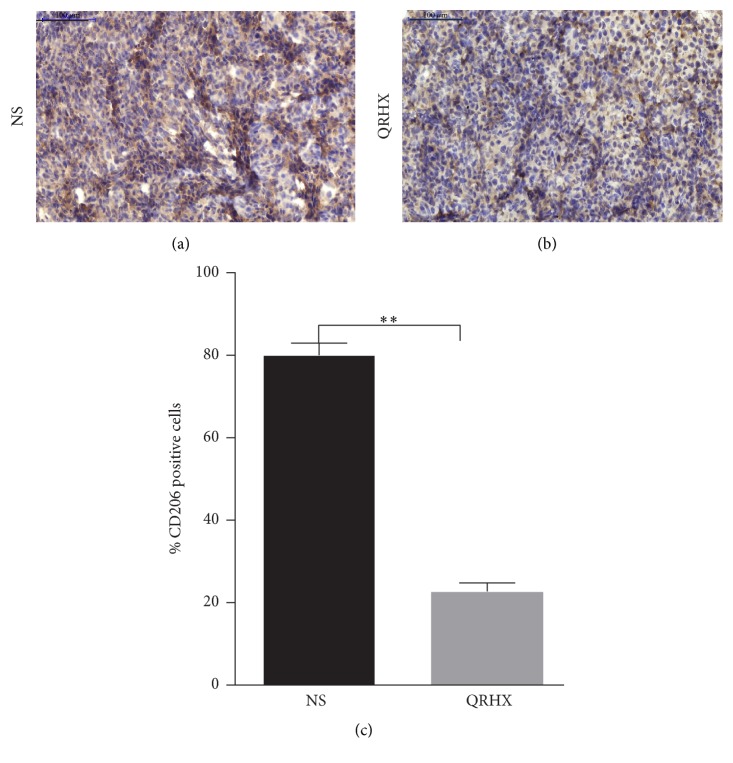
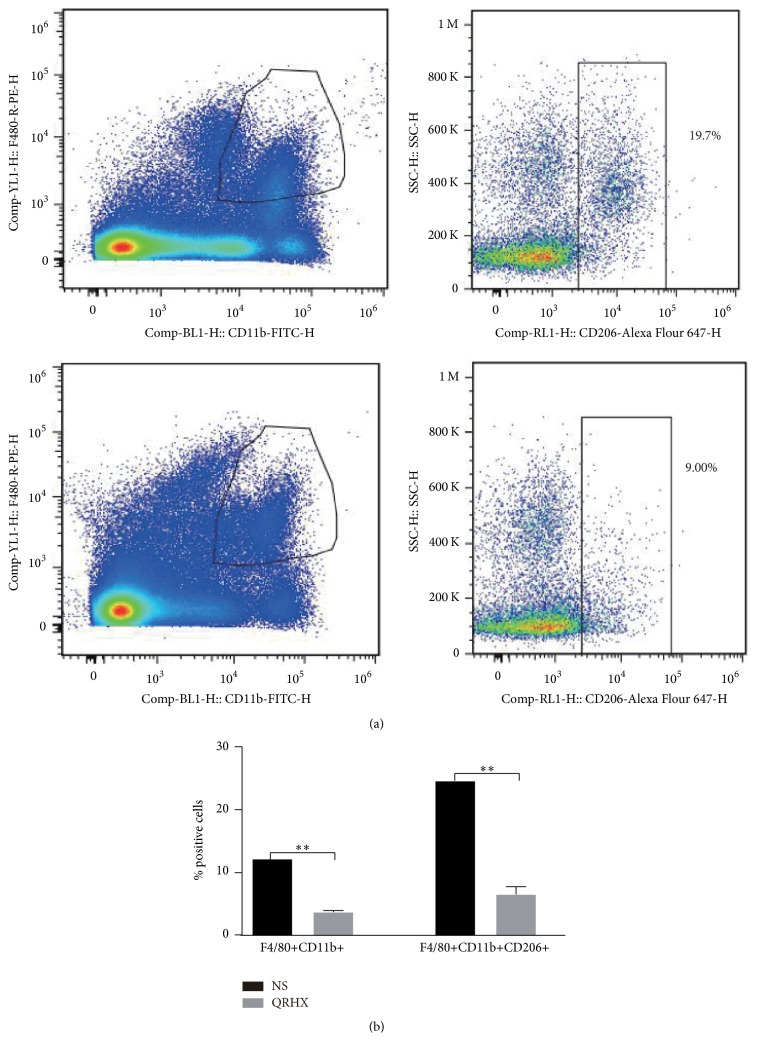
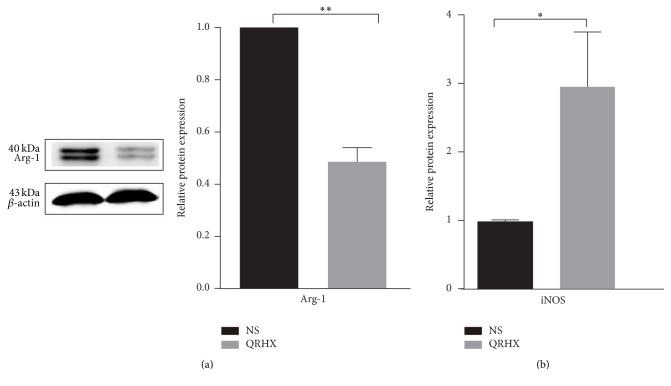
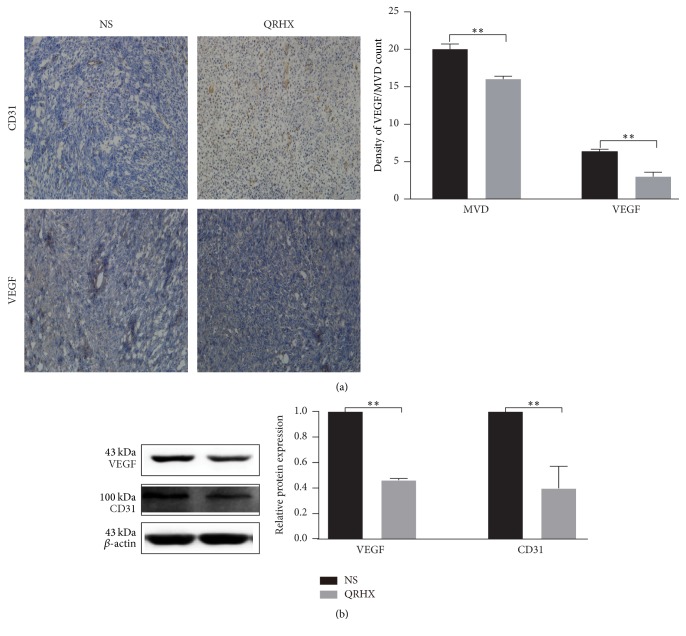
Our previous studies have shown that Qing-Re-Huo-Xue (QRHX) formulae had significant anti-inflammatory effects in chronic airway diseases such as asthma and chronic obstructive lung disease. Here, we examined the effects of QRHX on lung cancer cell invasion and the potential associated mechanism(s), mainly polarization of macrophages in the tumor microenvironment. In vivo, QRHX both inhibited tumor growth and decreased the number of tumor-associated macrophages (TAMs) in mice with lung cancer. Further study indicated that QRHX inhibited cancer-related inflammation in tumor by decreasing infiltration of TAMs and IL-6 and TNF- production and meanwhile decreased arginase 1 (Arg-1) expression and increased inducible NO synthase (iNOS) expression. QRHX could markedly inhibit CD31 and VEGF protein expression. Additionally, CXCL12/CXCR4 expression and JAK2/STAT3 phosphorylation were reduced in QRHX treatment group. Thus, we draw that QRHX played a more important role in inhibiting tumor growth by regulating TAMs in mice, which was found to be associated with the inhibition of inflammation and the CXCL12/CXCR4/JAK2/STAT3 signaling pathway.
我们之前的研究表明,清热活血(QRHX)方剂在哮喘和慢性阻塞性肺疾病等慢性气道疾病中具有显著的抗炎作用。在此,我们研究了QRHX对肺癌细胞侵袭的影响及其潜在相关机制,主要是肿瘤微环境中巨噬细胞的极化。在体内,QRHX既能抑制肺癌小鼠的肿瘤生长,又能减少肿瘤相关巨噬细胞(TAM)的数量。进一步研究表明,QRHX通过减少TAM浸润以及IL-6和TNF的产生来抑制肿瘤中的癌症相关炎症,同时降低精氨酸酶1(Arg-1)的表达并增加诱导型一氧化氮合酶(iNOS)的表达。QRHX可显著抑制CD31和VEGF蛋白表达。此外,QRHX治疗组中CXCL12/CXCR4的表达以及JAK2/STAT3的磷酸化水平均降低。因此,我们得出结论,QRHX在通过调节小鼠体内的TAM来抑制肿瘤生长方面发挥了更重要的作用,这一作用被发现与炎症抑制以及CXCL12/CXCR4/JAK2/STAT3信号通路有关。