Julius-Bernstein-Institut für Physiologie, Universität Halle-Wittenberg, Halle, Germany.
Klinik und Poliklinik für Strahlentherapie, Universität Halle-Wittenberg, Halle, Germany.
Oncol Res. 2018 Mar 5;26(2):191-200. doi: 10.3727/096504017X14965111926391. Epub 2017 Jun 19.
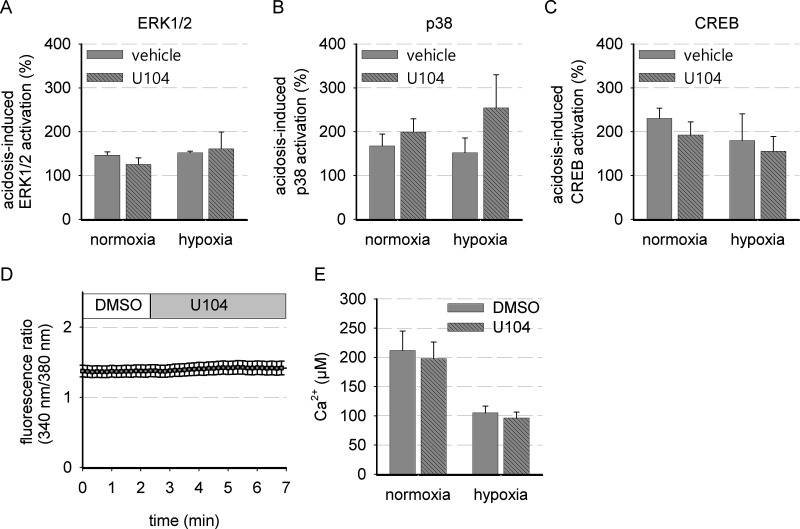
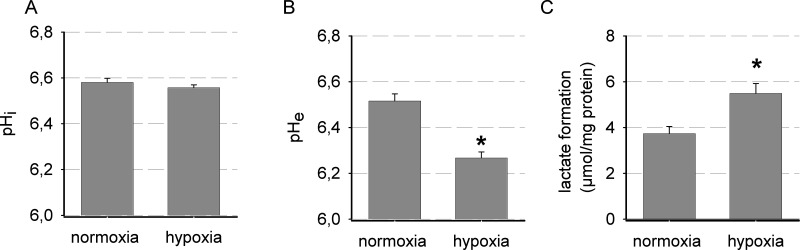
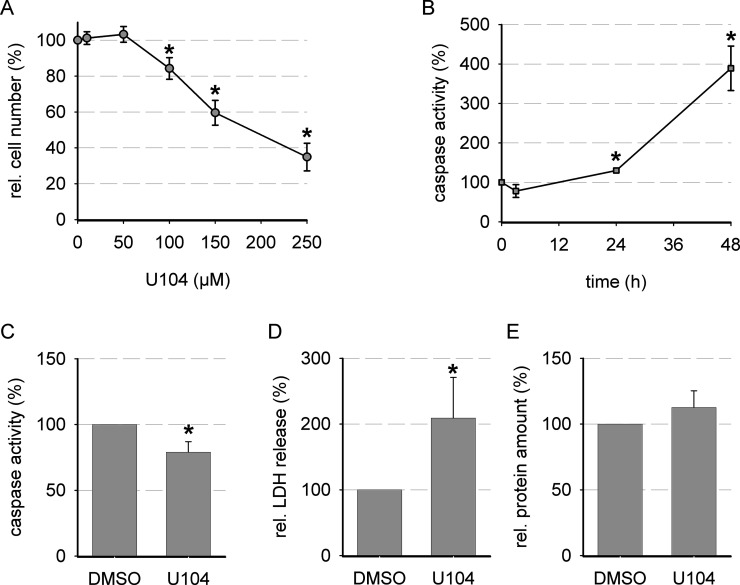
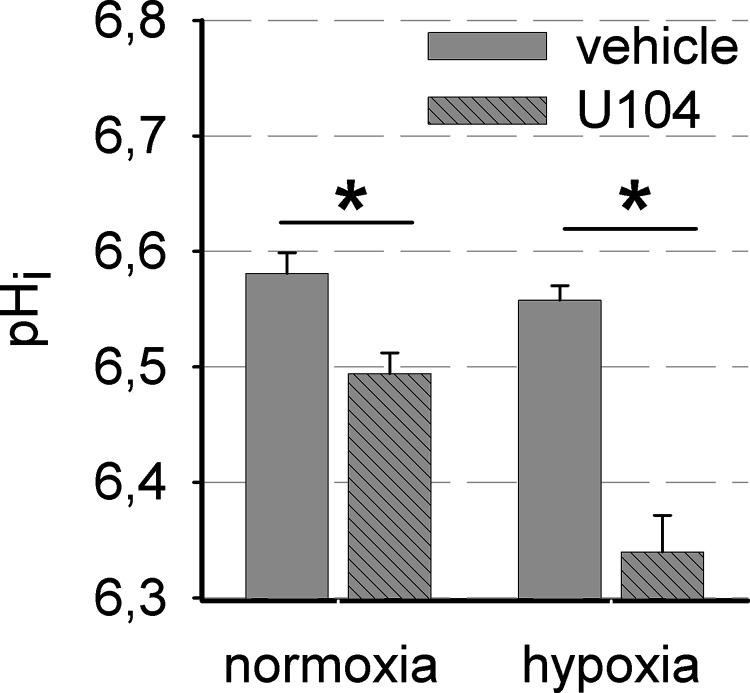
Carbonic anhydrase (CA) IX has emerged as a promising target for cancer therapy. It is highly upregulated in hypoxic regions and mediates pH regulation critical for tumor cell survival as well as extracellular acidification of the tumor microenvironment, which promotes tumor aggressiveness via various mechanisms, such as augmenting metastatic potential. Therefore, the aim of this study was to analyze the complex interdependency between CA IX and the tumor microenvironment in prostate tumor cells with regard to potential therapeutic implications. CA IX was upregulated by hypoxia as well as acidosis in prostate cancer cells. This induction did not modulate intracellular pH but led to extracellular acidification. Pharmacological inhibition of CA IX activity by U104 (SLC-0111) resulted in a reduction in tumor cell growth and an increase in apoptotic cell death. Intracellular pH was reduced under normoxic and even more so under hypoxic conditions when CA IX level was high. However, although intracellular pH regulation was disturbed, targeting CA IX in combination with daunorubicin or cisplatin did not intensify apoptotic tumor cell death. Hence, targeting CA IX in prostate cancer cells can lead to intracellular pH dysregulation and, consequently, can reduce cellular growth and elevate apoptotic cell death. Attenuation of extracellular acidification by blocking CA IX might additionally impede tumor progression and metastasis. However, no beneficial effect was seen when targeting CA IX in combination with chemotherapeutic drugs.
碳酸酐酶(CA)IX 已成为癌症治疗的一个有前途的靶点。它在缺氧区域高度上调,并介导 pH 调节,这对肿瘤细胞的存活以及肿瘤微环境的细胞外酸化至关重要,通过各种机制促进肿瘤侵袭性,例如增强转移潜力。因此,本研究旨在分析前列腺肿瘤细胞中 CA IX 与肿瘤微环境之间的复杂相互依存关系,以探讨潜在的治疗意义。CA IX 在前列腺癌细胞中被缺氧和酸中毒上调。这种诱导不会调节细胞内 pH 值,但会导致细胞外酸化。通过 U104(SLC-0111)抑制 CA IX 的活性会导致肿瘤细胞生长减少和凋亡细胞死亡增加。在常氧条件下和 CA IX 水平较高的缺氧条件下,细胞内 pH 值降低。然而,尽管细胞内 pH 值调节受到干扰,但靶向 CA IX 与柔红霉素或顺铂联合使用并没有增强凋亡肿瘤细胞死亡。因此,靶向前列腺癌细胞中的 CA IX 会导致细胞内 pH 值失调,从而减少细胞生长并增加凋亡细胞死亡。通过阻断 CA IX 来减弱细胞外酸化可能会进一步阻碍肿瘤的进展和转移。然而,当靶向 CA IX 与化疗药物联合使用时,并没有看到有益的效果。