Schoeman Johannes C, Moutloatse Gontse P, Harms Amy C, Vreeken Rob J, Scherpbier Henriette J, Van Leeuwen Liesbeth, Kuijpers Taco W, Reinecke Carools J, Berger Ruud, Hankemeier Thomas, Bunders Madeleine J
Department of Analytical Biosciences, Leiden Academic Center for Drug Research, Leiden University, The Netherlands.
Centre for Human Metabolomics, Faculty of Natural Sciences, North-West University, Potchefstroom, South Africa.
J Infect Dis. 2017 Aug 15;216(4):436-446. doi: 10.1093/infdis/jix291.
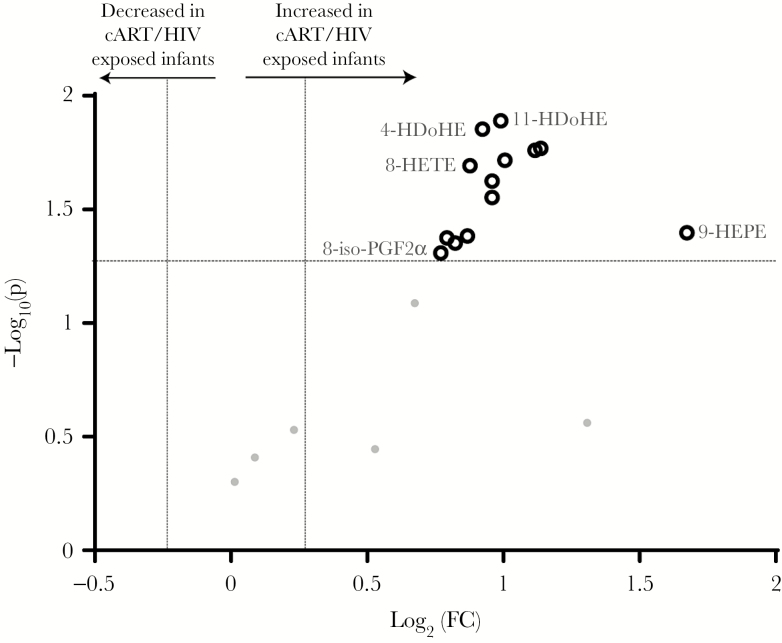
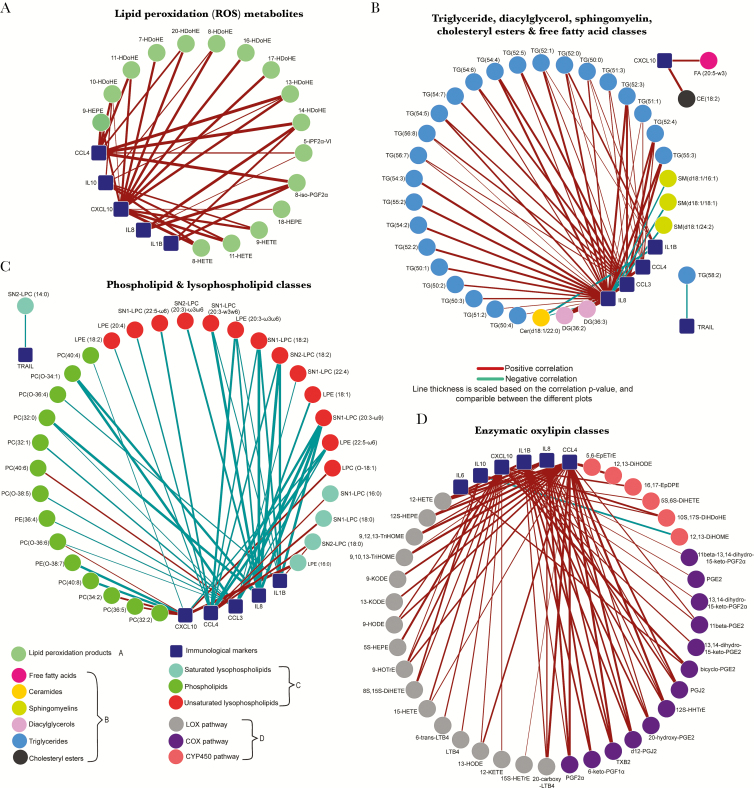
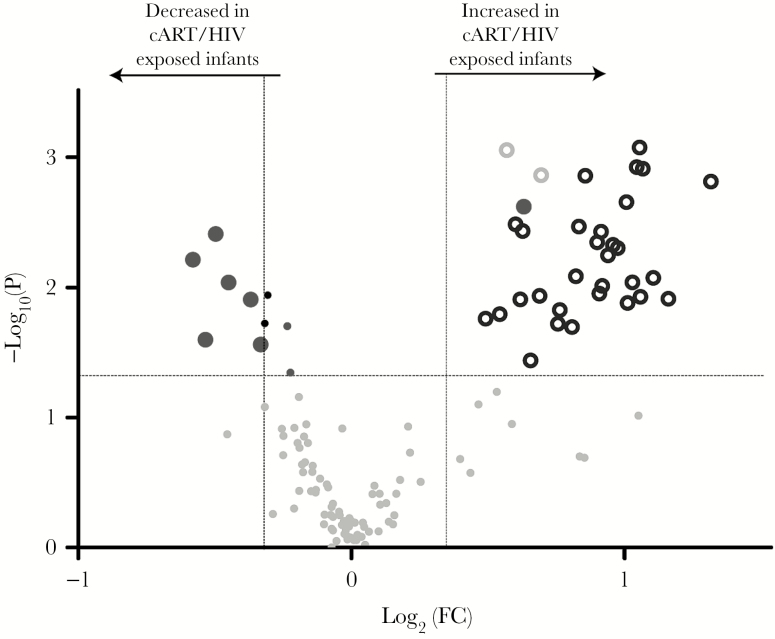
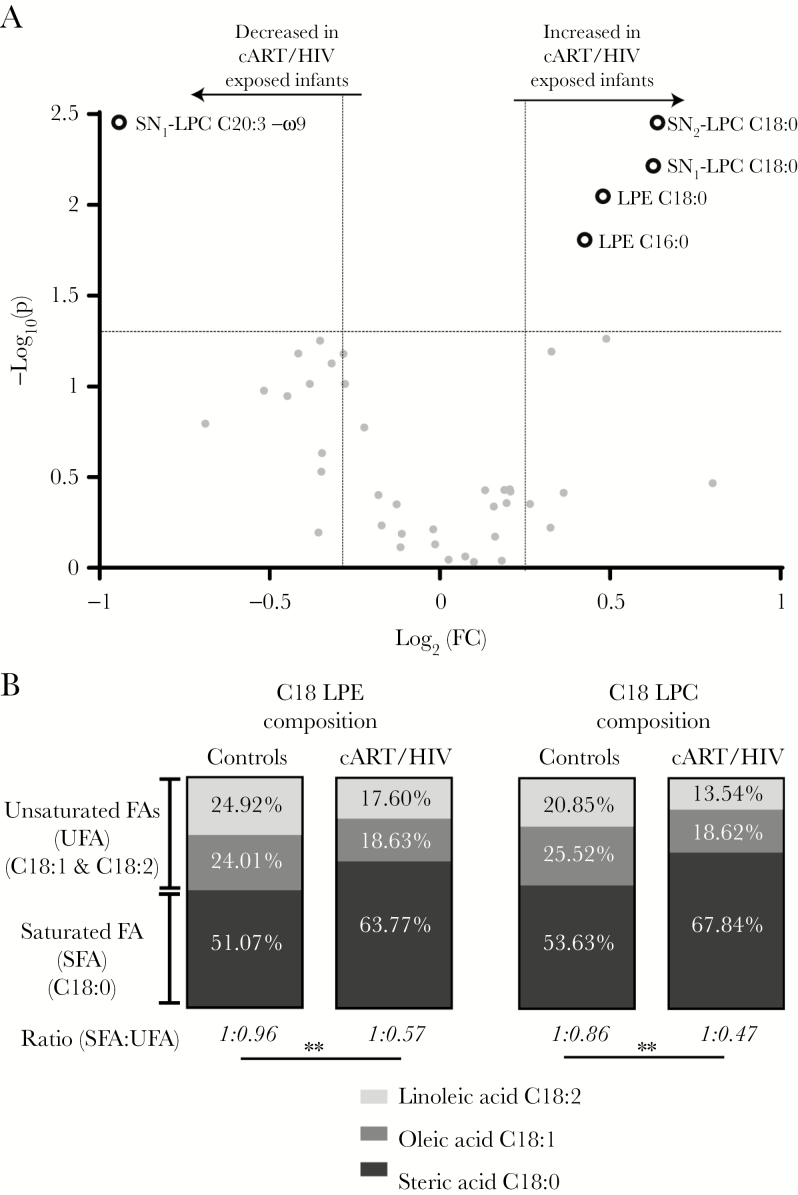
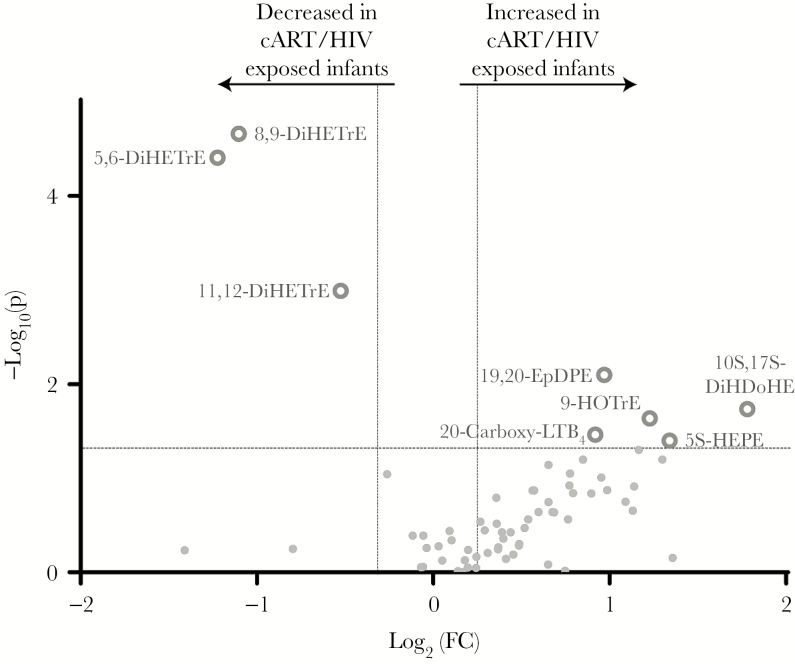
Increased morbidity and fetal growth restriction are reported in uninfected children born to human immunodeficiency virus type 1 (HIV-1)-infected women treated with antiretroviral (ARV) therapy. Viruses and/or pharmacological interventions such as ARVs can induce metabolic stress, skewing the cell's immune response and restricting (cell) growth. Novel metabolomic techniques provided the opportunity to investigate the impact of fetal HIV-1 and combination ARV therapy (cART) exposure on the infants' immune metabolome. Peroxidized lipids, generated by reactive oxygen species, were increased in cART/HIV-1-exposed infants, indicating altered mitochondrial functioning. The lipid metabolism was further dysregulated with increased triglyceride species and a subsequent decrease in phospholipids in cART/HIV-1-exposed infants compared to control infants. Proinflammatory immune mediators, lysophospholipids as well as cytokines such as CXCL10 and CCL3, were increased whereas anti-inflammatory metabolites from the cytochrome P450 pathway were reduced in cART/HIV-1-exposed infants. Taken together, these data demonstrate that the fetal metabolism is impacted by maternal factors (cART and HIV-1) and skews physiological immune responses toward inflammation in the newborn infant.
据报道,接受抗逆转录病毒(ARV)治疗的人类免疫缺陷病毒1型(HIV-1)感染女性所生的未感染儿童发病率增加且出现胎儿生长受限。病毒和/或诸如抗逆转录病毒药物等药理学干预可诱导代谢应激,使细胞免疫反应发生偏差并限制(细胞)生长。新型代谢组学技术为研究胎儿暴露于HIV-1及联合抗逆转录病毒疗法(cART)对婴儿免疫代谢组的影响提供了机会。活性氧产生的过氧化脂质在暴露于cART/HIV-1的婴儿中增加,表明线粒体功能发生改变。与对照婴儿相比,暴露于cART/HIV-1的婴儿中甘油三酯种类增加,随后磷脂减少,脂质代谢进一步失调。促炎免疫介质、溶血磷脂以及细胞因子如CXCL10和CCL3增加,而细胞色素P450途径的抗炎代谢产物在暴露于cART/HIV-1的婴儿中减少。综上所述,这些数据表明胎儿代谢受到母体因素(cART和HIV-1)的影响,并使新生儿的生理免疫反应偏向炎症。