Parikh Ankit, Kathawala Krishna, Tan Chun Chuan, Garg Sanjay, Zhou Xin-Fu
a School of Pharmacy and Medical Sciences, Sansom Institute for Health Research, Division of Health Sciences , University of South Australia , Adelaide , Australia.
Drug Deliv. 2017 Nov;24(1):962-978. doi: 10.1080/10717544.2017.1337825.
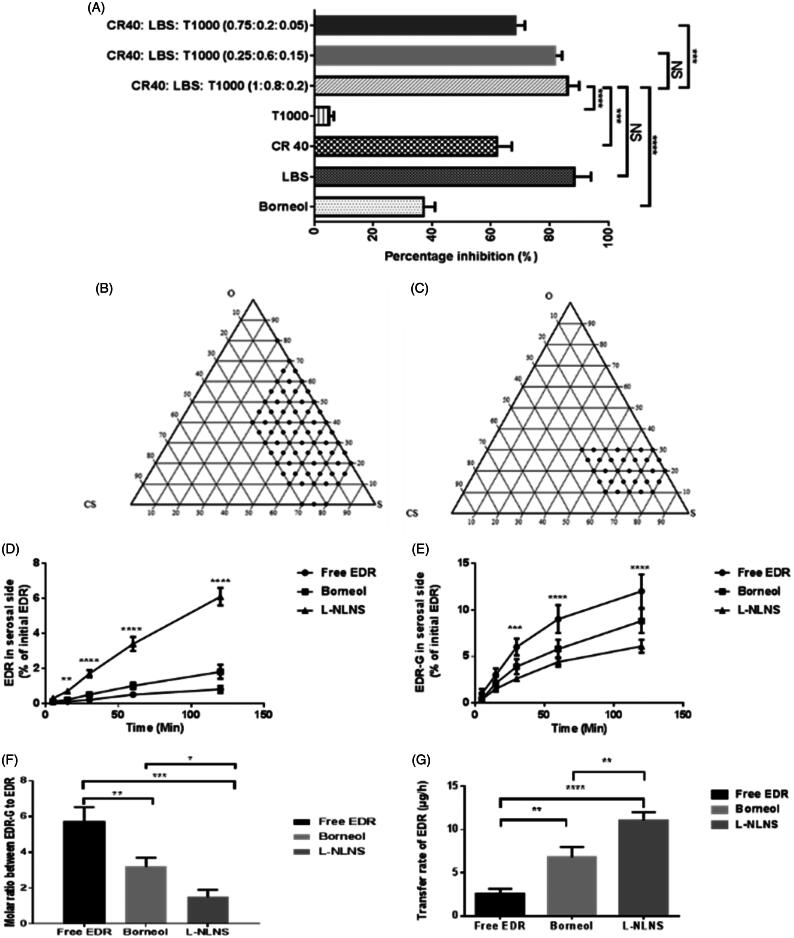
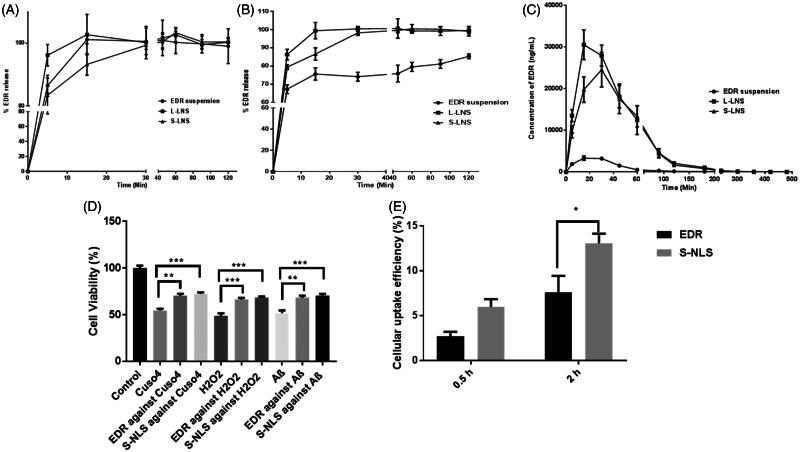
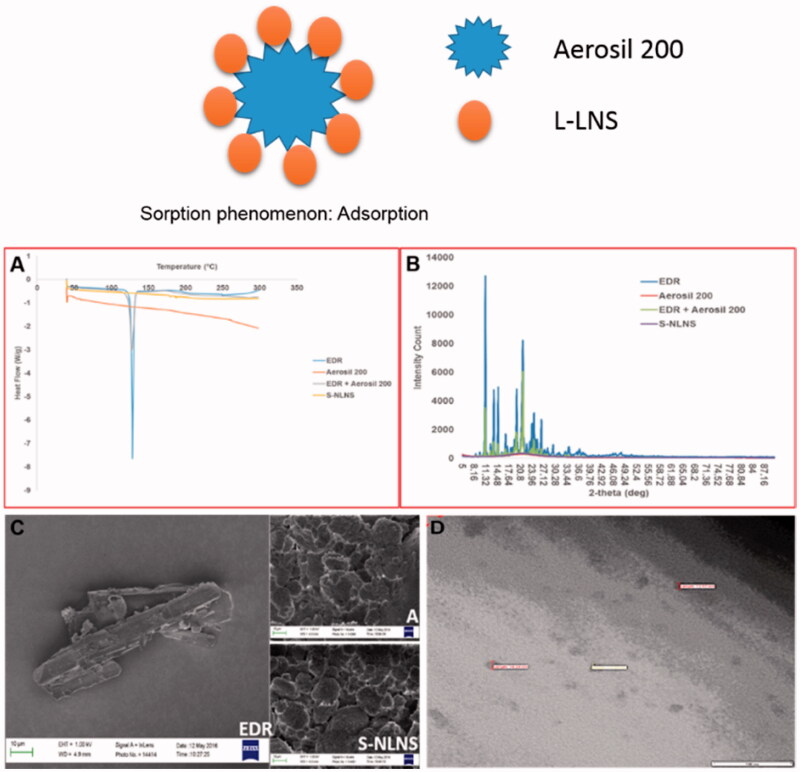
Edaravone (EDR) is a well-recognized lipophilic free radical scavenger for diseases including neurodegenerative disease, cardiovascular disease, and cancer. However, its oral use is restricted due to poor oral bioavailability (BA). The aim of present research was to enable its oral use by developing a lipid-based nanosystem (LNS). The components of LNS including oil, surfactants, and co-surfactants were selected based on their potential to maximize the solubilization in gastrointestinal (GI) fluids, reduce its glucuronidation and improve transmembrane permeability. The liquid LNS (L-LNS) with Capryol™ PGMC (Oil), Cremophor RH 40:Labrasol:TPGS 1000 (1:0.8:0.2) (Surfactant) and Transcutol P (Co-surfactant) were optimized to form microemulsion having droplet size (16.25 nm), polydispersity index (0.039), % Transmittance (99.85%), and self-emulsification time (32 s). It significantly improved the EDR loading as well as its metabolism and permeability profile during transport across the GI tract. To overcome the possible drawbacks of L-LNS, Aerosil 200 was used to formulate solid LNS (S-LNS), and its concentration was optimized based on flow properties. S-LNS possessed all quality attributes of L-LNS confirmed by solid-state characterization, reconstitution ability, and stability study. The dissolution rate of EDR was significantly enhanced with L-LNS and S-LNS in simulated gastric, and intestinal fluids. The pharmacokinetic study revealed significant improvement in relative BA, C, and t with L-LNS and S-LNS against EDR suspension. Moreover, S-LNS showed superior cellular uptake and neuroprotective effect compared to EDR in SH-SY5Y695 cell line. An appropriate selection of the components of LNS could enable effective oral delivery of challenging therapeutics that are conventionally used by the parenteral administration.
依达拉奉(EDR)是一种公认的亲脂性自由基清除剂,可用于治疗包括神经退行性疾病、心血管疾病和癌症在内的多种疾病。然而,由于口服生物利用度(BA)较差,其口服应用受到限制。本研究的目的是通过开发基于脂质的纳米系统(LNS)来实现其口服应用。LNS的成分包括油、表面活性剂和助表面活性剂,其选择基于它们在胃肠道(GI)液体中最大化增溶、减少其葡萄糖醛酸化以及提高跨膜通透性的潜力。对含有辛酸癸酸甘油三酯(Capryol™ PGMC)(油)、聚氧乙烯氢化蓖麻油40:Labrasol:维生素E聚乙二醇1000(1:0.8:0.2)(表面活性剂)和二乙二醇单乙醚(助表面活性剂)的液体LNS(L-LNS)进行优化,以形成具有液滴尺寸(16.25纳米)、多分散指数(0.039)、透光率(99.85%)和自乳化时间(32秒)的微乳液。它显著提高了依达拉奉的载药量以及其在胃肠道转运过程中的代谢和通透性。为了克服L-LNS可能存在的缺点,使用气相二氧化硅200来制备固体LNS(S-LNS),并根据流动性质对其浓度进行了优化。通过固态表征、复溶能力和稳定性研究证实,S-LNS具有L-LNS的所有质量属性。在模拟胃液和肠液中,L-LNS和S-LNS显著提高了依达拉奉的溶出速率。药代动力学研究表明,与依达拉奉混悬液相比,L-LNS和S-LNS的相对生物利用度、血药浓度和达峰时间均有显著改善。此外,在SH-SY5Y695细胞系中,S-LNS显示出比依达拉奉更好的细胞摄取和神经保护作用。对LNS成分进行适当选择可以实现对传统采用肠胃外给药的具有挑战性的治疗药物的有效口服递送。