Sanikommu Srinivasa R, Clemente Michael J, Chomczynski Peter, Afable Manuel G, Jerez Andres, Thota Swapna, Patel Bhumika, Hirsch Cassandra, Nazha Aziz, Desamito John, Lichtin Alan, Pohlman Brad, Sekeres Mikkael A, Radivoyevitch Tomas, Maciejewski Jaroslaw P
a Department of Translational Hematology and Oncology Research , Taussig Cancer Institute, Cleveland Clinic , Cleveland , OH , USA.
b Department of Hematologic Oncology and Blood Disorders , Taussig Cancer Institute, Cleveland Clinic , Cleveland , OH , USA.
Leuk Lymphoma. 2018 Feb;59(2):416-422. doi: 10.1080/10428194.2017.1339880. Epub 2017 Jun 20.
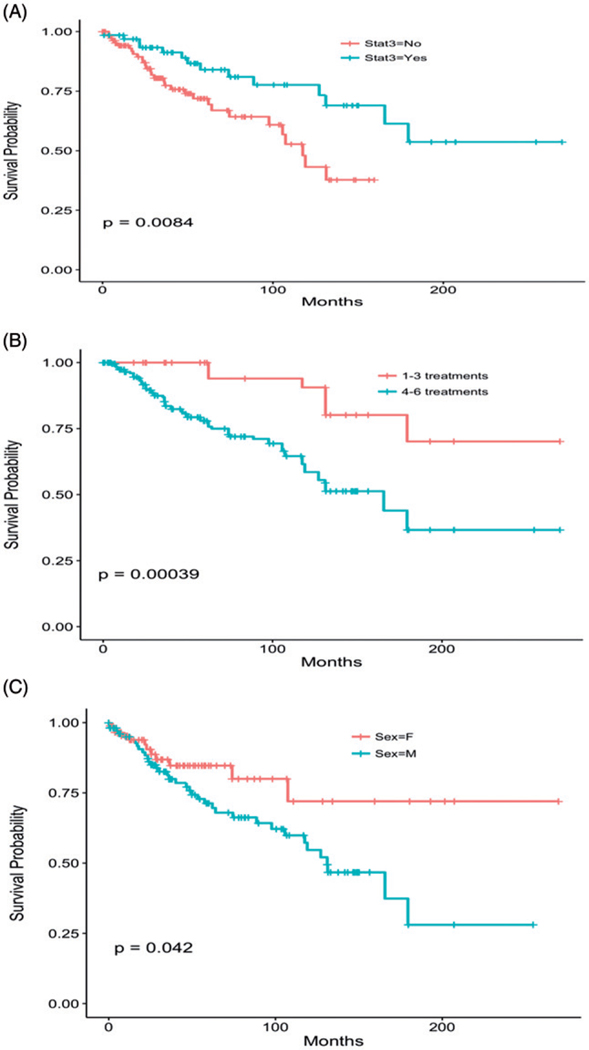
Large granular lymphocytic leukemia (LGLL) represents a clonal/oligoclonal lymphoproliferation of cytotoxic T and natural killer cells often associated with STAT3 mutations. When symptomatic, due to mostly anemia and neutropenia, therapy choices are often empirically-based, because only few clinical trials and systematic studies have been performed. Incorporating new molecular and flow cytometry parameters, we identified 204 patients fulfilling uniform criteria for LGLL diagnoses and analyzed clinical course with median follow-up of 36 months, including responses to treatments. While selection of initial treatment was dictated by clinical features, the initial responses, as well as overall responses to methotrexate (MTX), cyclosporine (CsA), and cyclophosphamide (CTX), were similar at 40-50% across drugs. Sequential use of these drugs resulted in responses in most cases: only 10-20% required salvage therapies such as ATG, Campath, tofacitinib, splenectomy or abatacept. MTX yielded the most durable responses. STAT3-mutated patients required therapy more frequently and had better overall survival.
大颗粒淋巴细胞白血病(LGLL)是一种细胞毒性T细胞和自然杀伤细胞的克隆性/寡克隆性淋巴细胞增殖,常与STAT3突变相关。出现症状时,主要是由于贫血和中性粒细胞减少,治疗选择往往基于经验,因为仅开展了少量临床试验和系统性研究。纳入新的分子和流式细胞术参数后,我们确定了204例符合LGLL诊断统一标准的患者,并分析了他们的临床病程,中位随访时间为36个月,包括对治疗的反应。虽然初始治疗的选择取决于临床特征,但甲氨蝶呤(MTX)、环孢素(CsA)和环磷酰胺(CTX)的初始反应以及总体反应相似,每种药物的反应率在40%-50%。在大多数情况下,序贯使用这些药物会产生反应:只有10%-20%的患者需要挽救治疗,如抗胸腺细胞球蛋白(ATG)、阿仑单抗、托法替布、脾切除术或阿巴西普。MTX产生的反应最持久。STAT3突变的患者更频繁地需要治疗,且总生存期更好。