Irie Yasuhiko, Roberts Aled E L, Kragh Kasper N, Gordon Vernita D, Hutchison Jaime, Allen Rosalind J, Melaugh Gavin, Bjarnsholt Thomas, West Stuart A, Diggle Stephen P
School of Life Sciences, Centre for Biomolecular Sciences, University of Nottingham, Nottingham, United Kingdom
Department of Biology and Biochemistry, University of Bath, Bath, United Kingdom.
mBio. 2017 Jun 20;8(3):e00374-17. doi: 10.1128/mBio.00374-17.
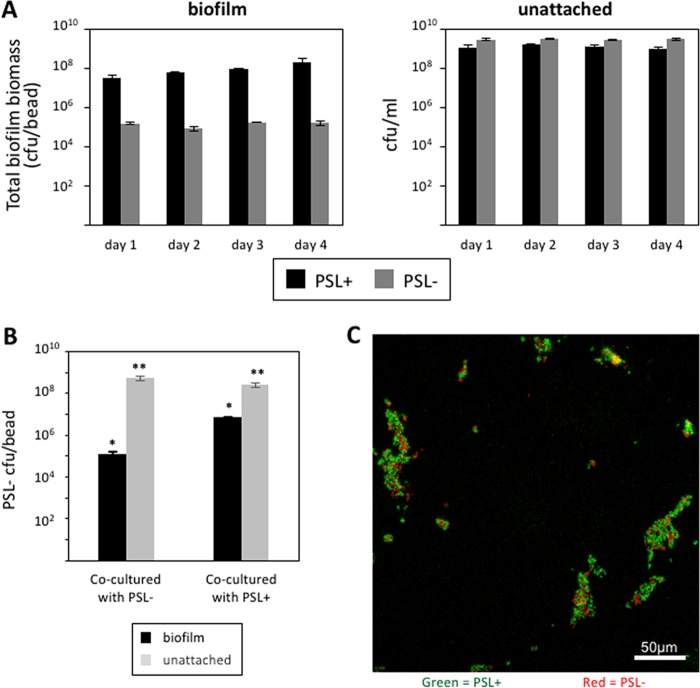
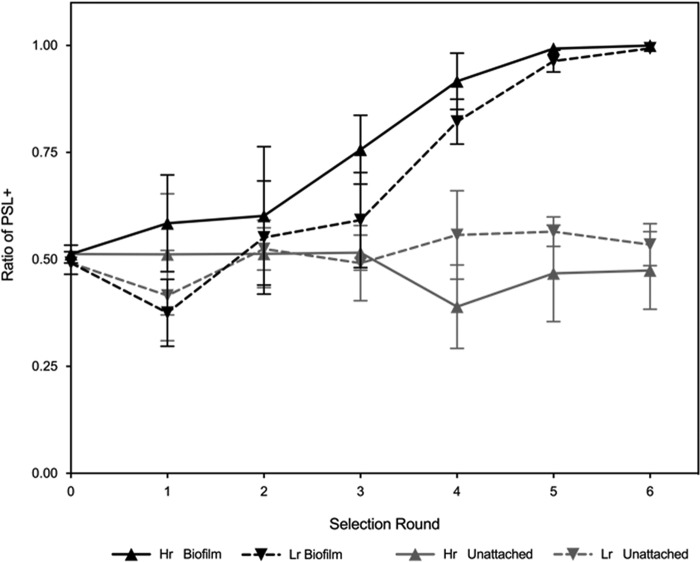
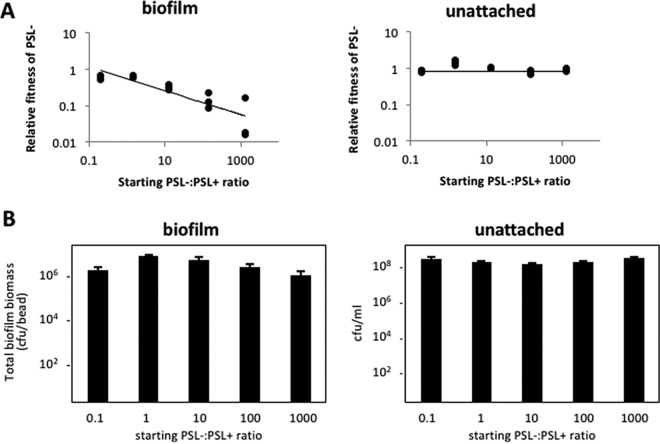
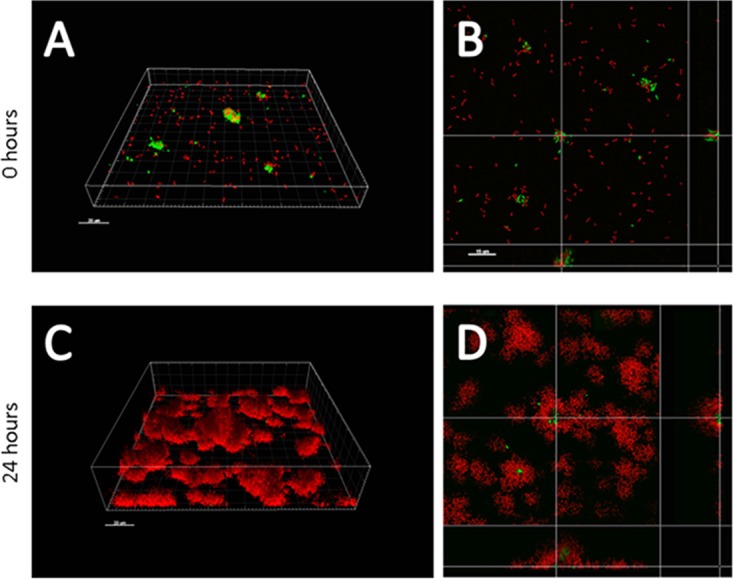
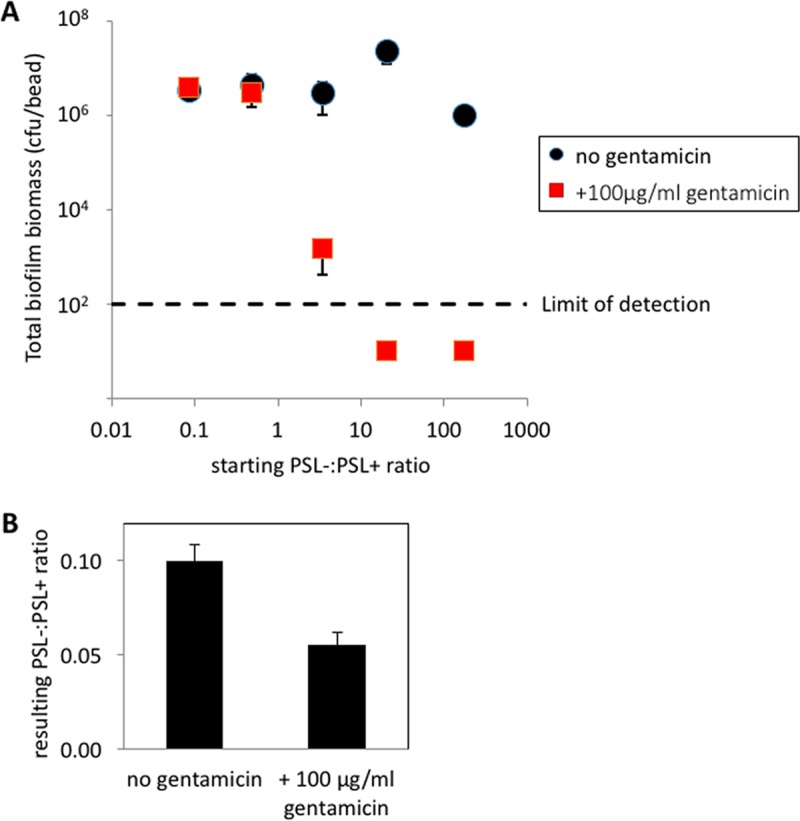
Extracellular polysaccharides are compounds secreted by microorganisms into the surrounding environment, and they are important for surface attachment and maintaining structural integrity within biofilms. The social nature of many extracellular polysaccharides remains unclear, and it has been suggested that they could function as either cooperative public goods or as traits that provide a competitive advantage. Here, we empirically tested the cooperative nature of the PSL polysaccharide, which is crucial for the formation of biofilms in We show that (i) PSL is not metabolically costly to produce; (ii) PSL provides population-level benefits in biofilms, for both growth and antibiotic tolerance; (iii) the benefits of PSL production are social and are shared with other cells; (iv) the benefits of PSL production appear to be preferentially directed toward cells which produce PSL; (v) cells which do not produce PSL are unable to successfully exploit cells which produce PSL. Taken together, this suggests that PSL is a social but relatively nonexploitable trait and that growth within biofilms selects for PSL-producing strains, even when multiple strains are on a patch (low relatedness at the patch level). Many studies have shown that bacterial traits, such as siderophores and quorum sensing, are social in nature. This has led to an impression that secreted traits act as public goods, which are costly to produce but benefit both the producing cell and its surrounding neighbors. Theories and subsequent experiments have shown that such traits are exploitable by asocial cheats, but we show here that this does not always hold true. We demonstrate that the exopolysaccharide PSL provides social benefits to populations but that it is nonexploitable, because most of the fitness benefits accrue to PSL-producing cells. Our work builds on an increasing body of work showing that secreted traits can have both private and public benefits to cells.
胞外多糖是微生物分泌到周围环境中的化合物,它们对于生物膜内的表面附着和维持结构完整性非常重要。许多胞外多糖的社会性本质仍不清楚,有人提出它们可能作为合作性公共物品发挥作用,或者作为提供竞争优势的特性。在这里,我们通过实验测试了PSL多糖的合作性质,PSL多糖对于在[具体生物名称未给出]中生物膜的形成至关重要。我们发现:(i)产生PSL的代谢成本不高;(ii)PSL在生物膜中为群体水平带来益处,包括促进生长和提高抗生素耐受性;(iii)产生PSL的益处具有社会性,可与其他细胞共享;(iv)产生PSL的益处似乎优先指向产生PSL的细胞;(v)不产生PSL的细胞无法成功利用产生PSL的细胞。综合来看,这表明PSL是一种社会性但相对不可被利用的特性,并且生物膜内的生长会选择产生PSL的菌株,即使在一个斑块上存在多个菌株(斑块水平上亲缘关系较低)。许多研究表明,细菌的特性,如意铁载体和群体感应,本质上具有社会性。这导致了一种印象,即分泌的特性作为公共物品发挥作用,生产成本高昂,但对产生细胞及其周围邻居都有益处。理论和后续实验表明,此类特性可能会被非社会性的欺骗者利用,但我们在此表明情况并非总是如此。我们证明胞外多糖PSL为群体提供社会益处,但它不可被利用,因为大多数适应性益处归于产生PSL的细胞。我们的工作建立在越来越多的研究基础之上,这些研究表明分泌的特性对细胞可能既有私人益处又有公共益处。