Kowalik Artur, Kowalska Aldona, Walczyk Agnieszka, Chodurska Renata, Kopczyński Janusz, Chrapek Magdalena, Wypiórkiewicz Elżbieta, Chłopek Małgorzata, Pięciak Liliana, Gąsior-Perczak Danuta, Pałyga Iwona, Gruszczyński Krzysztof, Nowak Ewelina, Góźdź Stanisław
Department of Molecular Diagnostics, Holycross Cancer Centre, Kielce, Poland.
Endocrinology Clinic, Holycross Cancer Centre, Kielce, Poland.
PLoS One. 2017 Jun 21;12(6):e0179691. doi: 10.1371/journal.pone.0179691. eCollection 2017.
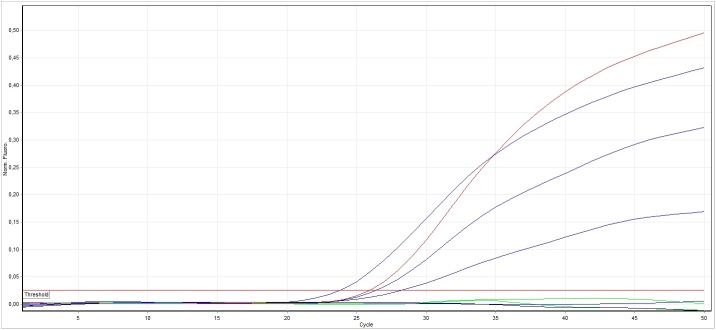
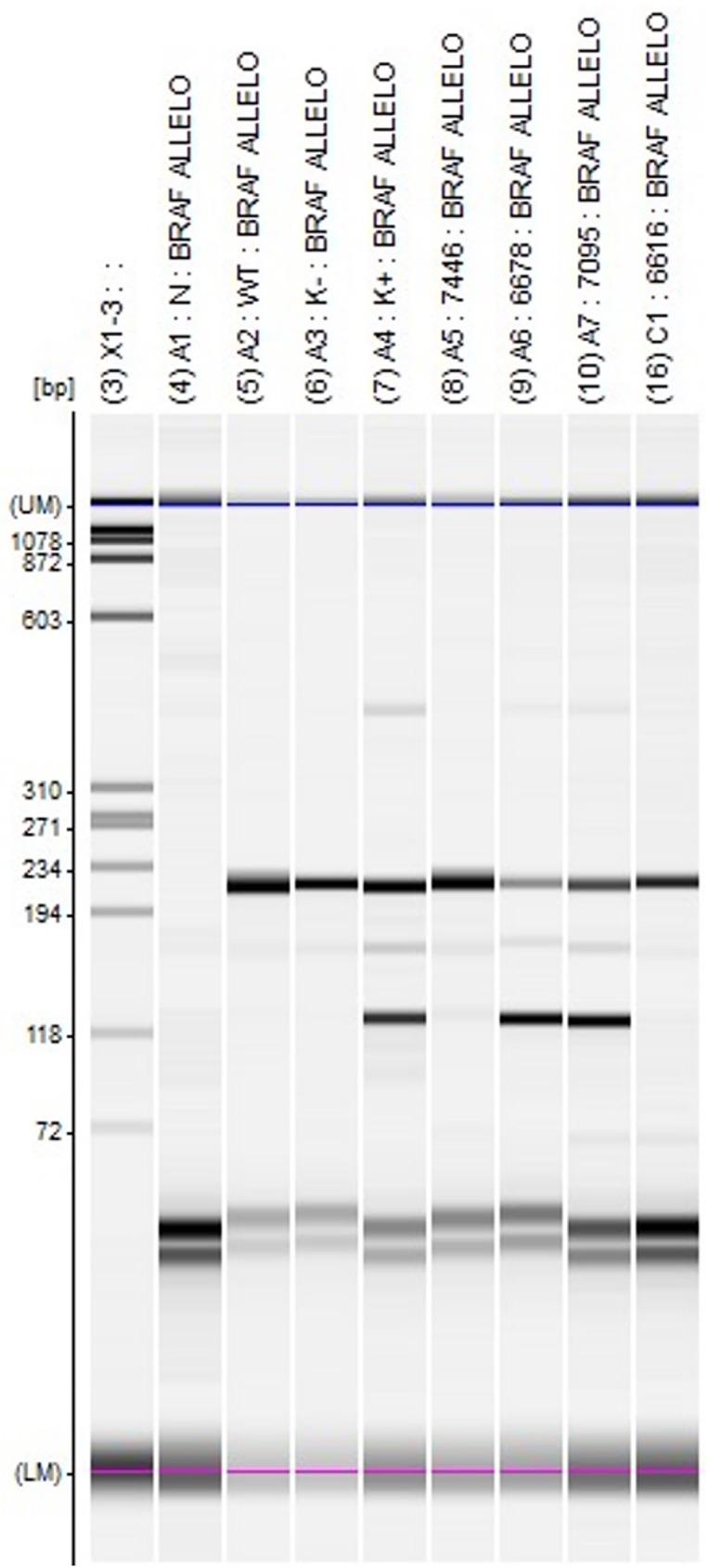
Differentiated papillary thyroid cancer (PTC) is the most common cancer of the endocrine system. PTC has a very good prognosis and a high 5 year survival rate; however, some patients are unresponsive to treatment, and their diagnosis eventually results in death. Recent efforts have focused on searching for prognostic and predictive factors that may enable treatment personalization and monitoring across the course of the disease. The presence of the BRAF mutation is considered to contribute to the risk of poor clinical course, according to American Thyroid Association (ATA) recommendations. The method used for genotyping can impact the predicted mutation frequency; however, ATA recommendations do not address this issue. We evaluated the molecular diagnostic (BRAF p.V600E mutation) results of 410 patients treated for PTC. We thoroughly analyzed the impact of three different BRAF mutation detection methods, Sanger Sequencing (Seq), allele-specific amplification PCR (ASA-PCR), and quantitative PCR (qPCR), on the frequency of mutation detection in 399 patients. Using Seq, we detected the BRAF mutation in 37% of patients; however, we were able to detect BRAF mutations in 57% and 60% of patients using the more sensitive ASA-PCR and qPCR technologies, respectively. Differences between methods were particularly marked in the thyroid papillary microcarcinoma group; BRAF p.V600E mutations were found in 37% of patients using Seq and 63% and 66% of patients using ASA-PCR and qPCR, respectively. We also evaluated how these different diagnostic methods were impacted by DNA quality. Applying methods with different sensitivities to the detection of BRAF p.V600E mutations may result in different results for the same patient; such data can influence stratification of patients into different risk groups, leading to alteration of treatment and follow-up schemes.
分化型甲状腺乳头状癌(PTC)是内分泌系统最常见的癌症。PTC预后良好,5年生存率高;然而,一些患者对治疗无反应,最终诊断导致死亡。最近的研究致力于寻找可能实现疾病全程治疗个体化和监测的预后及预测因素。根据美国甲状腺协会(ATA)的建议,BRAF突变的存在被认为会增加临床病程不佳的风险。用于基因分型的方法会影响预测的突变频率;然而,ATA的建议并未涉及这一问题。我们评估了410例接受PTC治疗患者的分子诊断(BRAF p.V600E突变)结果。我们全面分析了三种不同的BRAF突变检测方法,即桑格测序(Seq)、等位基因特异性扩增PCR(ASA-PCR)和定量PCR(qPCR),对399例患者突变检测频率的影响。使用Seq,我们在37%的患者中检测到BRAF突变;然而,使用更敏感的ASA-PCR和qPCR技术,我们分别在57%和60%的患者中检测到BRAF突变。方法之间的差异在甲状腺乳头状微小癌组尤为明显;使用Seq在37%的患者中发现BRAF p.V600E突变,使用ASA-PCR和qPCR分别在63%和66%的患者中发现该突变。我们还评估了这些不同的诊断方法如何受到DNA质量的影响。对BRAF p.V600E突变检测应用不同灵敏度的方法可能会导致同一患者出现不同结果;此类数据可能会影响患者分层到不同风险组,从而导致治疗和随访方案的改变。