Evans Ashley J, Gurung Sonam, Wilkinson Kevin A, Stephens David J, Henley Jeremy M
School of Biochemistry, Centre for Synaptic Plasticity, Biomedical Sciences Building, University of Bristol, University Walk, Bristol BS8 1TD, UK.
School of Biochemistry, Centre for Synaptic Plasticity, Biomedical Sciences Building, University of Bristol, University Walk, Bristol BS8 1TD, UK.
Cell Rep. 2017 Jun 20;19(12):2613-2626. doi: 10.1016/j.celrep.2017.06.001.
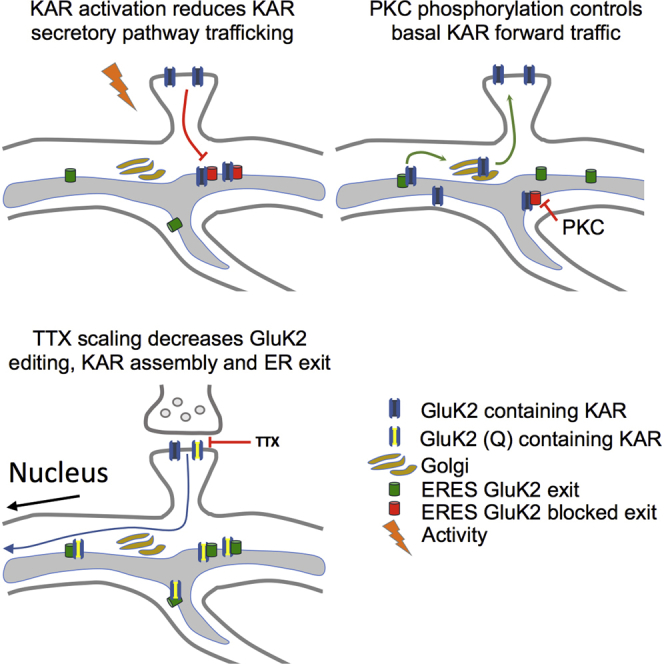
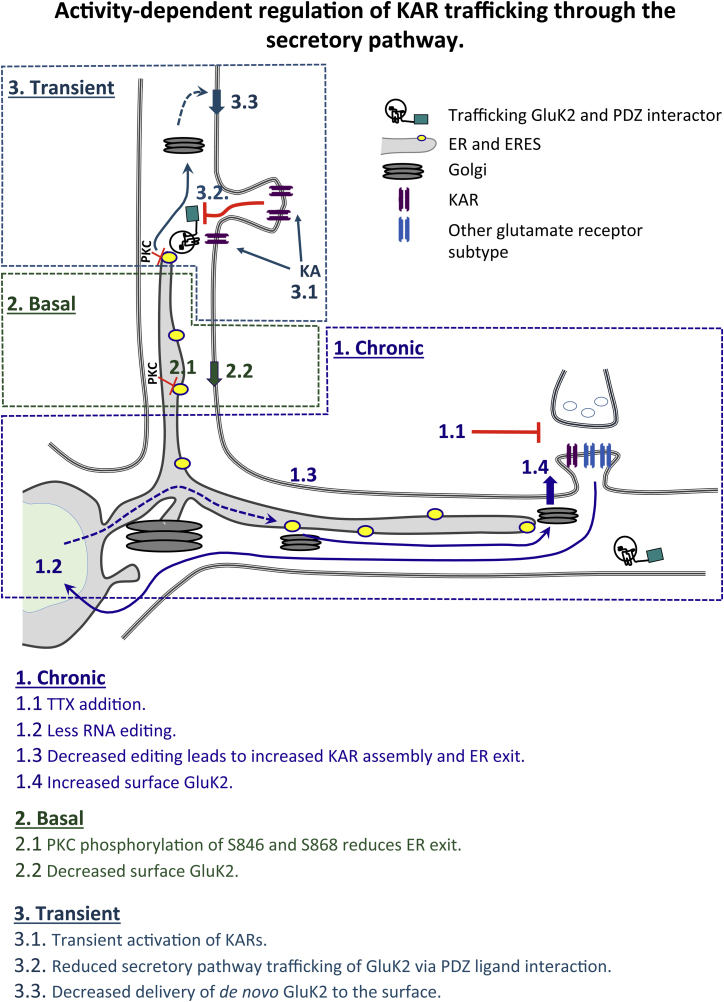
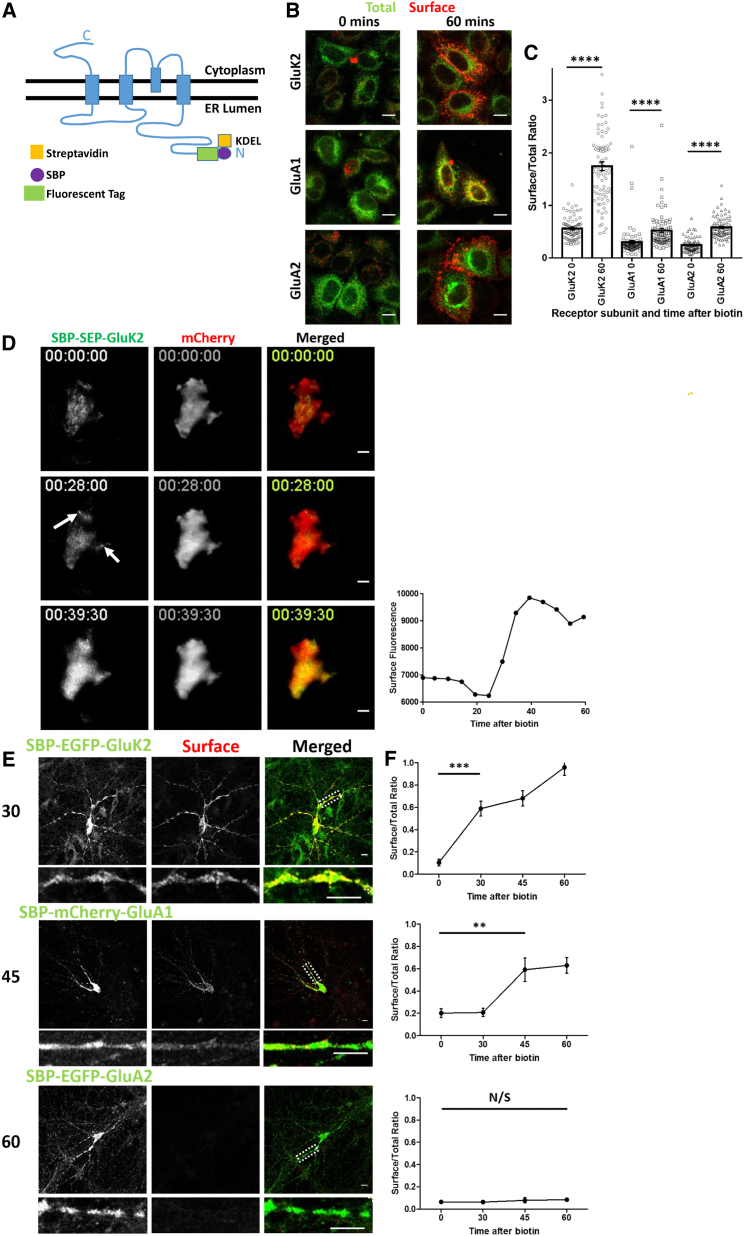
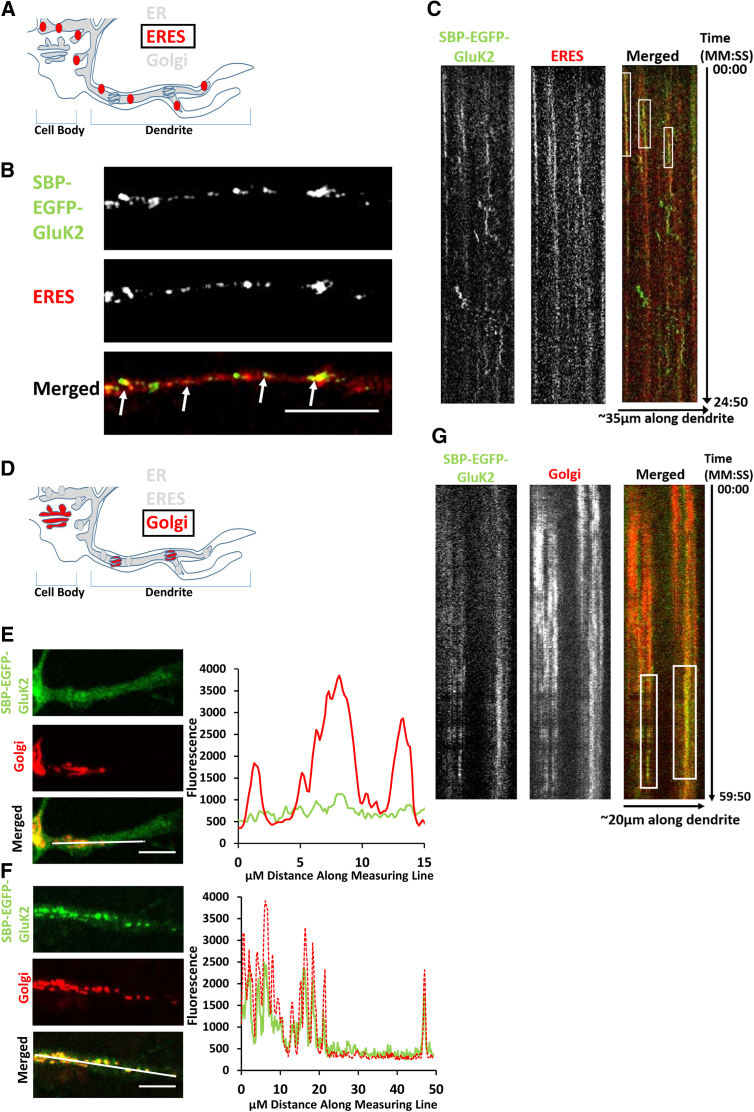
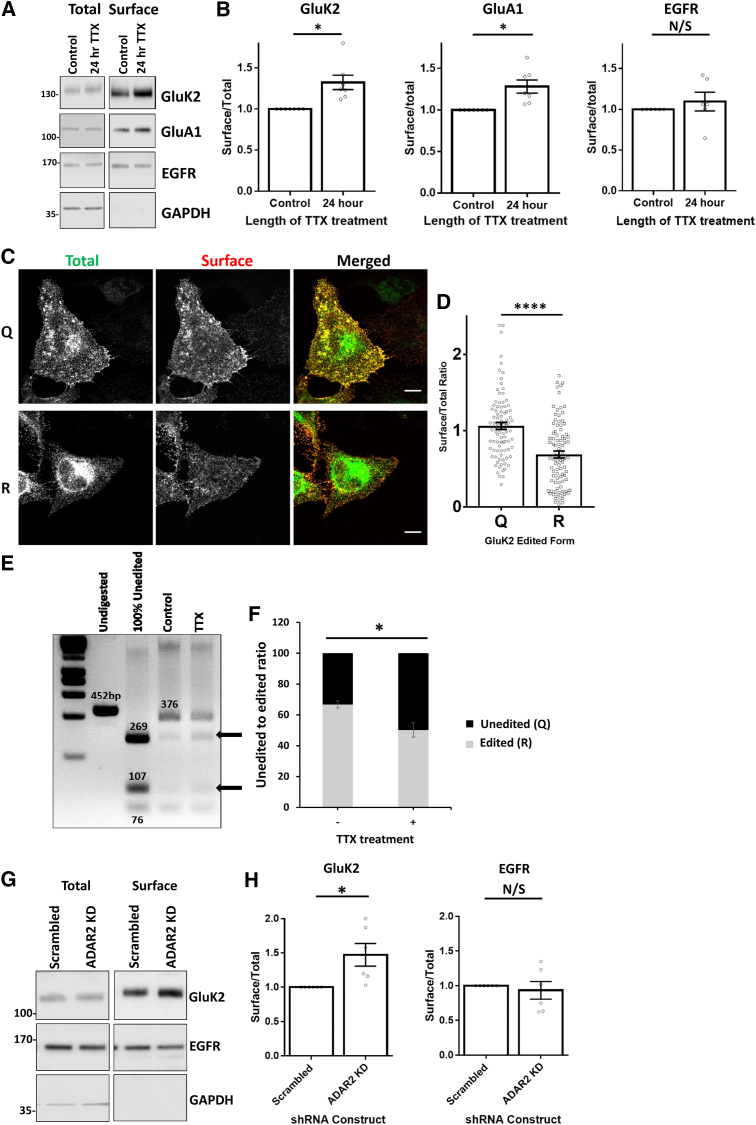
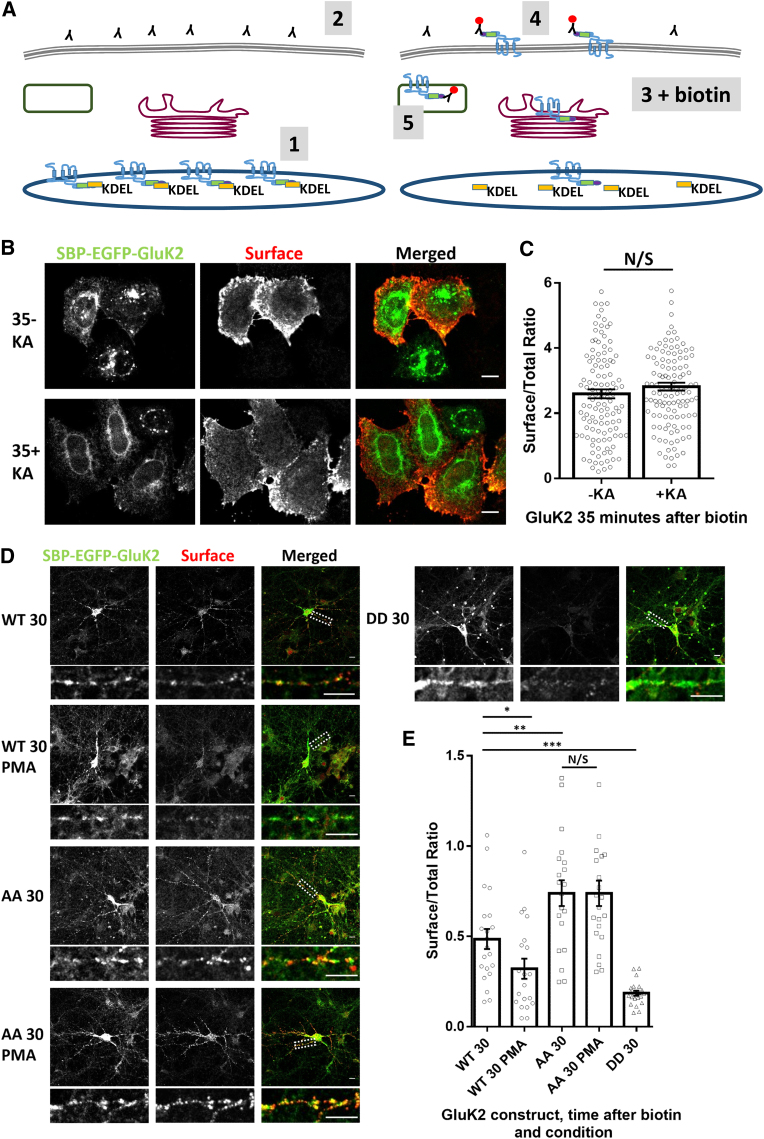
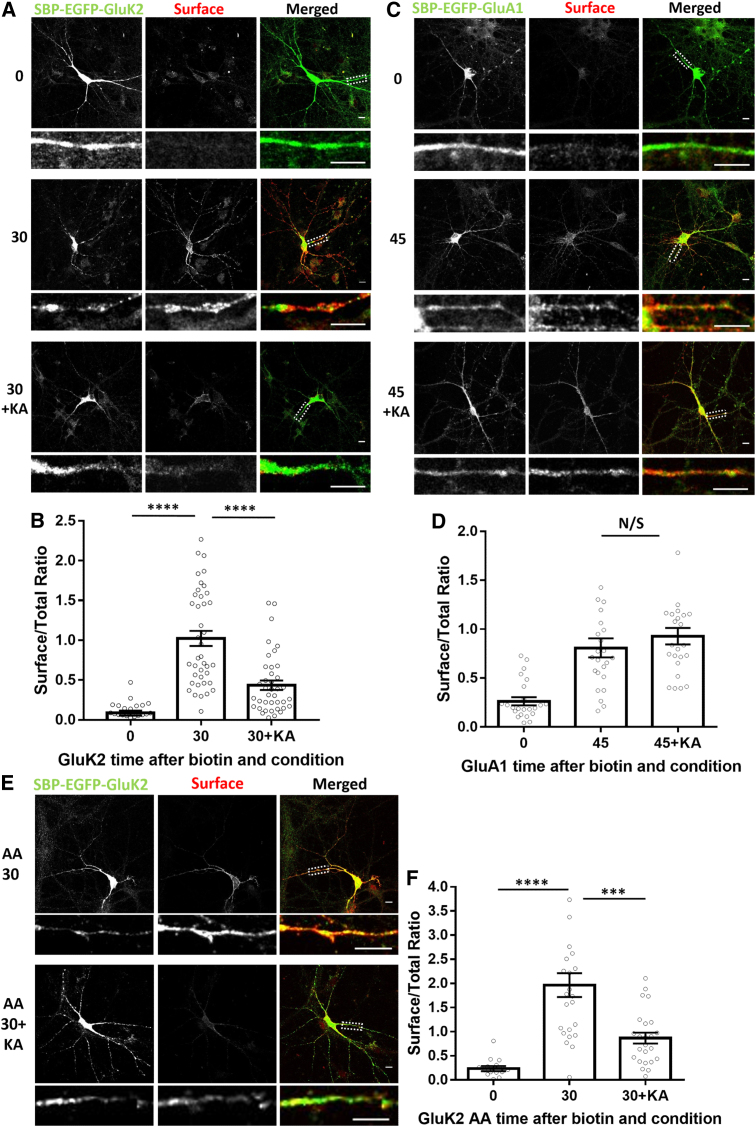
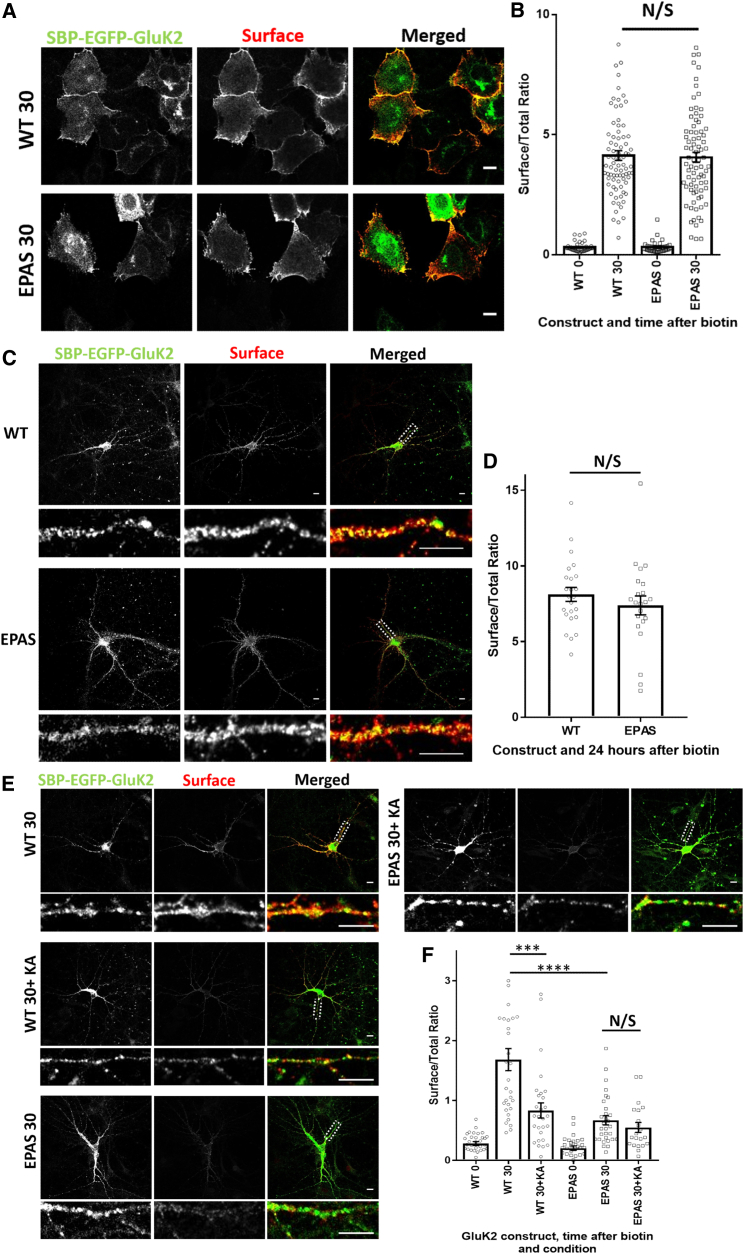
Ionotropic glutamate receptor (iGluR) trafficking and function underpin excitatory synaptic transmission and plasticity and shape neuronal networks. It is well established that the transcription, translation, and endocytosis/recycling of iGluRs are all regulated by neuronal activity, but much less is known about the activity dependence of iGluR transport through the secretory pathway. Here, we use the kainate receptor subunit GluK2 as a model iGluR cargo to show that the assembly, early secretory pathway trafficking, and surface delivery of iGluRs are all controlled by neuronal activity. We show that the delivery of de novo kainate receptors is differentially regulated by modulation of GluK2 Q/R editing, PKC phosphorylation, and PDZ ligand interactions. These findings reveal that, in addition to short-term regulation of iGluRs by recycling/endocytosis and long-term modulation by altered transcription/translation, the trafficking of iGluRs through the secretory pathway is under tight activity-dependent control to determine the numbers and properties of surface-expressed iGluRs.
离子型谷氨酸受体(iGluR)的转运与功能是兴奋性突触传递、可塑性以及神经元网络形成的基础。iGluRs的转录、翻译以及内吞作用/再循环均受神经元活动调控,这一点已得到充分证实,但对于iGluR通过分泌途径进行转运的活动依赖性却知之甚少。在此,我们以红藻氨酸受体亚基GluK2作为iGluR货物的模型,来表明iGluRs的组装、早期分泌途径转运以及表面递送均受神经元活动控制。我们发现,从头合成的红藻氨酸受体的递送受GluK2 Q/R编辑、PKC磷酸化以及PDZ配体相互作用的调节而存在差异。这些发现表明,除了通过再循环/内吞作用对iGluRs进行短期调控以及通过改变转录/翻译进行长期调节之外,iGluRs通过分泌途径的转运也受到严格的活动依赖性控制,以决定表面表达的iGluRs的数量和特性。