ARC Centre of Excellence for Translational Photosynthesis, Division of Plant Sciences, Research School of Biology, Australian National University, Canberra, ACT 2601, Australia.
J Exp Bot. 2017 Jun 1;68(14):3915-3924. doi: 10.1093/jxb/erx188.
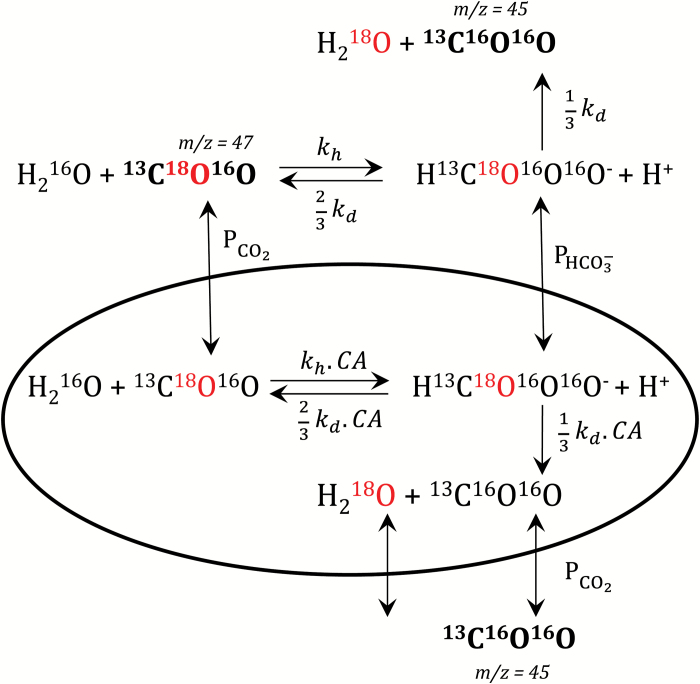
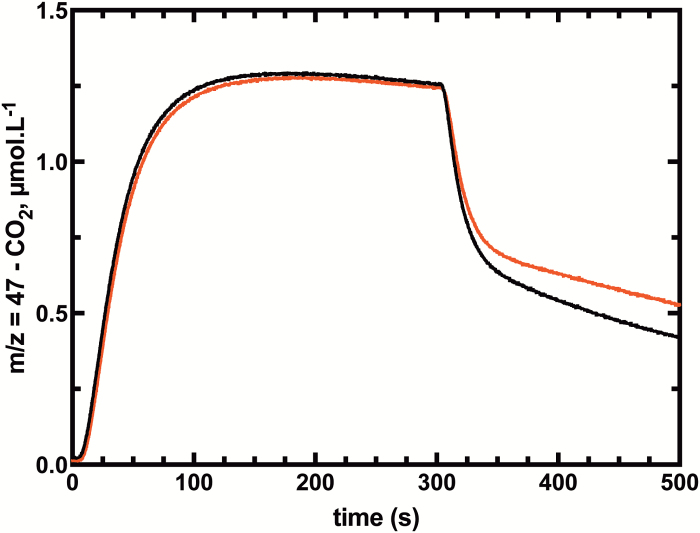
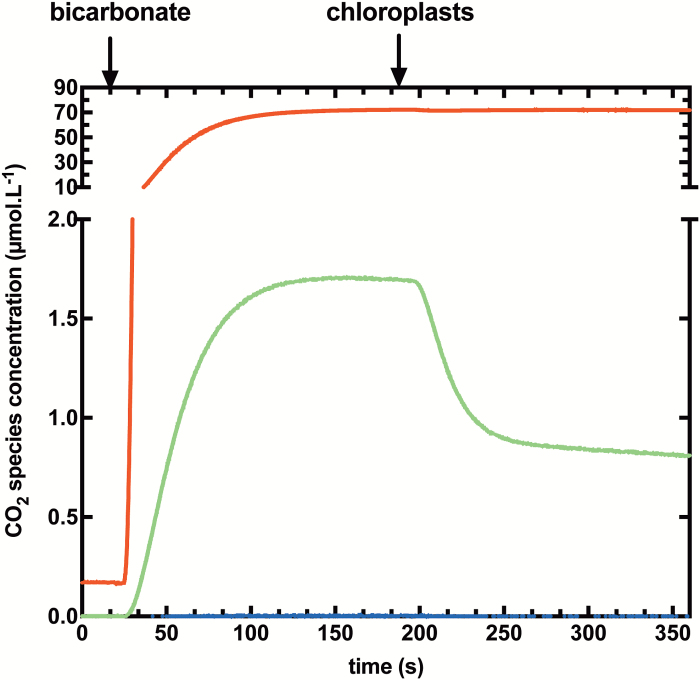
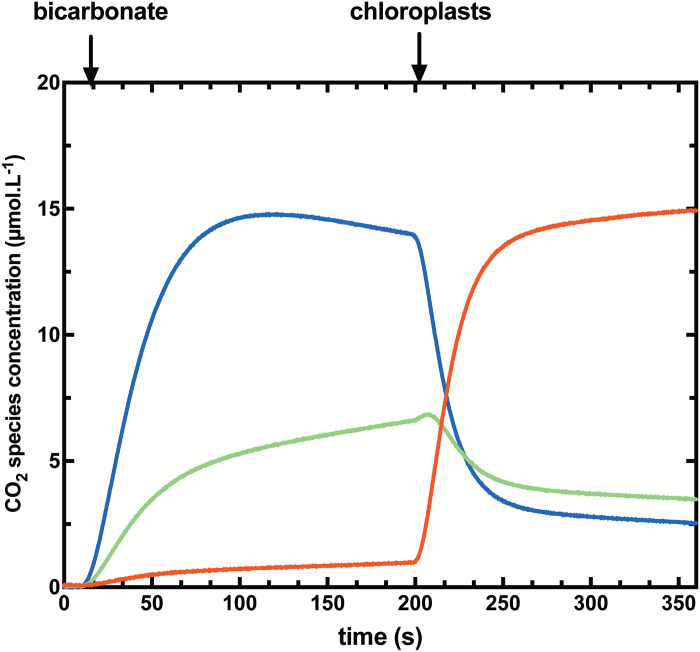
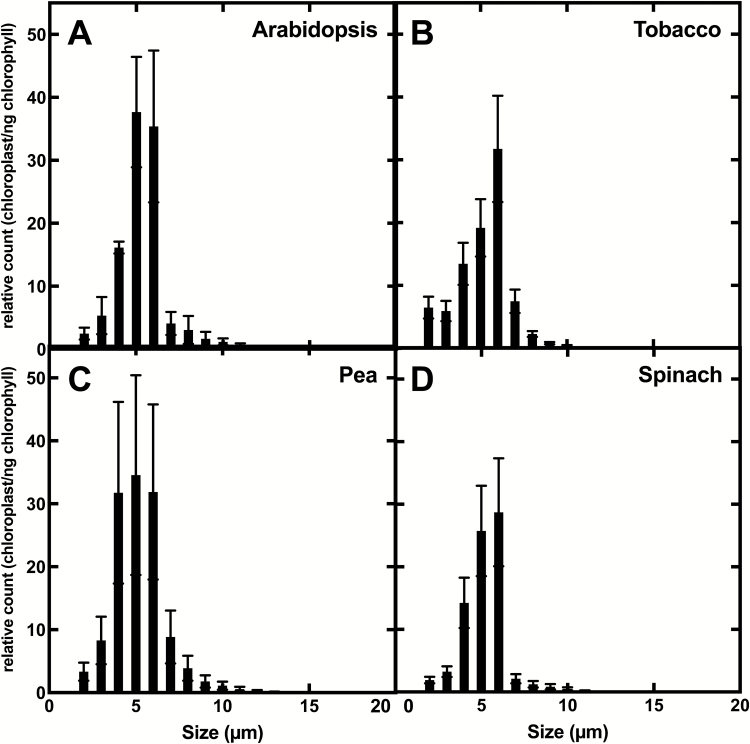
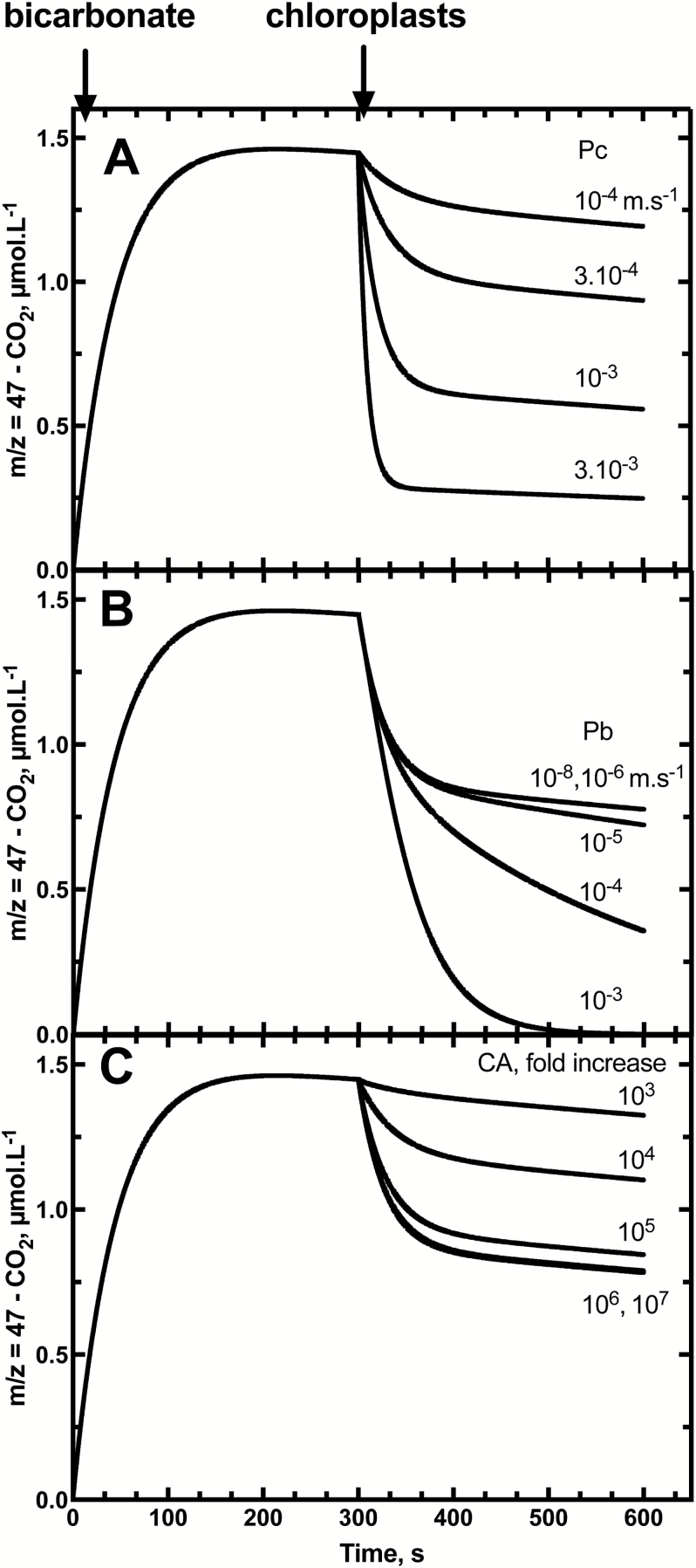
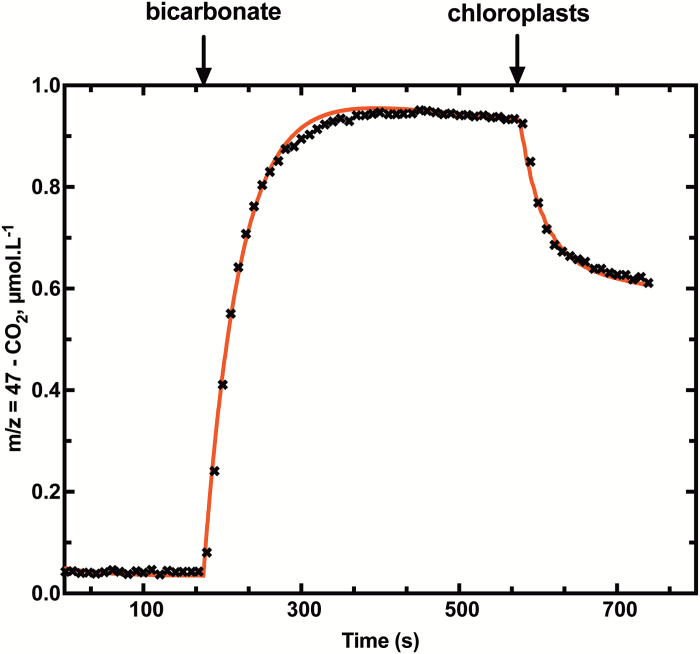
To support photosynthetic CO2 fixation by Rubisco, the chloroplast must be fed with inorganic carbon in the form of CO2 or bicarbonate. However, the mechanisms allowing the rapid passage of this gas and this charged molecule through the bounding membranes of the chloroplast envelope are not yet completely elucidated. We describe here a method allowing us to measure the permeability of these two molecules through the chloroplast envelope using a membrane inlet mass spectrometer and 18O-labelled inorganic carbon. We established that the internal stromal carbonic anhydrase activity is not limiting for this technique, and precisely measured the chloroplast surface area and permeability values for CO2 and bicarbonate. This was performed on chloroplasts from several plant species, with values ranging from 2.3 × 10⁻⁴ m s-1 to 8 × 10⁻⁴ m s-1 permeability for CO2 and 1 × 10⁻⁸ m s-1 for bicarbonate. We were able to apply our method to chloroplasts from an Arabidopsis aquaporin mutant, and this showed that CO2 permeability was reduced 50% in the mutant compared with the wild-type reference.
为了支持 Rubisco 的光合 CO2 固定,叶绿体必须以 CO2 或碳酸氢盐的形式提供无机碳。然而,允许这种气体和这种带电分子快速通过叶绿体包膜边界膜的机制尚未完全阐明。我们在这里描述了一种使用膜入口质谱仪和 18O 标记的无机碳来测量这两种分子通过叶绿体包膜的渗透性的方法。我们确定内部基质碳酸酐酶活性对该技术没有限制,并精确测量了 CO2 和碳酸氢盐的叶绿体表面积和渗透率值。这是在来自几种植物物种的叶绿体上进行的,CO2 的渗透率值范围从 2.3×10⁻⁴ m s-1 到 8×10⁻⁴ m s-1,而碳酸氢盐的渗透率值为 1×10⁻⁸ m s-1。我们能够将我们的方法应用于拟南芥 aquaporin 突变体的叶绿体,结果表明突变体中 CO2 的渗透率比野生型参考降低了 50%。