Erkes Annett, Reschke Maik, Boch Jens, Grau Jan
Institute of Computer Science, Martin Luther University Halle-Wittenberg, Halle (Saale), Germany.
Department of Plant Biotechnology, Leibniz Universität Hannover, Germany.
Genome Biol Evol. 2017 Jun 1;9(6):1599-1615. doi: 10.1093/gbe/evx108.
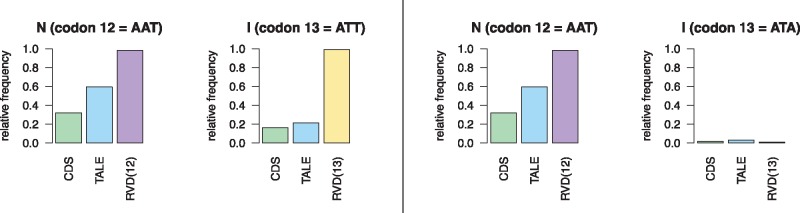
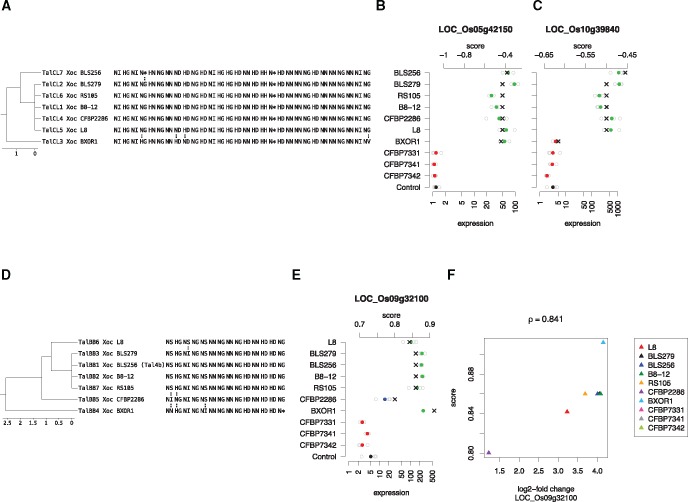
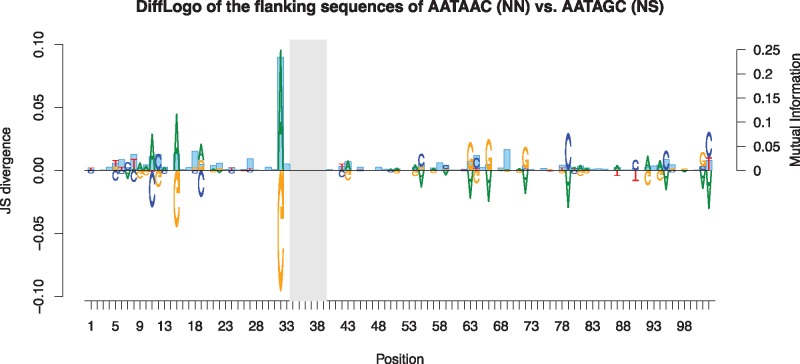
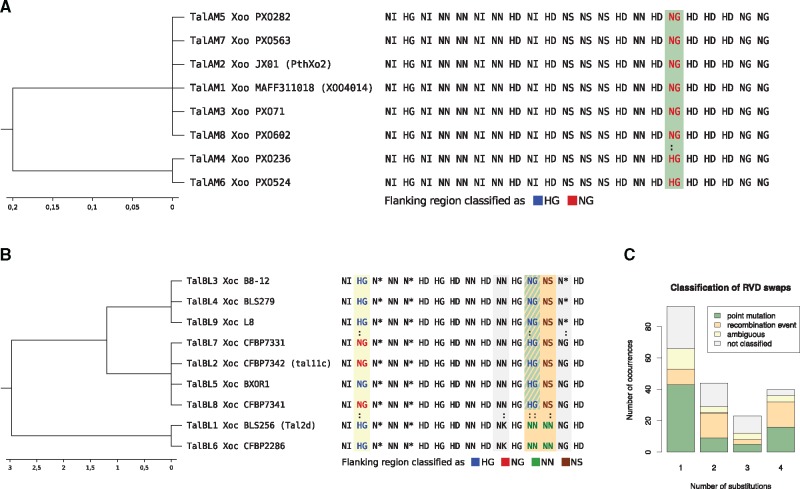
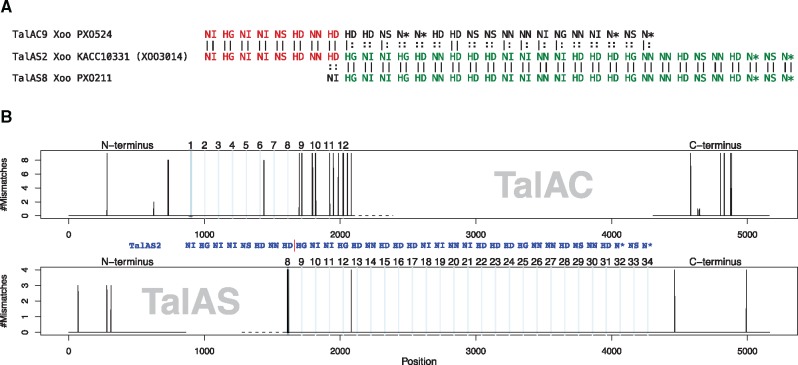
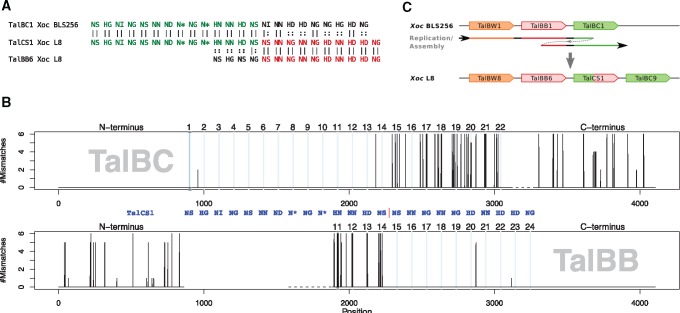
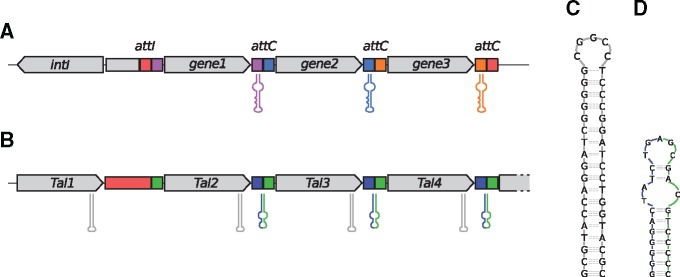
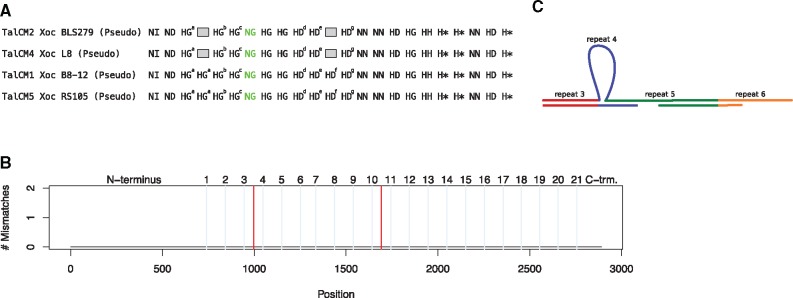
Transcription activator-like effectors (TALEs) are secreted by plant-pathogenic Xanthomonas bacteria into plant cells where they act as transcriptional activators and, hence, are major drivers in reprogramming the plant for the benefit of the pathogen. TALEs possess a highly repetitive DNA-binding domain of typically 34 amino acid (AA) tandem repeats, where AA 12 and 13, termed repeat variable di-residue (RVD), determine target specificity. Different Xanthomonas strains possess different repertoires of TALEs. Here, we study the evolution of TALEs from the level of RVDs determining target specificity down to the level of DNA sequence with focus on rice-pathogenic Xanthomonas oryzae pv. oryzae (Xoo) and Xanthomonas oryzae pv. oryzicola (Xoc) strains. We observe that codon pairs coding for individual RVDs are conserved to a similar degree as the flanking repeat sequence. We find strong indications that TALEs may evolve 1) by base substitutions in codon pairs coding for RVDs, 2) by recombination of N-terminal or C-terminal regions of existing TALEs, or 3) by deletion of individual TALE repeats, and we propose possible mechanisms. We find indications that the reassortment of TALE genes in clusters is mediated by an integron-like mechanism in Xoc. We finally study the effect of the presence/absence and evolutionary modifications of TALEs on transcriptional activation of putative target genes in rice, and find that even single RVD swaps may lead to considerable differences in activation. This correlation allowed a refined prediction of TALE targets, which is the crucial step to decipher their virulence activity.
转录激活样效应因子(TALEs)由植物致病黄单胞菌分泌到植物细胞中,在那里它们作为转录激活因子发挥作用,因此是使植物重编程以利于病原体的主要驱动因素。TALEs具有一个高度重复的DNA结合结构域,通常由34个氨基酸(AA)串联重复组成,其中第12和13位氨基酸,即重复可变双残基(RVD),决定了靶标特异性。不同的黄单胞菌菌株拥有不同的TALEs组合。在这里,我们从决定靶标特异性的RVD水平到DNA序列水平研究TALEs的进化,重点关注水稻致病稻黄单胞菌稻致病变种(Xoo)和稻黄单胞菌稻生致病变种(Xoc)菌株。我们观察到,编码单个RVD的密码子对与侧翼重复序列的保守程度相似。我们发现有力的迹象表明,TALEs可能通过以下方式进化:1)编码RVD的密码子对中的碱基替换;2)现有TALEs的N端或C端区域的重组;3)单个TALE重复序列的缺失,并且我们提出了可能的机制。我们发现有迹象表明,Xoc中TALE基因在簇中的重排是由一种类似整合子的机制介导的。我们最终研究了TALEs的存在/缺失和进化修饰对水稻中假定靶基因转录激活的影响,发现即使是单个RVD的交换也可能导致激活方面的显著差异。这种相关性使得对TALE靶标的预测更加精确,这是破译其毒力活性的关键步骤。