Wang Zhengduo, Zhang Li, Liu Zhongwei, Sang Lijun, Yang Lizhen, Chen Qiang
Laboratory of Plasma Physics and Materials, Beijing Institute of Graphic Communication, Beijing, 102600, China.
Beijing Institute of Fashion Technology, School of Materials Science and Engineering, Beijing, 100029, China.
Nanoscale Res Lett. 2017 Dec;12(1):421. doi: 10.1186/s11671-017-2162-1. Epub 2017 Jun 20.
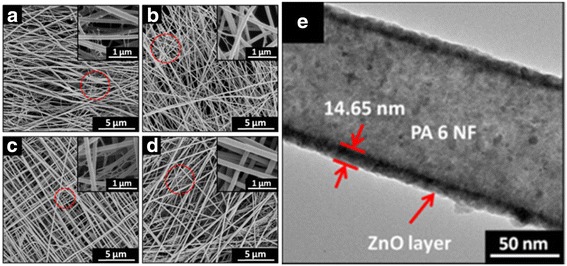
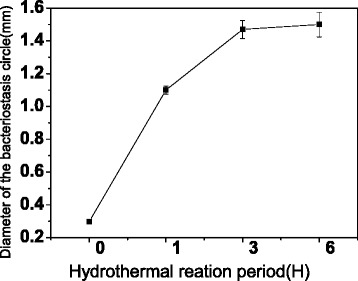
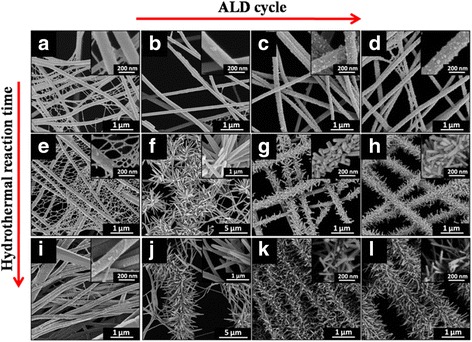
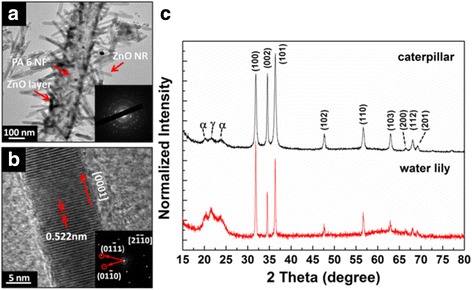
In this paper, we report the combination of atomic layer deposition (ALD) with hydrothermal techniques to deposit ZnO on electrospun polyamide 6 (PA 6) nanofiber (NF) surface in the purpose of antibacterial application. The micro- and nanostructures of the hierarchical fibers are characterized by field emission scanning electron microscopy (FE-SEM), high-resolution transmission electron microscopy (HRTEM), and scanning transmission electron microscopy (STEM). We find that NFs can grow into "water lily"- and "caterpillar"-like shapes, which depend on the number of ALD cycles and the hydrothermal reaction period. It is believed that the thickness of ZnO seed layer by ALD process and the period in hydrothermal reaction have the same importance in crystalline growth and hierarchical fiber formation. The tests of antibacterial activity demonstrate that the ZnO/PA 6 core-shell composite fabricated by the combination of ALD with hydrothermal are markedly efficient in suppressing bacteria survivorship.
在本文中,我们报道了将原子层沉积(ALD)与水热技术相结合,在电纺聚酰胺6(PA 6)纳米纤维(NF)表面沉积ZnO,以用于抗菌应用。通过场发射扫描电子显微镜(FE-SEM)、高分辨率透射电子显微镜(HRTEM)和扫描透射电子显微镜(STEM)对分级纤维的微观和纳米结构进行了表征。我们发现纳米纤维可以生长成“睡莲”状和“毛毛虫”状,这取决于ALD循环次数和水热反应时间。据信,ALD工艺制备的ZnO籽晶层厚度和水热反应时间在晶体生长和分级纤维形成中具有同等重要性。抗菌活性测试表明,通过ALD与水热相结合制备的ZnO/PA 6核壳复合材料在抑制细菌存活方面具有显著效果。