• 文献检索
  • 文档翻译
  • 深度研究
  • 学术资讯
  • Suppr Zotero 插件Zotero 插件
  • 邀请有礼
  • 套餐&价格
  • 历史记录
应用&插件
Suppr Zotero 插件Zotero 插件浏览器插件Mac 客户端Windows 客户端微信小程序
定价
高级版会员购买积分包购买API积分包
服务
文献检索文档翻译深度研究API 文档MCP 服务
关于我们
关于 Suppr公司介绍联系我们用户协议隐私条款
关注我们

Suppr 超能文献

核心技术专利:CN118964589B侵权必究
粤ICP备2023148730 号-1Suppr @ 2026

文献检索

告别复杂PubMed语法,用中文像聊天一样搜索,搜遍4000万医学文献。AI智能推荐,让科研检索更轻松。

立即免费搜索

文件翻译

保留排版,准确专业,支持PDF/Word/PPT等文件格式,支持 12+语言互译。

免费翻译文档

深度研究

AI帮你快速写综述,25分钟生成高质量综述,智能提取关键信息,辅助科研写作。

立即免费体验

走出非洲:巴西普通梅花雀(Estrilda astrild,林奈,1758年)(雀形目:梅花雀科)的螨类群落(蛛形纲:真螨目)

Out of Africa: the mite community (Arachnida: Acariformes) of the common waxbill, Estrilda astrild (Linnaeus, 1758) (Passeriformes: Estrildidae) in Brazil.

作者信息

Hernandes Fabio Akashi, OConnor Barry M

机构信息

Departamento de Zoologia, Universidade Estadual Paulista, Av. 24-A, 1515, Rio Claro, SP, 13506-900, Brazil.

Department of Ecology and Evolutionary Biology, Museum of Zoology, University of Michigan, Ann Arbor, MI, 48109-1079, USA.

出版信息

Parasit Vectors. 2017 Jun 21;10(1):299. doi: 10.1186/s13071-017-2230-5.

DOI:10.1186/s13071-017-2230-5
PMID:28637478
原文链接:https://pmc.ncbi.nlm.nih.gov/articles/PMC5480132/
Abstract

BACKGROUND

The common waxbill, Estrilda astrild (L., 1758) (Passeriformes: Estrildidae) is a small passerine bird native to Sub-Saharan Africa that has been introduced into several regions of the world.

RESULTS

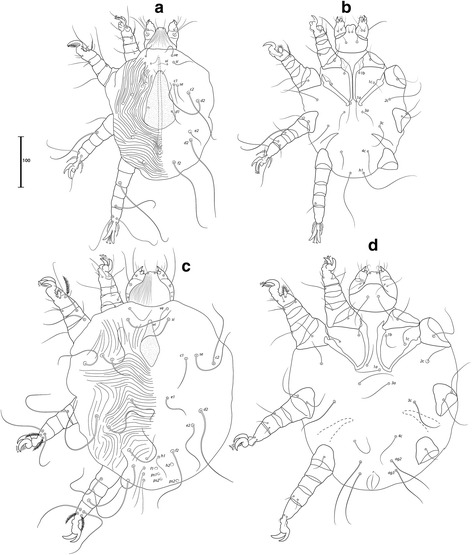
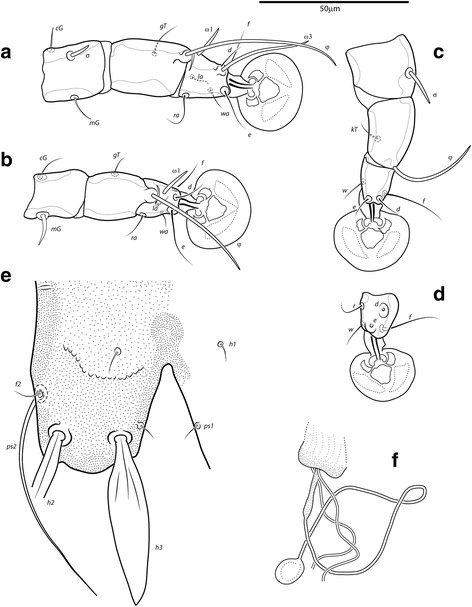
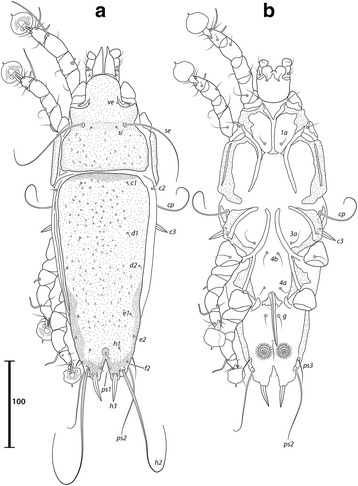
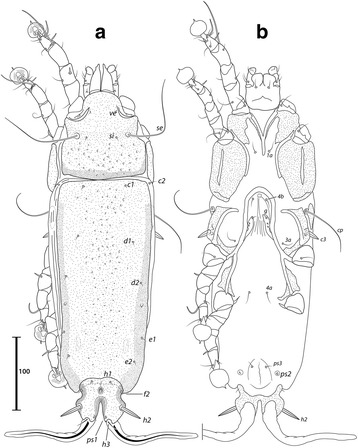
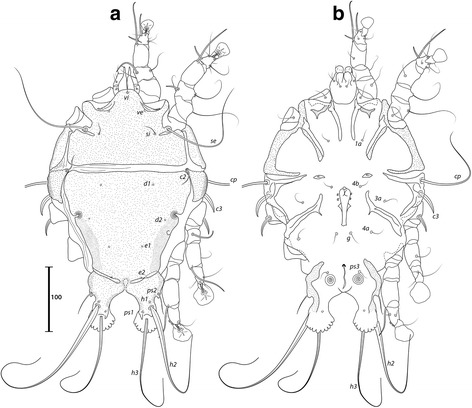
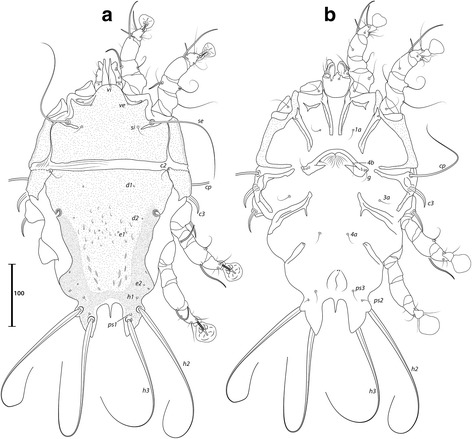
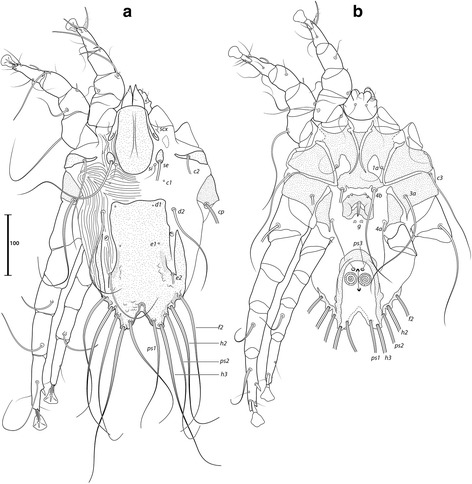
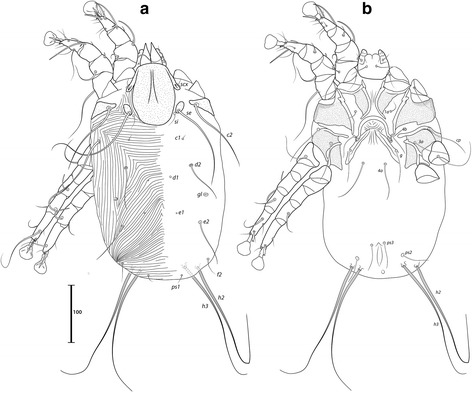
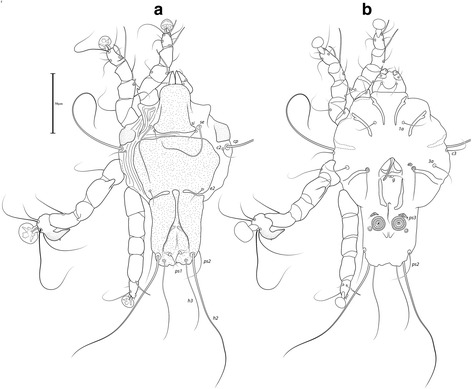
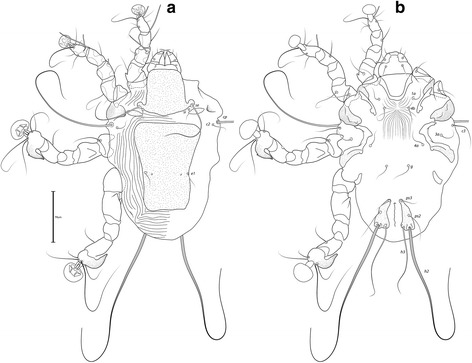
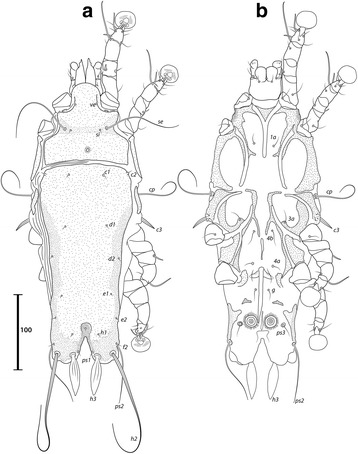
In the present paper, eight mite species (Acariformes) are reported from this host from Brazil, including three species new to science: Montesauria caravela n. sp., M. conquistador n. sp. (Proctophyllodidae), Trouessartia transatlantica n. sp., T. minuscula Gaud & Mouchet, 1958, T. estrildae Gaud & Mouchet, 1958 (Trouessartiidae), Onychalges pachyspathus Gaud, 1968 (Pyroglyphidae), Paddacoptes paddae (Fain, 1964) (Dermationidae) and Neocheyletiella megaphallos (Lawrence, 1959) (Cheyletidae). Comparative material from Africa was also studied.

CONCLUSIONS

These mites represent at least three morpho-ecological groups regarding their microhabitats occupied on the bird: (i) vane mites (Montesauria and Trouessartia on the large wing and tail feathers); (ii) down mites (Onychalges); and (iii) skin mites (Paddacoptes and Neocheyletiella). On one bird individual we found representatives of all eight mite species. Although the common waxbill was introduced to the Neotropical region almost two centuries ago, we demonstrate that it still retains its Old World acarofauna and has not yet acquired any representatives of typical Neotropical mite taxa.

摘要

背景

普通梅花雀(Estrilda astrild,林奈,1758年)(雀形目:梅花雀科)是一种原产于撒哈拉以南非洲的小型雀形目鸟类,已被引入世界多个地区。

结果

在本文中,报告了从巴西的这种宿主身上发现的8种螨类物种(真螨目),包括3个新物种:卡维拉蒙特螨(Montesauria caravela)新种、征服者蒙特螨(M. conquistador)新种(长角螨科)、跨大西洋特鲁螨(Trouessartia transatlantica)新种、微小特鲁螨(T. minuscula)(高和穆谢,1958年)、梅花雀特鲁螨(T. estrildae)(高和穆谢,1958年)(特鲁螨科)、厚跗甲螨(Onychalges pachyspathus)(高,1968年)(尘螨科)、帕氏帕达螨(Paddacoptes paddae)(费恩,1964年)(皮螨科)和巨阳新颚螯螨(Neocheyletiella megaphallos)(劳伦斯,1959年)(颚螯螨科)。还研究了来自非洲的比较材料。

结论

就它们在鸟类身上占据的微生境而言,这些螨类至少代表三个形态生态类群:(i)羽螨(大型翅羽和尾羽上的蒙特螨和特鲁螨);(ii)绒螨(甲螨);(iii)皮肤螨(帕达螨和新颚螯螨)。在一只鸟类个体上,我们发现了所有8种螨类的代表。尽管普通梅花雀在近两个世纪前就被引入了新热带地区,但我们证明它仍然保留着其东半球的螨类动物群,尚未获得任何典型新热带螨类分类群的代表。
https://cdn.ncbi.nlm.nih.gov/pmc/blobs/44dd/5480132/c406dcfcf9d7/13071_2017_2230_Fig17_HTML.jpg
https://cdn.ncbi.nlm.nih.gov/pmc/blobs/44dd/5480132/2830ee8fbe03/13071_2017_2230_Fig1_HTML.jpg
https://cdn.ncbi.nlm.nih.gov/pmc/blobs/44dd/5480132/7967b439696d/13071_2017_2230_Fig2_HTML.jpg
https://cdn.ncbi.nlm.nih.gov/pmc/blobs/44dd/5480132/a4ee6dfcde6a/13071_2017_2230_Fig3_HTML.jpg
https://cdn.ncbi.nlm.nih.gov/pmc/blobs/44dd/5480132/3e47b2c69c01/13071_2017_2230_Fig4_HTML.jpg
https://cdn.ncbi.nlm.nih.gov/pmc/blobs/44dd/5480132/9a880b44c16f/13071_2017_2230_Fig5_HTML.jpg
https://cdn.ncbi.nlm.nih.gov/pmc/blobs/44dd/5480132/283a476303f3/13071_2017_2230_Fig6_HTML.jpg
https://cdn.ncbi.nlm.nih.gov/pmc/blobs/44dd/5480132/9a8c6c15adc9/13071_2017_2230_Fig7_HTML.jpg
https://cdn.ncbi.nlm.nih.gov/pmc/blobs/44dd/5480132/2e62da2756e8/13071_2017_2230_Fig8_HTML.jpg
https://cdn.ncbi.nlm.nih.gov/pmc/blobs/44dd/5480132/364ab2c52be9/13071_2017_2230_Fig9_HTML.jpg
https://cdn.ncbi.nlm.nih.gov/pmc/blobs/44dd/5480132/a089154fde01/13071_2017_2230_Fig10_HTML.jpg
https://cdn.ncbi.nlm.nih.gov/pmc/blobs/44dd/5480132/6afb6fd83d53/13071_2017_2230_Fig11_HTML.jpg
https://cdn.ncbi.nlm.nih.gov/pmc/blobs/44dd/5480132/76b9463c6348/13071_2017_2230_Fig12_HTML.jpg
https://cdn.ncbi.nlm.nih.gov/pmc/blobs/44dd/5480132/742c3536fa01/13071_2017_2230_Fig13_HTML.jpg
https://cdn.ncbi.nlm.nih.gov/pmc/blobs/44dd/5480132/c35b886d593a/13071_2017_2230_Fig14_HTML.jpg
https://cdn.ncbi.nlm.nih.gov/pmc/blobs/44dd/5480132/4c1cd9b4f319/13071_2017_2230_Fig15_HTML.jpg
https://cdn.ncbi.nlm.nih.gov/pmc/blobs/44dd/5480132/1a7bb11d73ce/13071_2017_2230_Fig16_HTML.jpg
https://cdn.ncbi.nlm.nih.gov/pmc/blobs/44dd/5480132/c406dcfcf9d7/13071_2017_2230_Fig17_HTML.jpg
https://cdn.ncbi.nlm.nih.gov/pmc/blobs/44dd/5480132/2830ee8fbe03/13071_2017_2230_Fig1_HTML.jpg
https://cdn.ncbi.nlm.nih.gov/pmc/blobs/44dd/5480132/7967b439696d/13071_2017_2230_Fig2_HTML.jpg
https://cdn.ncbi.nlm.nih.gov/pmc/blobs/44dd/5480132/a4ee6dfcde6a/13071_2017_2230_Fig3_HTML.jpg
https://cdn.ncbi.nlm.nih.gov/pmc/blobs/44dd/5480132/3e47b2c69c01/13071_2017_2230_Fig4_HTML.jpg
https://cdn.ncbi.nlm.nih.gov/pmc/blobs/44dd/5480132/9a880b44c16f/13071_2017_2230_Fig5_HTML.jpg
https://cdn.ncbi.nlm.nih.gov/pmc/blobs/44dd/5480132/283a476303f3/13071_2017_2230_Fig6_HTML.jpg
https://cdn.ncbi.nlm.nih.gov/pmc/blobs/44dd/5480132/9a8c6c15adc9/13071_2017_2230_Fig7_HTML.jpg
https://cdn.ncbi.nlm.nih.gov/pmc/blobs/44dd/5480132/2e62da2756e8/13071_2017_2230_Fig8_HTML.jpg
https://cdn.ncbi.nlm.nih.gov/pmc/blobs/44dd/5480132/364ab2c52be9/13071_2017_2230_Fig9_HTML.jpg
https://cdn.ncbi.nlm.nih.gov/pmc/blobs/44dd/5480132/a089154fde01/13071_2017_2230_Fig10_HTML.jpg
https://cdn.ncbi.nlm.nih.gov/pmc/blobs/44dd/5480132/6afb6fd83d53/13071_2017_2230_Fig11_HTML.jpg
https://cdn.ncbi.nlm.nih.gov/pmc/blobs/44dd/5480132/76b9463c6348/13071_2017_2230_Fig12_HTML.jpg
https://cdn.ncbi.nlm.nih.gov/pmc/blobs/44dd/5480132/742c3536fa01/13071_2017_2230_Fig13_HTML.jpg
https://cdn.ncbi.nlm.nih.gov/pmc/blobs/44dd/5480132/c35b886d593a/13071_2017_2230_Fig14_HTML.jpg
https://cdn.ncbi.nlm.nih.gov/pmc/blobs/44dd/5480132/4c1cd9b4f319/13071_2017_2230_Fig15_HTML.jpg
https://cdn.ncbi.nlm.nih.gov/pmc/blobs/44dd/5480132/1a7bb11d73ce/13071_2017_2230_Fig16_HTML.jpg
https://cdn.ncbi.nlm.nih.gov/pmc/blobs/44dd/5480132/c406dcfcf9d7/13071_2017_2230_Fig17_HTML.jpg

相似文献

1
Out of Africa: the mite community (Arachnida: Acariformes) of the common waxbill, Estrilda astrild (Linnaeus, 1758) (Passeriformes: Estrildidae) in Brazil.走出非洲:巴西普通梅花雀(Estrilda astrild,林奈,1758年)(雀形目:梅花雀科)的螨类群落(蛛形纲:真螨目)
Parasit Vectors. 2017 Jun 21;10(1):299. doi: 10.1186/s13071-017-2230-5.
2
Revision of the subfamily Onychalginae Fain, 1988 (Acariformes: Pyroglyphidae)-ectoparasites of passerine birds.1988年法因氏甲螨亚科(真螨目:尘螨科)的修订——雀形目鸟类的体外寄生虫
Zootaxa. 2014 Apr 3;3785:175-200. doi: 10.11646/zootaxa.3785.2.3.
3
A new feather mite of the genus Trouessartia Canestrini 1899 (Acariformes: Trouessartiidae) from the Seychelles magpie-robin, Copsychus sechellarum (Passeriformes: Muscicapidae).来自塞舌尔鹊鸲(Copsychus sechellarum,雀形目:鹟科)的一种新的特鲁萨蒂亚螨属(Trouessartia Canestrini,1899)羽螨(真螨目:特鲁萨蒂亚螨科)。
Acta Parasitol. 2016 Sep 1;61(3):629-35. doi: 10.1515/ap-2016-0084.
4
Two new species of the feather mite family Gabuciniidae (Acariformes: Pterolichoidea) from wrens (Passeriformes: Troglodytidae).来自鹪鹩(雀形目:鹪鹩科)的羽螨科(真螨目:翼羽螨总科)两个新物种。
Acta Parasitol. 2014 Oct;59(4):568-79. doi: 10.2478/s11686-014-0287-2. Epub 2014 Sep 20.
5
Feather mites of the genus Passeroptes Fain (Acariformes: Dermationidae) from passerines (Aves: Passeriformes) of China.来自中国雀形目鸟类(雀形目:鸟纲)的法因氏雀羽螨属(蜱螨亚纲:皮螨科)羽螨
Zootaxa. 2015 Jul 9;3985(1):53-68. doi: 10.11646/zootaxa.3985.1.3.
6
Three new feather mite species (Acariformes: Proctophyllodidae, Trouessartiidae) from tyrant flycatchers (Passeriformes: Tyrannidae) in Brazil.巴西霸鹟(雀形目:霸鹟科)中的三种新羽螨物种(蜱螨目:Proctophyllodidae,Trouessartiidae)。
Syst Parasitol. 2022 Apr;99(2):115-138. doi: 10.1007/s11230-021-10018-0. Epub 2022 Jan 17.
7
Five new feather mites of the subfamily Pterodectinae (Acariformes: Astigmata: Proctophyllodidae) from passerines and hummingbirds (Aves) of Brazil.来自巴西雀形目鸟类和蜂鸟(鸟纲)的翼螨亚科(真螨目:粉螨亚目:长喙螨科)的五种新羽螨
Zootaxa. 2016 Sep 6;4161(3):301-28. doi: 10.11646/zootaxa.4161.3.1.
8
Feather mites of the genus Proterothrix Gaud (Astigmata: Proctophyllodidae) from parrotbills (Passeriformes: Paradoxornithidae) in China.中国长尾山雀(雀形目:长尾山雀科)体内的原羽螨属(Proterothrix Gaud)羽螨(粉螨亚目:长角羽螨科)
J Parasitol. 2009 Oct;95(5):1093-107. doi: 10.1645/GE-1961.1. Epub 2009 Mar 12.
9
The feather mites of nightjars (Aves: Caprimulgidae), with descriptions of two new species from Brazil (Acari: Xolalgidae, Gabuciniidae).夜鹰的羽螨(鸟类:夜鹰科),并描述来自巴西的两个新物种(蜱螨亚纲:索拉螨科、加布螨科)
Folia Parasitol (Praha). 2014 Apr;61(2):173-81.
10
Two new species of the feather mite genus Analloptes (Trouessart, 1885) Acariformes: Astigmata: Xolalgidae) from passerines (Aves: Passeriformes) in Brazil.来自巴西雀形目(鸟纲:雀形目)鸟类的羽螨属(Trouessart,1885年)的两个新物种(蜱螨亚纲:无气门目:Xolalgidae科)。
Zootaxa. 2014 Dec 2;3889(4):589-600. doi: 10.11646/zootaxa.3889.4.6.

引用本文的文献

1
A new feather mite species of the genus Canestrini, 1899 (Acarina, Trouessartiidae) - an integrative description (morphology and DNA barcoding data).1899年卡内斯特里尼属(蜱螨亚纲,特鲁萨尔蒂螨科)一新羽螨物种——综合描述(形态学与DNA条形码数据)
Zookeys. 2018 Oct 10(789):19-35. doi: 10.3897/zookeys.789.27829. eCollection 2018.
2
Two new species of Trouessartia Canestrini, 1899 (Astigmata: Trouessartiidae) from passeriform birds in Brazil.来自巴西雀形目鸟类的曲跗螨属(Trouessartia)的两个新物种,1899年(粉螨目:曲跗螨科)
Syst Parasitol. 2017 Nov;94(9):1019-1032. doi: 10.1007/s11230-017-9755-z. Epub 2017 Oct 11.

本文引用的文献

1
Two new species of Trouessartia Canestrini, 1899 (Astigmata: Trouessartiidae) from passeriform birds in Brazil.来自巴西雀形目鸟类的曲跗螨属(Trouessartia)的两个新物种,1899年(粉螨目:曲跗螨科)
Syst Parasitol. 2017 Nov;94(9):1019-1032. doi: 10.1007/s11230-017-9755-z. Epub 2017 Oct 11.
2
Two new species of the feather mite genus Trouessartia (Acari: Trouessartiidae) from Asia.来自亚洲的羽螨属(蜱螨亚纲:特鲁萨尔蒂螨科)的两个新物种。
Zootaxa. 2016 Jul 12;4137(3):357-74. doi: 10.11646/zootaxa.4137.3.4.
3
A new feather mite of the genus Trouessartia Canestrini 1899 (Acariformes: Trouessartiidae) from the Seychelles magpie-robin, Copsychus sechellarum (Passeriformes: Muscicapidae).
来自塞舌尔鹊鸲(Copsychus sechellarum,雀形目:鹟科)的一种新的特鲁萨蒂亚螨属(Trouessartia Canestrini,1899)羽螨(真螨目:特鲁萨蒂亚螨科)。
Acta Parasitol. 2016 Sep 1;61(3):629-35. doi: 10.1515/ap-2016-0084.
4
Two new species of the genus Trouessartia (Acari, Trouessartiidae) from laughingthrushes (Passeriformes, Leiothrichidae).来自噪鹛(雀形目,噪鹛科)的Trouessartia属(蜱螨亚纲,Trouessartiidae科)的两个新物种。
Zookeys. 2016 Mar 7(571):59-79. doi: 10.3897/zookeys.571.7724. eCollection 2016.
5
Key to Species of the Genus Neocheyletiella (Acariformes: Cheyletidae), With Description of a New Species.新栉齿螨属(真螨目:栉齿螨科)物种检索表及一新物种描述
J Med Entomol. 2014 Nov 1;51(6):1116-21. doi: 10.1603/ME14002.
6
Epidemiology of Megninia spp. in laying flocks from the State of Minas Gerais, Brazil.
Rev Bras Parasitol Vet. 2015 Apr-Jun;24(2):198-203. doi: 10.1590/S1984-29612015027.
7
Five new species of the feather mite genus Trouessartia Canestrini from South America (Acari: Trouessartiidae).来自南美洲的羽螨属特鲁萨尔蒂亚螨(Acari: Trouessartiidae)的五个新物种。
Zootaxa. 2014 Aug 21;3856(1):50-72. doi: 10.11646/zootaxa.3856.1.2.
8
From cuckoos to chickens: a caught-in-the-act case of host shift in feather mites (Arachnida: Acari: Psoroptoididae).从杜鹃到鸡:羽螨(蛛形纲:蜱螨亚纲:禽螨科)宿主转移的一个当场捕获的案例。
Parasitol Res. 2014 Dec;113(12):4355-61. doi: 10.1007/s00436-014-4110-7. Epub 2014 Sep 4.
9
Revision of the subfamily Onychalginae Fain, 1988 (Acariformes: Pyroglyphidae)-ectoparasites of passerine birds.1988年法因氏甲螨亚科(真螨目:尘螨科)的修订——雀形目鸟类的体外寄生虫
Zootaxa. 2014 Apr 3;3785:175-200. doi: 10.11646/zootaxa.3785.2.3.
10
Amendment of Articles 8, 9, 10, 21 and 78 of the International Code of Zoological Nomenclature to expand and refine methods of publication.修订《国际动物命名法规》第8、9、10、21和78条,以扩展和完善发表方法。
Zookeys. 2012(219):1-10. doi: 10.3897/zookeys.219.3994. Epub 2012 Sep 4.