ESRF- The European Synchrotron, F-38043, Grenoble, France.
Institut Lumière Matière, UMR5306 Université Lyon 1-CNRS, Université de Lyon, 69622, Villeurbanne Cedex, France.
Sci Rep. 2017 Jun 21;7(1):3962. doi: 10.1038/s41598-017-04271-x.
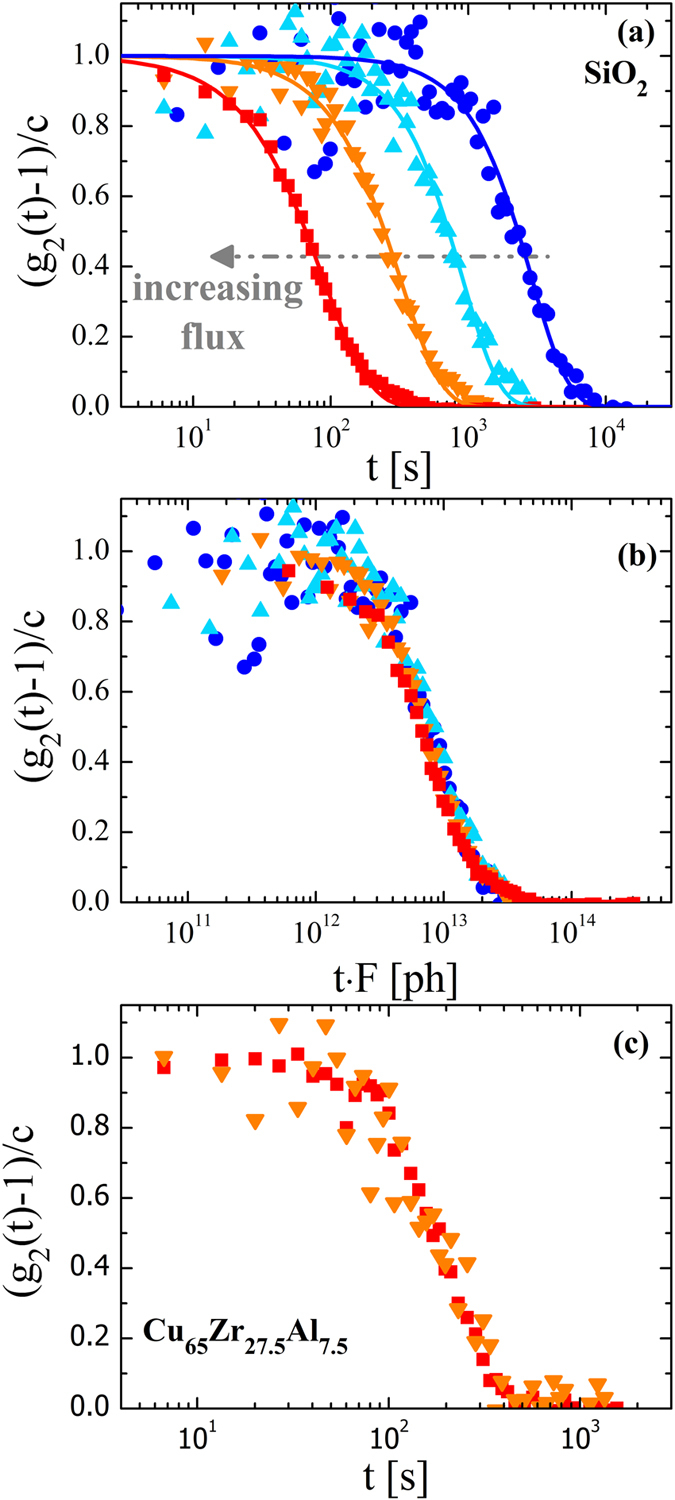
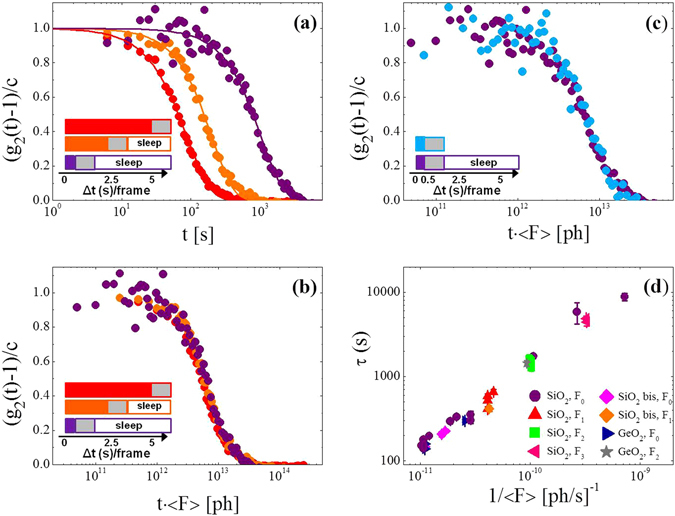
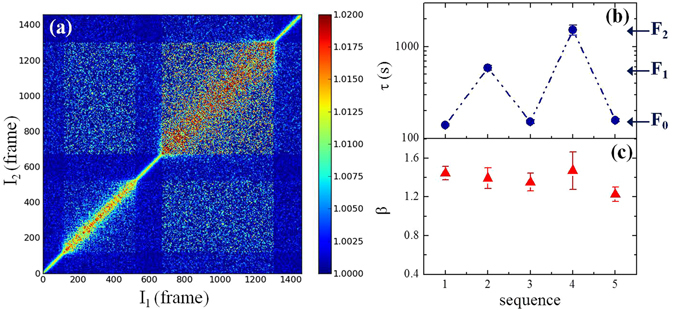
Nowadays powerful X-ray sources like synchrotrons and free-electron lasers are considered as ultimate tools for probing microscopic properties in materials. However, the correct interpretation of such experiments requires a good understanding on how the beam affects the properties of the sample, knowledge that is currently lacking for intense X-rays. Here we use X-ray photon correlation spectroscopy to probe static and dynamic properties of oxide and metallic glasses. We find that although the structure does not depend on the flux, strong fluxes do induce a non-trivial microscopic motion in oxide glasses, whereas no such dependence is found for metallic glasses. These results show that high fluxes can alter dynamical properties in hard materials, an effect that needs to be considered in the analysis of X-ray data but which also gives novel possibilities to study materials properties since the beam can not only be used to probe the dynamics but also to pump it.
如今,同步加速器和自由电子激光器等强大的 X 射线源被认为是探测材料微观性质的终极工具。然而,要正确解释此类实验,需要很好地理解光束如何影响样品的性质,而目前对于高强度 X 射线来说,这方面的知识还很欠缺。在这里,我们使用 X 射线光子相关光谱法来探测氧化物和金属玻璃的静态和动态性质。我们发现,尽管结构不依赖于通量,但强通量确实会在氧化物玻璃中引起非平凡的微观运动,而对于金属玻璃则没有这种依赖性。这些结果表明,高通量可以改变硬材料的动力学性质,这一效应在分析 X 射线数据时需要考虑,但也为研究材料性质提供了新的可能性,因为光束不仅可以用来探测动力学,还可以用来激发它。