Key Laboratory of Cotton Breeding and Cultivation in Huang-Huai-Hai Plain, Ministry of Agriculture, Cotton Research Center of Shandong Academy of Agricultural Sciences, Jinan, 250100, P. R. China.
Key Laboratory of Plant Stress Research, College of Life Sciences, Shandong Normal University, Jinan, 250014, P. R. China.
Sci Rep. 2017 Jun 21;7(1):3940. doi: 10.1038/s41598-017-04213-7.
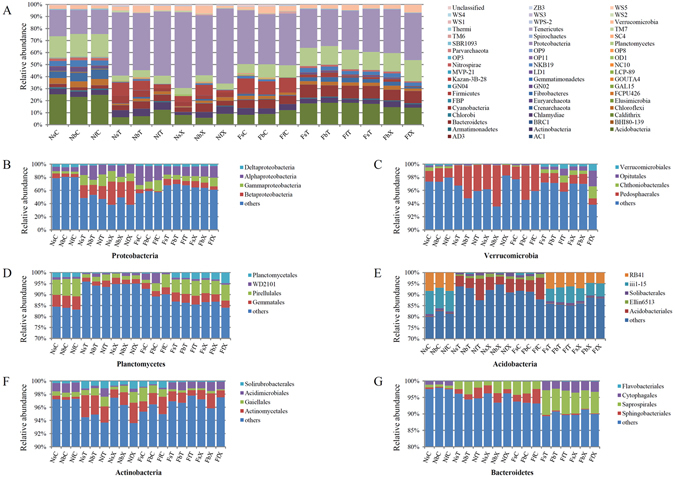
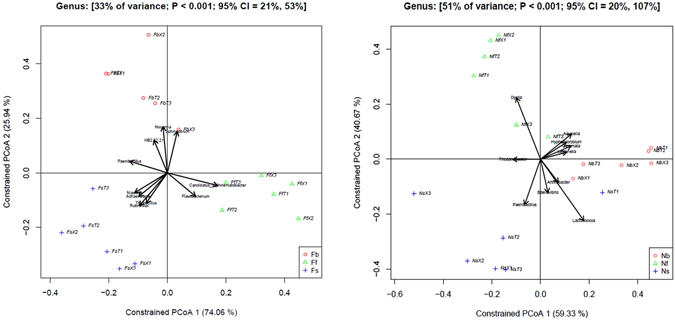
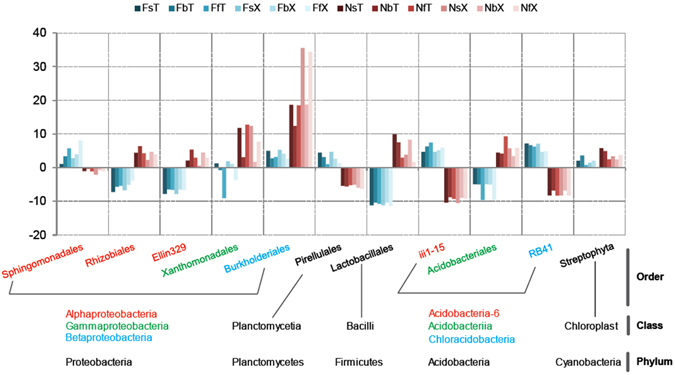
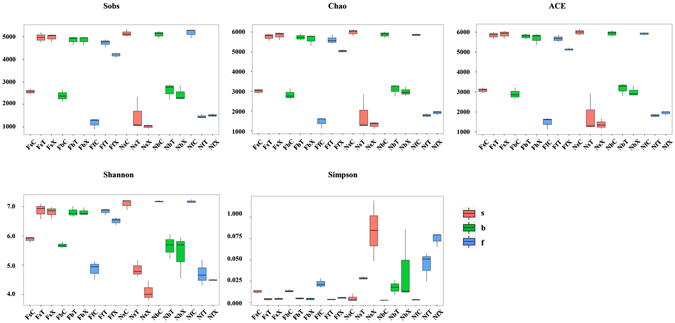
Plant roots and soil microorganisms interact with each other mainly in the rhizosphere. Changes in the community structure of the rhizosphere microbiome are influenced by many factors. In this study, we determined the community structure of rhizosphere bacteria in cotton, and studied the variation of rhizosphere bacterial community structure in different soil types and developmental stages using TM-1, an upland cotton cultivar (Gossypium hirsutum L.) and Hai 7124, a sea island cotton cultivar (G. barbadense L.) by high-throughput sequencing technology. Six bacterial phyla were found dominantly in cotton rhizosphere bacterial community including Acidobacteria, Actinobacteria, Bacteroidetes, Planctomycetes, Proteobacteria, and Verrucomicrobia. The abundance of Acidobacteria, Cyanobacteria, Firmicutes, Planctomycetes and Proteobacteria were largely influenced by cotton root. Bacterial α-diversity in rhizosphere was lower than that of bulk soil in nutrient-rich soil, but higher in cotton continuous cropping field soil. The β-diversity in nutrient-rich soil was greater than that in continuous cropping field soil. The community structure of the rhizosphere bacteria varied significantly during different developmental stages. Our results provided insights into the dynamics of cotton rhizosphere bacterial community and would facilitate to improve cotton growth and development through adjusting soil bacterial community structure artificially.
植物根系和土壤微生物主要在根际相互作用。根际微生物群落的结构变化受许多因素的影响。本研究采用高通量测序技术,测定了棉花根际细菌的群落结构,研究了不同土壤类型和发育阶段棉花根际细菌群落结构的变化。选用陆地棉品种 TM-1(Gossypium hirsutum L.)和海岛棉品种海 7124 作为研究材料,发现棉花根际细菌群落主要由 6 个细菌门组成,包括 Acidobacteria、Actinobacteria、Bacteroidetes、Planctomycetes、Proteobacteria 和 Verrucomicrobia。根际细菌群落的丰度受棉花根系的影响较大,其中 Acidobacteria、Cyanobacteria、Firmicutes、Planctomycetes 和 Proteobacteria 的丰度受棉花根系的影响较大。在养分丰富的土壤中,根际细菌的α多样性低于土壤,而在棉花连作土壤中则较高。养分丰富土壤的β多样性大于连作土壤。根际细菌群落结构在不同发育阶段变化显著。本研究结果为棉花根际细菌群落的动态变化提供了新的认识,有助于通过人工调节土壤细菌群落结构来促进棉花的生长和发育。