Claudio-Campos Karla, Labastida Aurora, Ramos Alga, Gaedigk Andrea, Renta-Torres Jessicca, Padilla Dariana, Rivera-Miranda Giselle, Scott Stuart A, Ruaño Gualberto, Cadilla Carmen L, Duconge-Soler Jorge
Department of Pharmacology and Toxicology, School of Medicine, University of Puerto RicoSan Juan, PR, United States.
Independent Researcher, Primera Cerrada de Camino al Amalillo 4Mexico City, Mexico.
Front Pharmacol. 2017 Jun 7;8:347. doi: 10.3389/fphar.2017.00347. eCollection 2017.
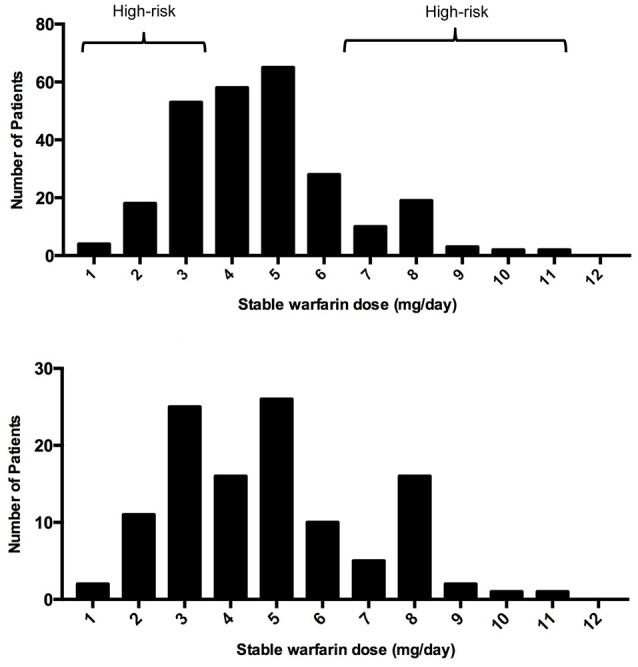
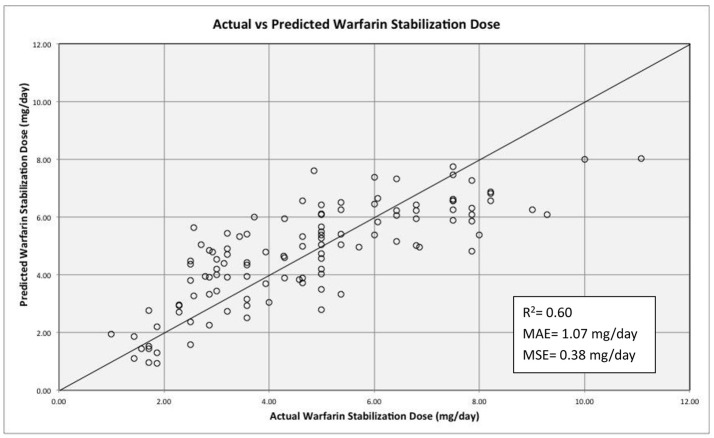
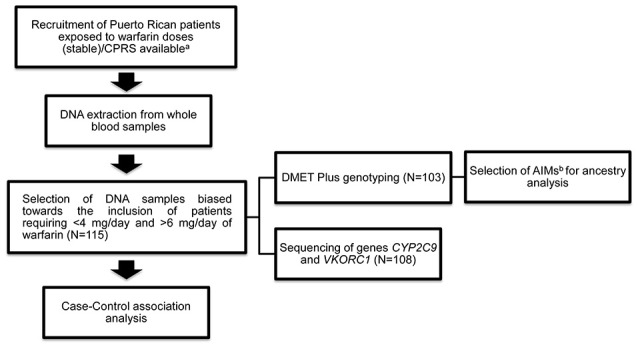
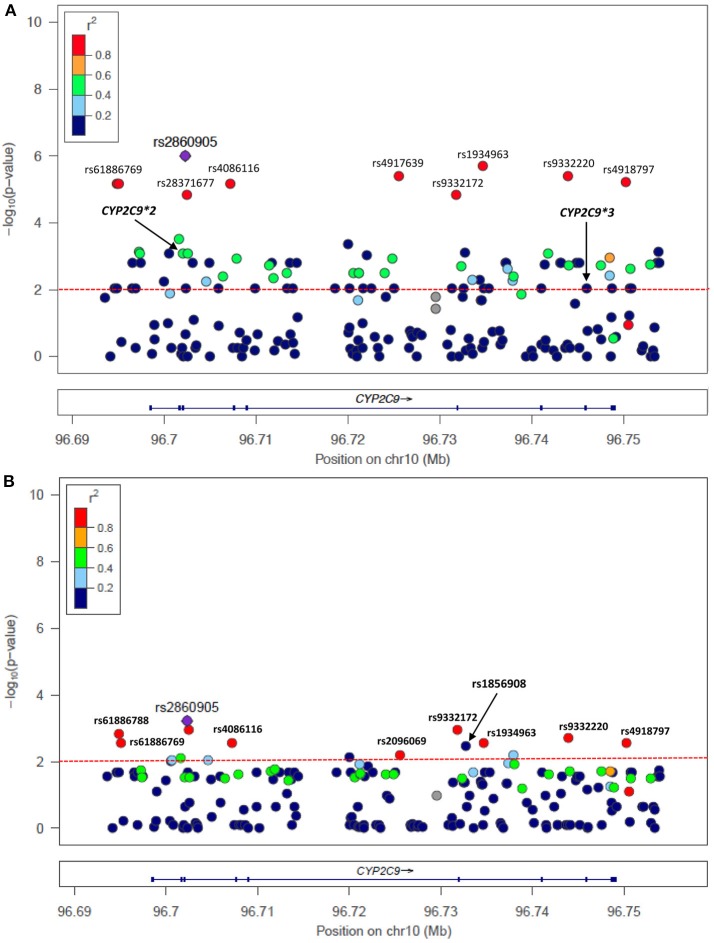
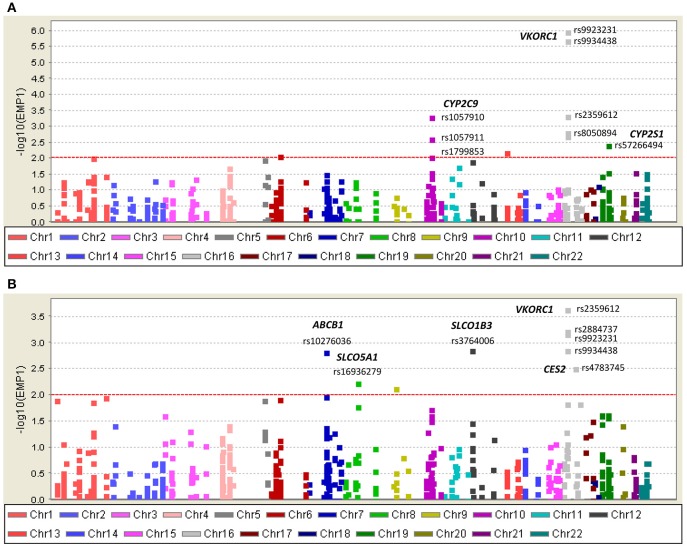
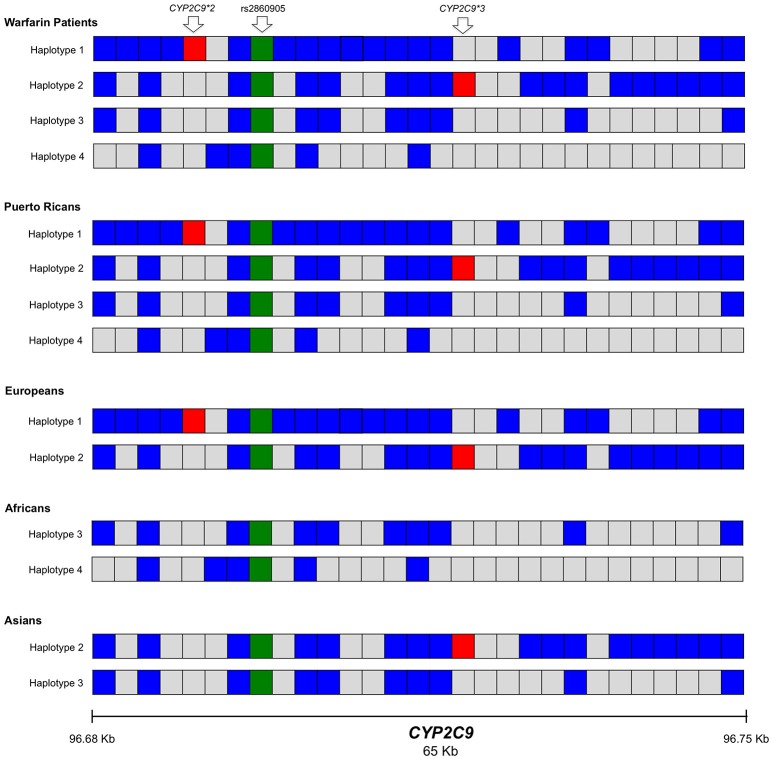
Existing algorithms account for ~50% of observed variance in warfarin dose requirements after including common polymorphisms. However, they do not perform as well in populations other than Caucasians, in part because some ethno-specific genetic variants are overlooked. The objective of the present study was to identify genetic polymorphisms that can explain variability in warfarin dose requirements among Caribbean Hispanics of Puerto Rico. Next-Generation Sequencing of candidate genes and and genotyping by DMET® Plus Assay of cardiovascular patients were performed. We also aimed at characterizing the genomic structure and admixture pattern of this study cohort. Our study used the Extreme Discordant Phenotype approach to perform a case-control association analysis. The variant rs2860905, which was found in all the major haplotypes occurring in the Puerto Rican population, showed stronger association with warfarin sensitivity (<4 mg/day) than common variants and . Although, and are separately contained within two of the haplotypes, 10 subjects with the sensitive phenotype were carriers of only the rs2860905 variant. Other polymorphisms in and were found to be associated with warfarin resistance. Incorporation of rs in a regression model ( = 0.63, MSE = 0.37) that also includes additional genetics (i.e., -1639 G>A; rs1856908; c.IVS9-44A>G/ rs10276036; c.269-965A>G/ rs4783745) and non-genetic factors (i.e., hypertension, diabetes and age) showed better prediction of warfarin dose requirements than and combined (partial = 0.132 vs. 0.023 and 0.007, respectively, < 0.001). The genetic background of Puerto Ricans in the study cohort showed a tri-hybrid admixture pattern, with a slightly higher than expected contribution of Native American ancestry (25%). The genomic diversity of Puerto Ricans is highlighted by the presence of four different major haplotype blocks in the locus. Although, our findings need further replication, this study contributes to the field by identifying novel genetic variants that increase predictability of stable warfarin dosing among Caribbean Hispanics.
现有算法在纳入常见多态性后,可解释华法林剂量需求中约50%的观察到的变异。然而,它们在非白种人群体中的表现不佳,部分原因是一些特定种族的基因变异被忽视。本研究的目的是确定能够解释波多黎各加勒比西班牙裔人群中华法林剂量需求变异性的基因多态性。对候选基因进行了下一代测序,并对心血管疾病患者采用DMET® Plus检测法进行基因分型。我们还旨在描述本研究队列的基因组结构和混合模式。我们的研究采用极端不一致表型方法进行病例对照关联分析。在波多黎各人群中出现的所有主要单倍型中均发现的rs2860905变异,与华法林敏感性(<4毫克/天)的关联比常见变异和更强。虽然和分别包含在两个单倍型中,但10名具有敏感表型的受试者仅为rs2860905变异的携带者。和中的其他多态性被发现与华法林抵抗有关。将rs纳入一个回归模型(=0.63,均方误差=0.37),该模型还包括其他遗传学因素(即-1639 G>A;rs1856908;c.IVS9-44A>G/rs10276036;c.269-965A>G/rs4783745)和非遗传因素(即高血压、糖尿病和年龄),与和联合使用相比,对华法林剂量需求的预测更好(偏=0.132,而分别为0.023和0.007,<0.001)。研究队列中波多黎各人的遗传背景显示出三杂交混合模式,美洲原住民血统的贡献略高于预期(25%)。位点中存在四个不同的主要单倍型块突出了波多黎各人的基因组多样性。虽然我们的发现需要进一步验证,但本研究通过识别新的基因变异为该领域做出了贡献,这些变异增加了加勒比西班牙裔人群中稳定华法林给药的可预测性。