Department of Research Hackensack University Medical Center Hackensack NJ USA.
Department of Neurosurgery Icahn School of Medicine at Mount Sinai New York NY USA.
Brain Behav. 2017 May 3;7(6):e00668. doi: 10.1002/brb3.668. eCollection 2017 Jun.
Motor endplate reinnervation is critical for restoring motor function of the denervated muscle. We developed a novel surgical technique called nerve-muscle-endplate band grafting (NMEG) for muscle reinnervation.
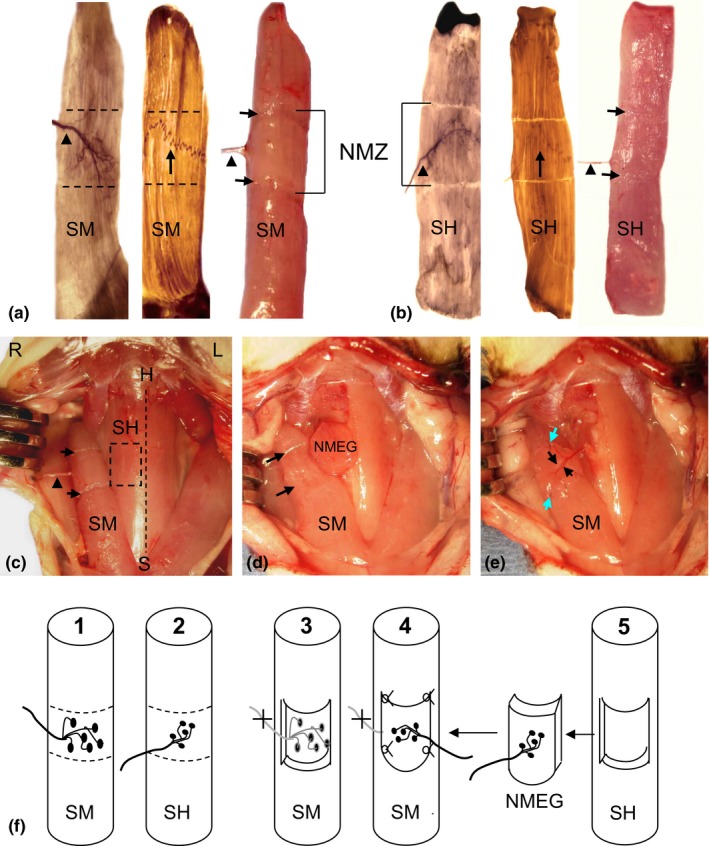
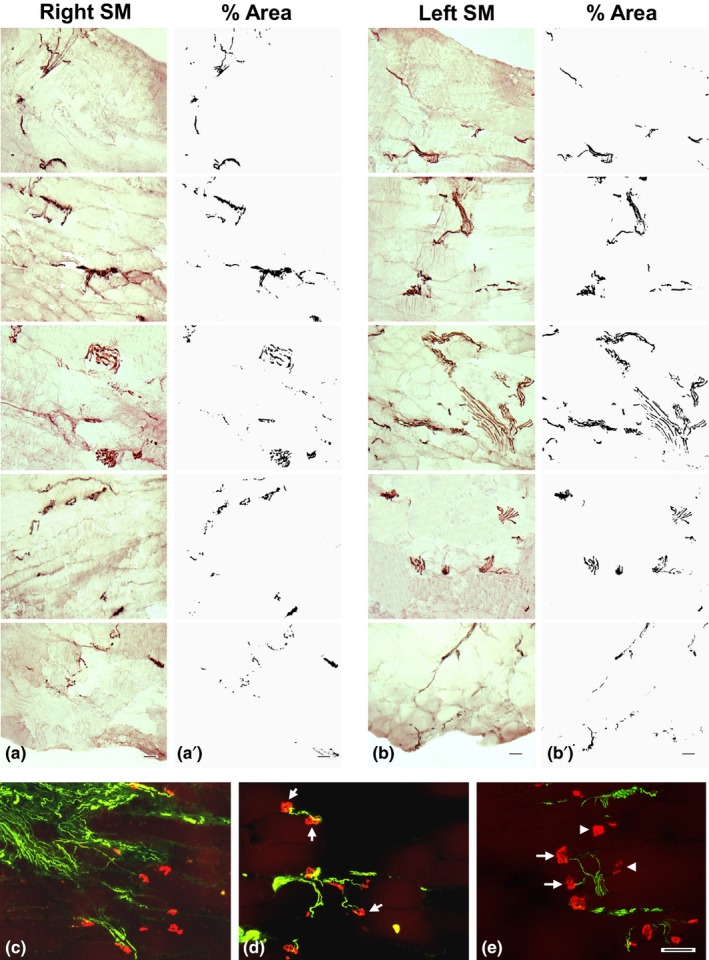
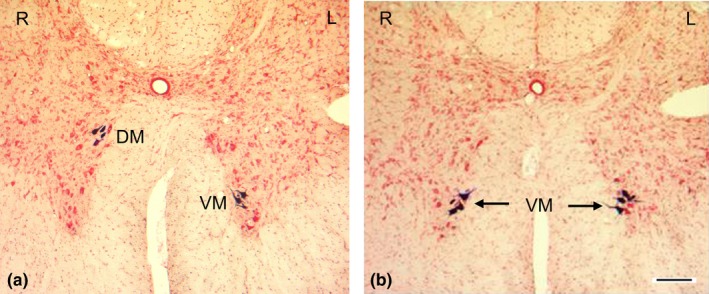
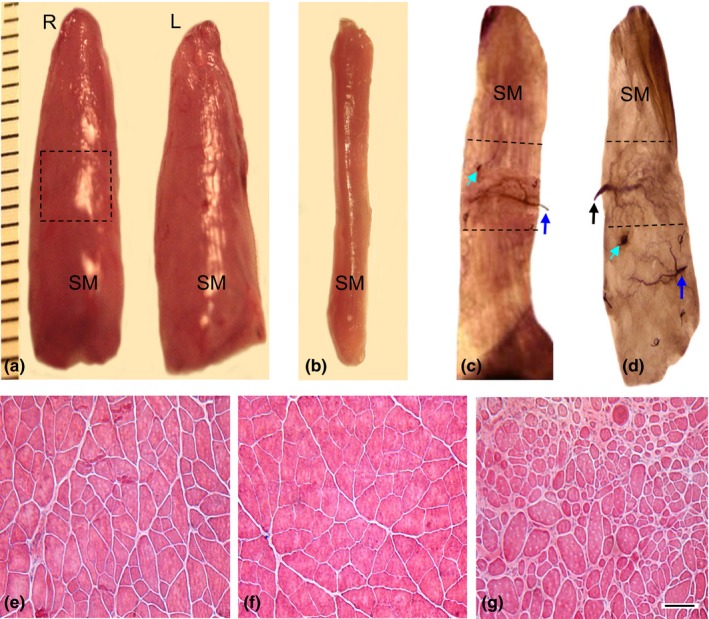
Experimentally denervated sternomastoid muscle in the rat was reinnervated by transferring a NMEG from the ipsilateral sternohyoid muscle to the native motor zone (NMZ) of the target muscle. A NMEG pedicle contained a block of muscle (~ 6 × 6 × 3 mm), a nerve branch with axon terminals, and a motor endplate band with numerous neuromuscular junctions. At 3 months after surgery, maximal tetanic muscle force measurement, muscle mass and myofiber morphology, motoneurons, regenerated axons, and axon-endplate connections of the muscles were analyzed.
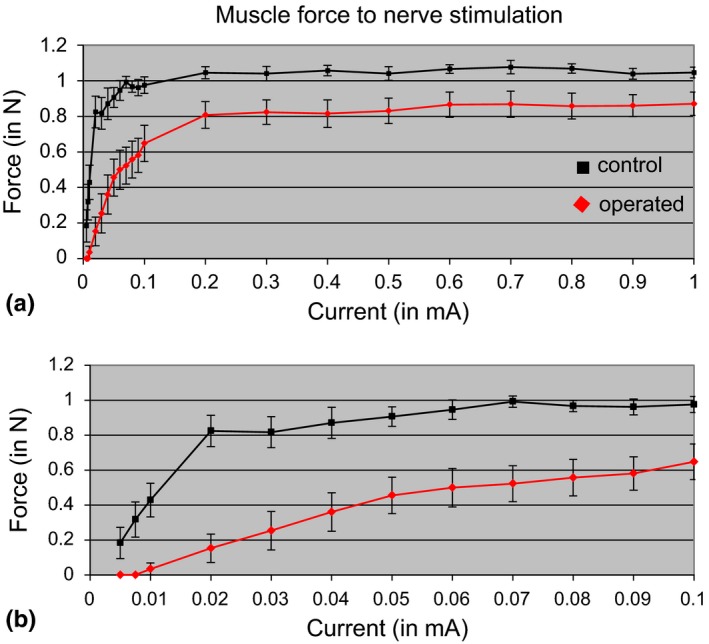
The mean force of the reinnervated muscles was 82% of the contralateral controls. The average weight of the treated muscles was 89% of the controls. The reinnervated muscles exhibited extensive axonal regeneration. Specifically, the mean count of the regenerated axons in the reinnervated muscles reached up to 76.8% of the controls. The majority (80%) of the denervated endplates in the target muscle regained motor innervation.
The NMZ of the denervated muscle is an ideal site for NMEG implantation and for the development of new microsurgical and therapeutic strategies to achieve sufficient axonal regeneration, rapid endplate reinnervation, and optimal functional recovery. NMEG-NMZ technique may become a useful tool in the treatment of muscle paralysis caused by peripheral nerve injuries in certain clinical situations.
运动终板再支配对于失神经肌肉的运动功能恢复至关重要。我们开发了一种称为神经-肌肉-终板带移植(NMEG)的新型外科技术,用于肌肉再支配。
通过将 NMEG 从同侧胸锁乳突肌转移到目标肌肉的固有运动区(NMZ),对大鼠实验性失神经胸锁乳突肌进行再支配。NMEG 蒂包含一块肌肉(~6×6×3mm)、一个带有轴突末梢的神经分支和一个带有许多运动终板的运动终板带。术后 3 个月,分析肌肉的最大强直肌肉力量测量、肌肉质量和肌纤维形态、运动神经元、再生轴突以及肌肉的轴突-终板连接。
再支配肌肉的平均力为对侧对照的 82%。治疗肌肉的平均重量为对照组的 89%。再支配肌肉表现出广泛的轴突再生。具体而言,再支配肌肉中再生轴突的平均计数达到对照组的 76.8%。靶肌肉中大多数(80%)失神经终板重新获得运动神经支配。
失神经肌肉的 NMZ 是 NMEG 植入的理想部位,也是开发新的显微外科和治疗策略以实现足够的轴突再生、快速终板再支配和最佳功能恢复的理想部位。NMEG-NMZ 技术可能成为治疗某些临床情况下周围神经损伤引起的肌肉瘫痪的有用工具。