Cui Xian-Jin, Lv Feng-Yan, Li Feng-Hua, Zeng Kun
Department of Ophthalmology, Linyi People's Hospital Department of Infectious Diseases, Affiliated Hospital of Shandong Medical College, Linyi Shenzhen Key Laboratory of Ophthalmology, Shenzhen Eye Hospital, Shenzhen, P.R. China.
Medicine (Baltimore). 2017 Jun;96(25):e7158. doi: 10.1097/MD.0000000000007158.
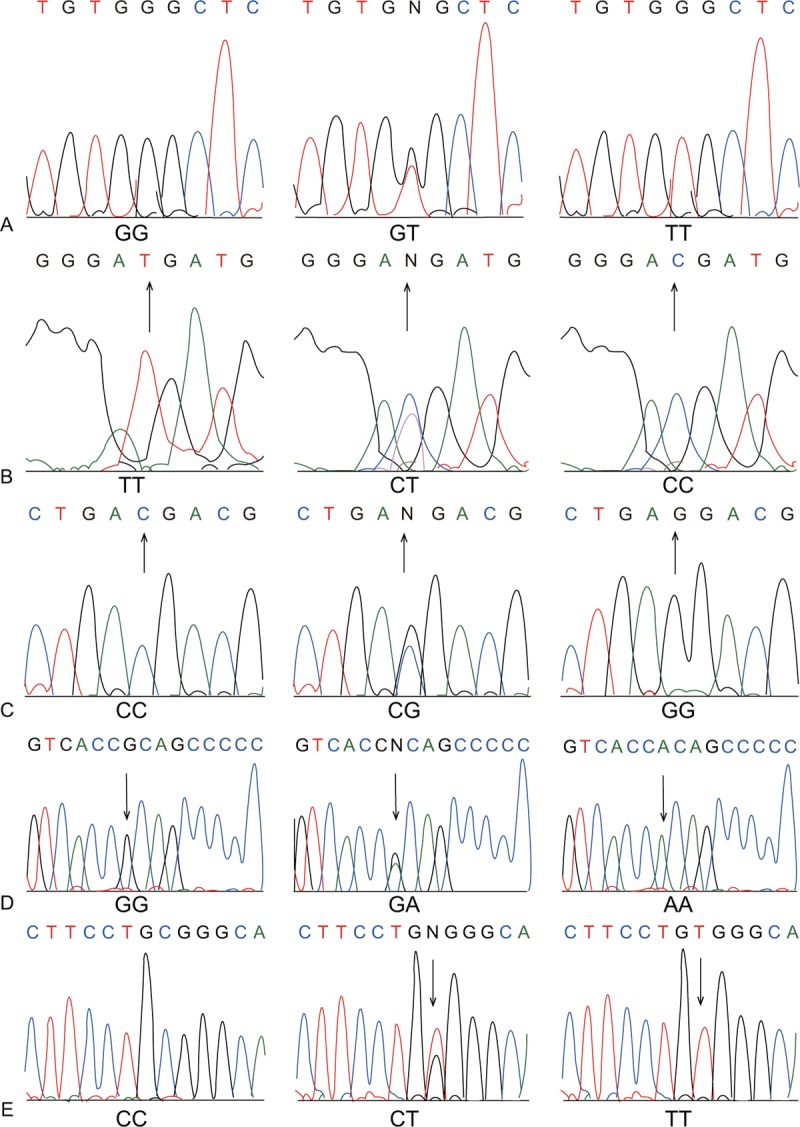
The study aims to explore the correlations of the single nucleotide polymorphisms (SNPs) of CRYAA and CRYAB with the risk and clinicopathological features of children with congenital cataract.
The study enrolled 168 children diagnosed as congenital cataract (case group) and 172 normal children (control group) from May 2015 to May 2016. Genomic DNA extraction was performed using a QIAamp DNA blood mini kit. Polymerase chain reaction (PCR) products were genotyped using an ABI direct sequencer. Haplotype, allele, and genotype frequencies of CRYAA and CRYAB gene polymorphisms analyses were carried out using the SHEsis software. Logistic regression analysis was performed in order to analyze the risk factors for children suffering from congenital cataract.
Presence of significant differences between the case and control groups' genotype and allele frequencies of CRYAA rs7278468 and CRYAB rs370803064/rs387907338. TA of CRYAB gene might increase congenital cataract risk in children, while GCG of CRYAA gene and GC of CRYAB gene might decrease congenital cataract risk in children. CRYAA rs7278468, CRYAB rs370803064/rs387907338 polymorphisms were significantly correlated to uncorrected visual acuity, best-corrected visual acuity, nystagmus, visual axis opacification, microcornea, lens opacity, posterior capsular thickening, and degrees of posterior capsule opacification after operation in children with congenital cataract. Logistic regression analysis revealed that the T allele of CRYAA rs7278468, A allele of CRYAB rs370803064, T allele of CRYAB rs387907338, family history, and TA haplotype of CRYAB gene were risk factors for children with congenital cataract.
Our findings demonstrated that CRYAA rs7278468 and CRYAB rs370803064/rs387907338 are correlated with the risk and clinicopathological features of children suffering from congenital cataract.
本研究旨在探讨CRYAA和CRYAB单核苷酸多态性(SNP)与先天性白内障患儿的发病风险及临床病理特征之间的相关性。
本研究纳入了2015年5月至2016年5月期间诊断为先天性白内障的168例患儿(病例组)和172例正常儿童(对照组)。使用QIAamp DNA血液微型试剂盒进行基因组DNA提取。聚合酶链反应(PCR)产物使用ABI直接测序仪进行基因分型。使用SHEsis软件对CRYAA和CRYAB基因多态性的单倍型、等位基因和基因型频率进行分析。进行逻辑回归分析以分析先天性白内障患儿的危险因素。
病例组与对照组在CRYAA rs7278468以及CRYAB rs370803064/rs387907338的基因型和等位基因频率方面存在显著差异。CRYAB基因的TA可能增加儿童先天性白内障的风险,而CRYAA基因的GCG和CRYAB基因的GC可能降低儿童先天性白内障的风险。CRYAA rs7278468、CRYAB rs370803064/rs387907338多态性与先天性白内障患儿的未矫正视力、最佳矫正视力、眼球震颤、视轴混浊、小角膜、晶状体混浊、后囊膜增厚以及术后后囊膜混浊程度显著相关。逻辑回归分析显示,CRYAA rs7278468的T等位基因、CRYAB rs370803064的A等位基因、CRYAB rs387907338的T等位基因、家族史以及CRYAB基因的TA单倍型是先天性白内障患儿的危险因素。
我们的研究结果表明,CRYAA rs7278468和CRYAB rs370803064/rs387907338与先天性白内障患儿的发病风险及临床病理特征相关。