Opondo Charles, Redshaw Maggie, Quigley Maria A
Policy Research Unit in Maternal Health and Care, National Perinatal Epidemiology Unit, Nuffield Department of Population Health, University of Oxford, Old Road Campus, Headington, Oxford OX3 7LF, United Kingdom.
Policy Research Unit in Maternal Health and Care, National Perinatal Epidemiology Unit, Nuffield Department of Population Health, University of Oxford, Old Road Campus, Headington, Oxford OX3 7LF, United Kingdom.
J Affect Disord. 2017 Oct 15;221:115-122. doi: 10.1016/j.jad.2017.06.010. Epub 2017 Jun 15.
Much of the research on parenting and its influence on child development has emphasised the mother's role. However, increasing evidence highlights the important role of fathers in the development, health and well-being of their children. We sought to explore the association between paternal involvement in early child-rearing and depressive symptoms in 9 and 11 year-old children.
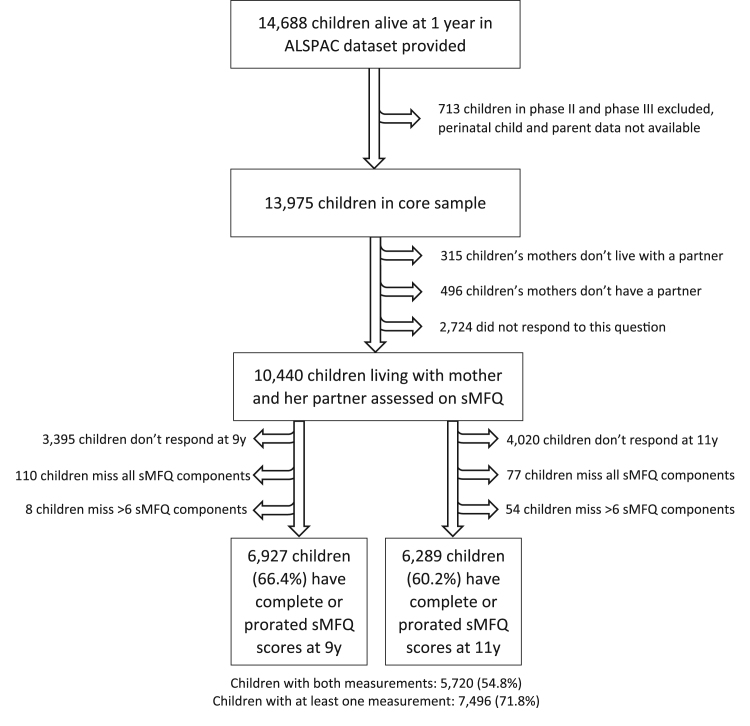
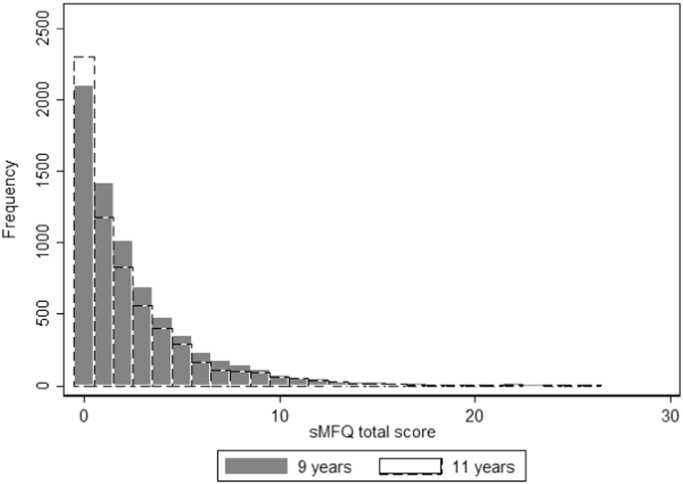
We used data from the Avon Longitudinal Study of Parents and Children (ALSPAC) cohort recruited in the southwest of England. The outcome was depressive symptoms measured using the short Moods and Feelings Questionnaire (sMFQ) score. The main exposure was father involvement measured through factor analysis of fathers' responses on their participation in, understanding of, and feelings about their child's early upbringing. Scores on factor 1 measured fathers' emotional response to the child; scores on factor 2 measured the frequency of father involvement in domestic and childcare activities; scores on factor 3 measured fathers' feelings of security in their role as parent and partner.
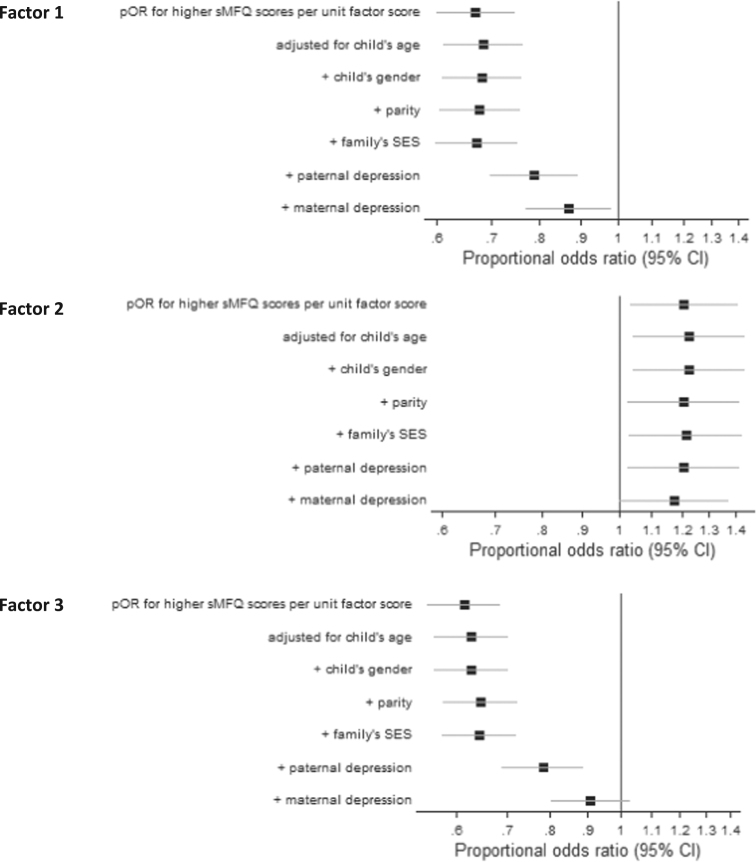
Children of fathers with high scores on factors 1 and 3 had 13% (OR 0.87, 95%CI 0.77-0.98, p = 0.024) and 9% (OR 0.91, 95%CI 0.80-1.03, p = 0.129) respectively lower adjusted odds of depressive symptoms at 9 and 11 years. For factor 2, there was weak evidence of a 17% increase in odds of depressive symptoms associated with 1 unit higher factor scores at both ages (OR 1.17, 95%CI 1.00-1.37, p = 0.050).
In these observational data, the possibility of residual confounding in the association between the exposure and the outcome cannot be ruled out.
Positive psychological and emotional aspects of father involvement in children's early upbringing, but not the quantity of direct involvement in childcare, may protect children against developing symptoms of depression in their pre-teen years.
许多关于养育子女及其对儿童发展影响的研究都强调了母亲的角色。然而,越来越多的证据凸显了父亲在子女成长、健康和幸福方面的重要作用。我们试图探究父亲参与早期育儿与9岁和11岁儿童抑郁症状之间的关联。
我们使用了来自英格兰西南部招募的埃文亲子纵向研究(ALSPAC)队列的数据。结果变量是使用简短情绪与感受问卷(sMFQ)得分测量的抑郁症状。主要暴露因素是通过对父亲关于其参与、理解和对孩子早期养育的感受的回答进行因子分析来测量的父亲参与度。因子1的得分衡量父亲对孩子的情感反应;因子2的得分衡量父亲参与家务和育儿活动的频率;因子3的得分衡量父亲作为父母和伴侣角色的安全感。
在因子1和因子3上得分高的父亲的孩子在9岁和11岁时抑郁症状的调整后比值分别低13%(OR 0.87,95%CI 0.77 - 0.98,p = 0.024)和9%(OR 0.91,95%CI 0.80 - 1.03,p = 0.129)。对于因子2,有微弱证据表明在两个年龄组中,因子得分每高1个单位,抑郁症状的比值增加17%(OR 1.17,95%CI 1.00 - 1.37,p = 0.050)。
在这些观察性数据中,不能排除暴露因素与结果之间残留混杂的可能性。
父亲参与孩子早期养育的积极心理和情感方面,而非直接参与育儿的数量,可能会保护孩子在青春期前不出现抑郁症状。