Wang Wei, Shahzad Khawar Ali, Li Miaochen, Zhang Aifeng, Zhang Lei, Xu Tao, Wan Xin, Shen Chuanlai
Department of Microbiology and Immunology, Southeast University Medical School, Nanjing, China.
Department of Pathology, Southeast University Medical School, Nanjing, China.
Front Immunol. 2017 Jun 9;8:657. doi: 10.3389/fimmu.2017.00657. eCollection 2017.
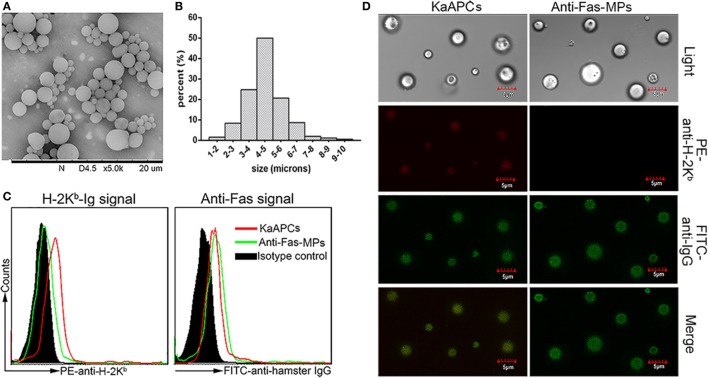
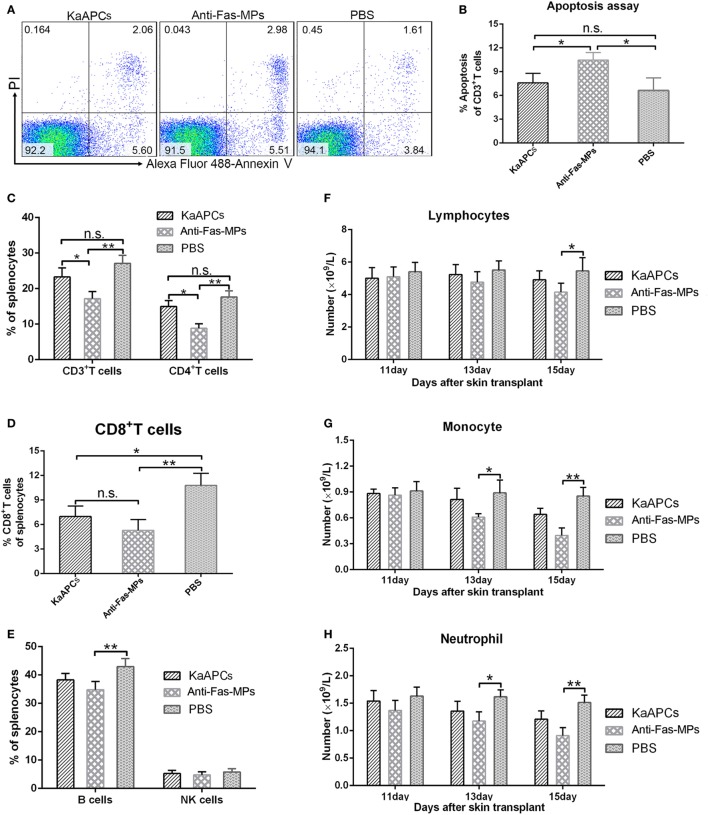
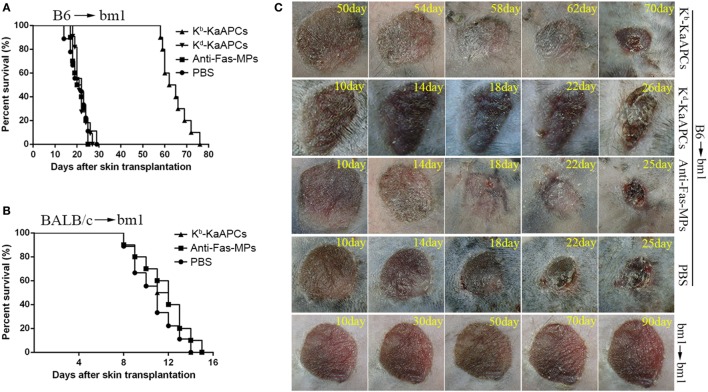
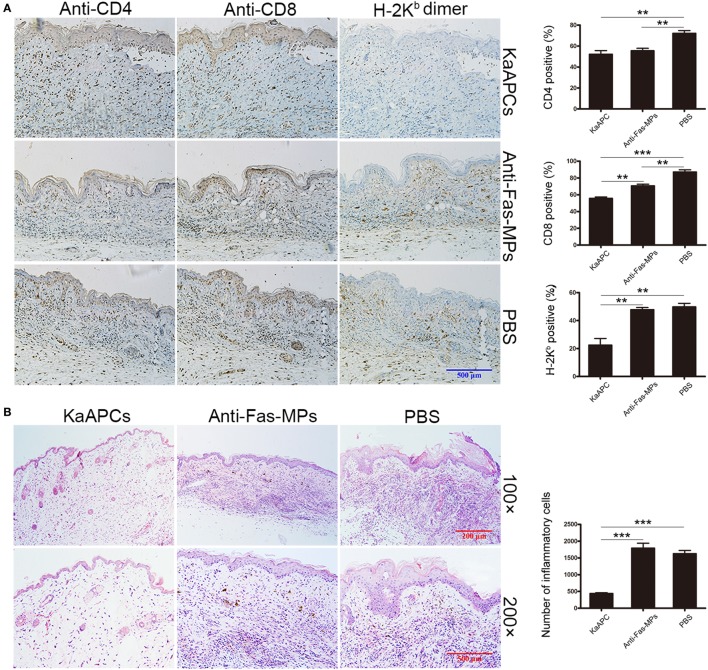
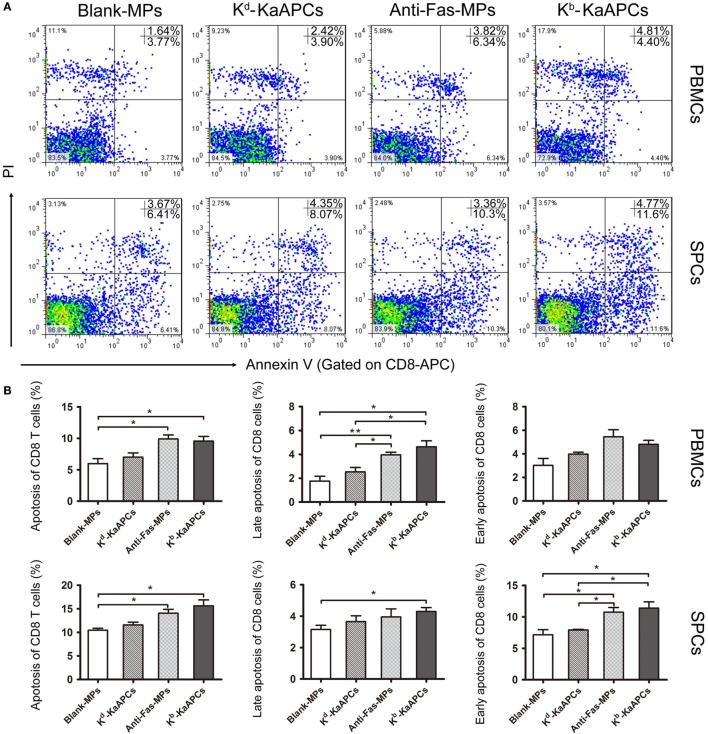
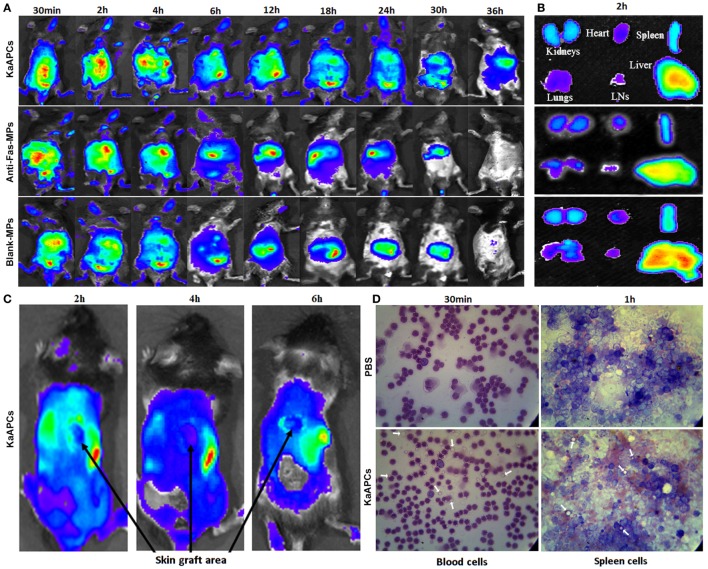
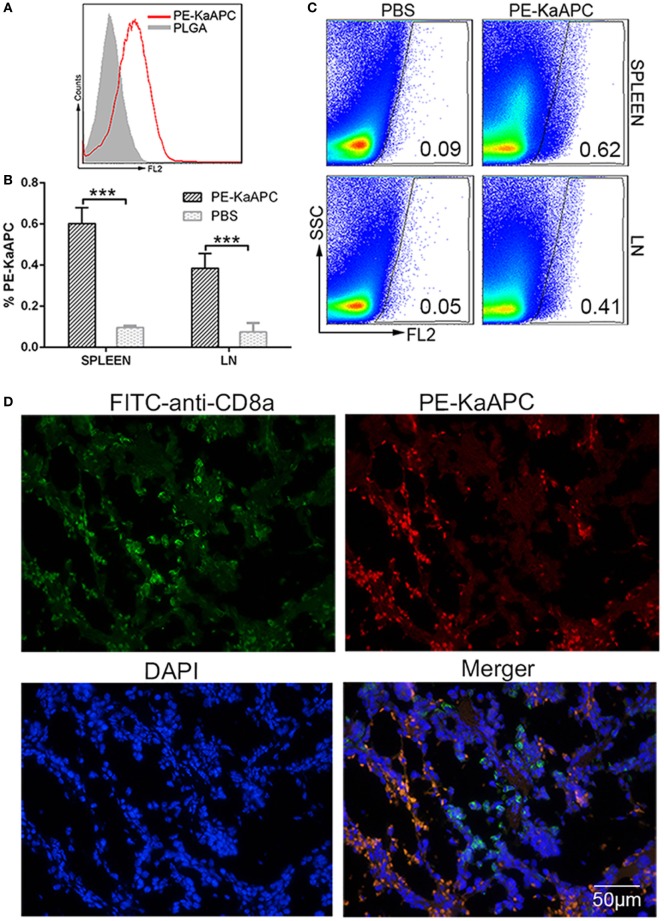
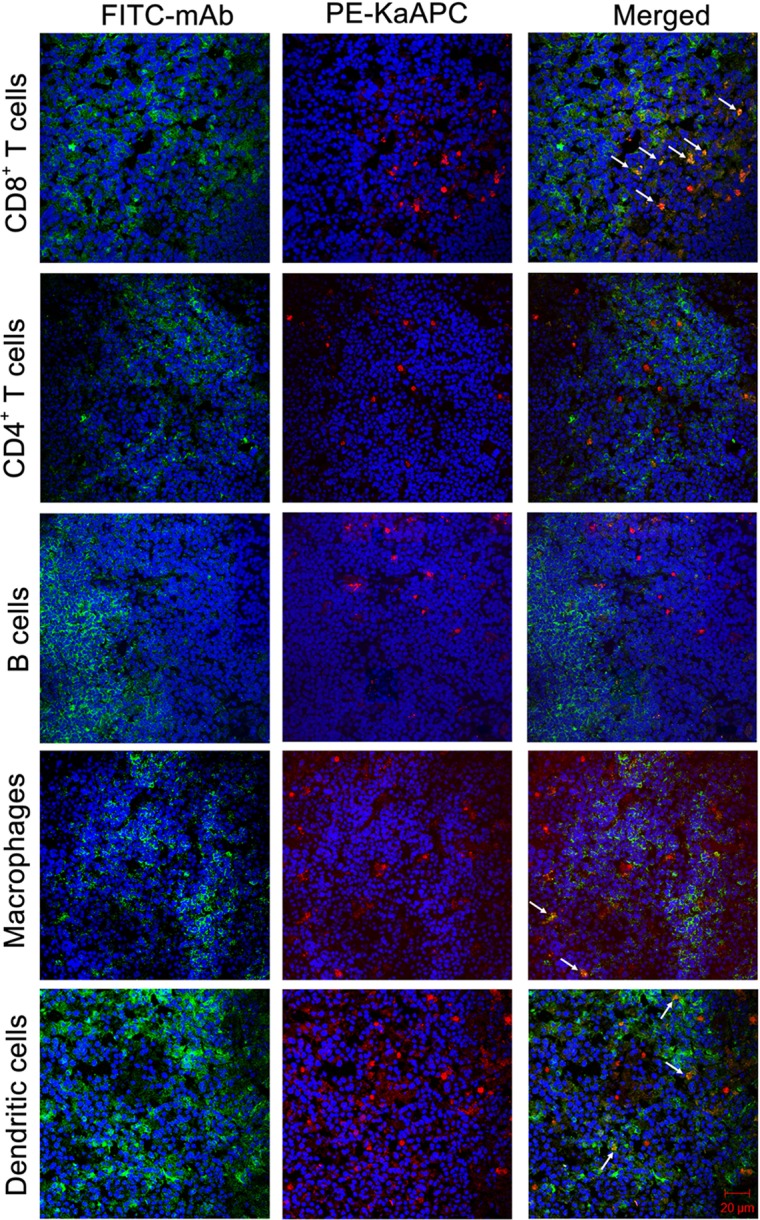
Selectively depleting the pathogenic T cells is a fundamental strategy for the treatment of allograft rejection and autoimmune disease since it retains the overall immune function of host. The concept of killer artificial antigen-presenting cells (KaAPCs) has been developed by co-coupling peptide-major histocompatibility complex (pMHC) multimer and anti-Fas monoclonal antibody (mAb) onto the polymeric microparticles (MPs) to induce the apoptosis of antigen-specific T cells. But little information is available about its therapeutic potential and mechanism. In this study, polyethylenimine (PEI)-coated poly lactic-co-glycolic acid microparticle (PLGA MP) was fabricated as a cell-sized scaffold to covalently co-couple H-2K-Ig dimer and anti-Fas mAb for the generation of alloantigen-presenting and apoptosis-inducing MPs. Intravenous infusions of the biodegradable KaAPCs prolonged the alloskin graft survival for 43 days in a single MHC-mismatched murine model, depleted the most of H-2K-alloreactive CD8 T cells in peripheral blood, spleen, and alloskin graft in an antigen-specific manner and anti-Fas-dependent fashion. The cell-sized KaAPCs circulated throughout vasculature into liver, kidney, spleen, lymph nodes, lung, and heart, but few ones into local allograft at early stage, with a retention time up to 36 h . They colocalized with CD8 T cells in secondary lymphoid organs while few ones contacted with CD4 T cells, B cells, macrophage, and dendritic cells, or internalized by phagocytes. Importantly, the KaAPC treatment did not significantly impair the native T cell repertoire or non-pathogenic immune cells, did not obviously suppress the overall immune function of host, and did not lead to visible organ toxicity. Our results strongly document the high potential of PLGA MP-based KaAPCs as a novel antigen-specific immunotherapy for allograft rejection and autoimmune disorder. The mechanism of alloinhibition, tissue distribution, and biosafety were also initially characterized, which will facilitate its translational studies from bench to bedside.
选择性清除致病性T细胞是治疗同种异体移植排斥反应和自身免疫性疾病的基本策略,因为它能保留宿主的整体免疫功能。杀伤性人工抗原呈递细胞(KaAPCs)的概念是通过将肽-主要组织相容性复合体(pMHC)多聚体和抗Fas单克隆抗体(mAb)共偶联到聚合物微粒(MPs)上而发展起来的,以诱导抗原特异性T细胞的凋亡。但关于其治疗潜力和机制的信息却很少。在本研究中,制备了聚乙烯亚胺(PEI)包被的聚乳酸-乙醇酸共聚物微粒(PLGA MP)作为细胞大小的支架,以共价共偶联H-2K-Ig二聚体和抗Fas mAb,用于生成同种异体抗原呈递和凋亡诱导微粒。在单个MHC不匹配的小鼠模型中,静脉注射可生物降解的KaAPCs可使同种异体皮肤移植物存活期延长43天,以抗原特异性方式和抗Fas依赖方式清除外周血、脾脏和同种异体皮肤移植物中大部分H-2K-同种异体反应性CD8 T细胞。细胞大小的KaAPCs通过脉管系统循环到肝脏、肾脏、脾脏、淋巴结、肺和心脏,但早期很少进入局部同种异体移植物,保留时间长达36小时。它们在二级淋巴器官中与CD8 T细胞共定位,而很少与CD4 T细胞、B细胞、巨噬细胞和树突状细胞接触,也很少被吞噬细胞内化。重要的是,KaAPC治疗并未显著损害天然T细胞库或非致病性免疫细胞,未明显抑制宿主的整体免疫功能,也未导致明显的器官毒性。我们的结果有力地证明了基于PLGA MP的KaAPCs作为一种用于同种异体移植排斥反应和自身免疫性疾病的新型抗原特异性免疫疗法具有很高的潜力。同时也初步阐明了同种异体抑制、组织分布和生物安全性的机制,这将有助于其从实验室到临床的转化研究。