Wang Hansen, Muiznieks Lisa D, Ghosh Punam, Williams Declan, Solarski Michael, Fang Andrew, Ruiz-Riquelme Alejandro, Pomès Régis, Watts Joel C, Chakrabartty Avi, Wille Holger, Sharpe Simon, Schmitt-Ulms Gerold
Tanz Centre for Research in Neurodegenerative Diseases, University of Toronto, Toronto, Canada.
Molecular Medicine Program, Research Institute, The Hospital for Sick Children, Toronto, Canada.
Elife. 2017 Jun 26;6:e28401. doi: 10.7554/eLife.28401.
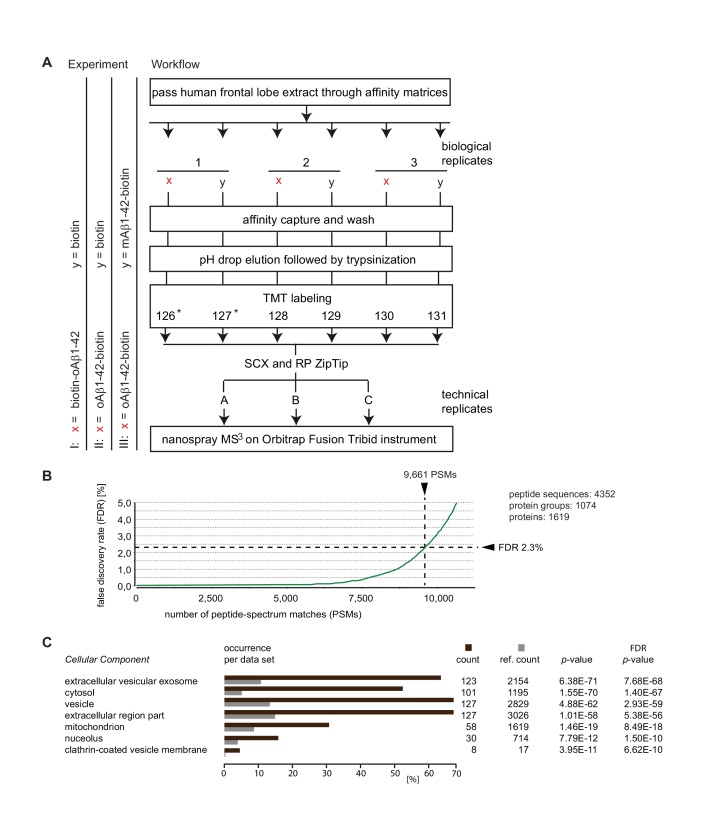
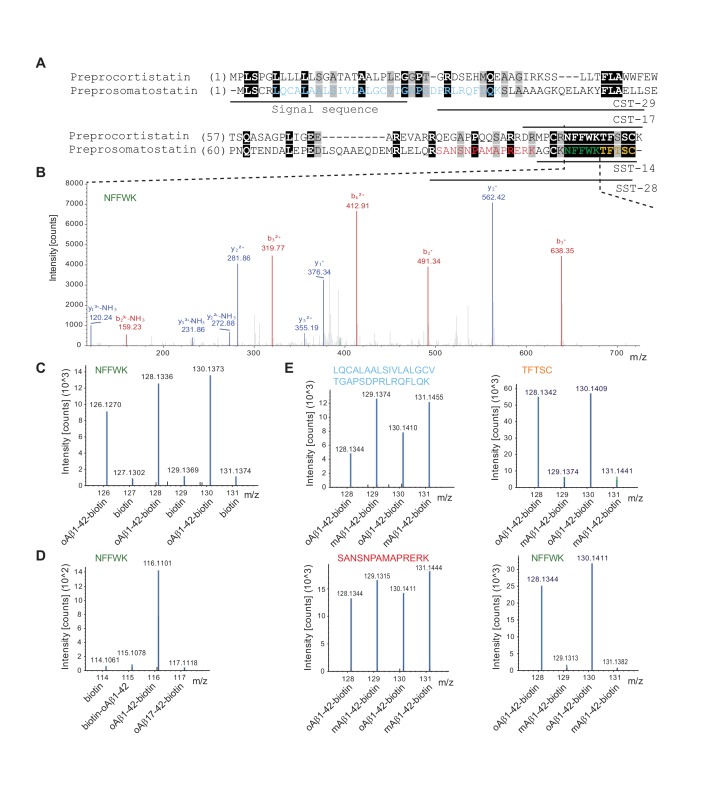
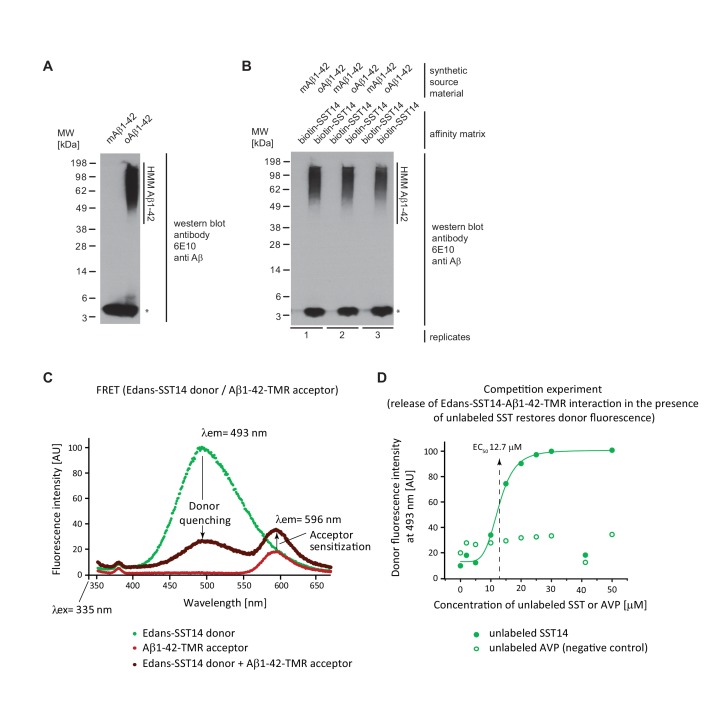
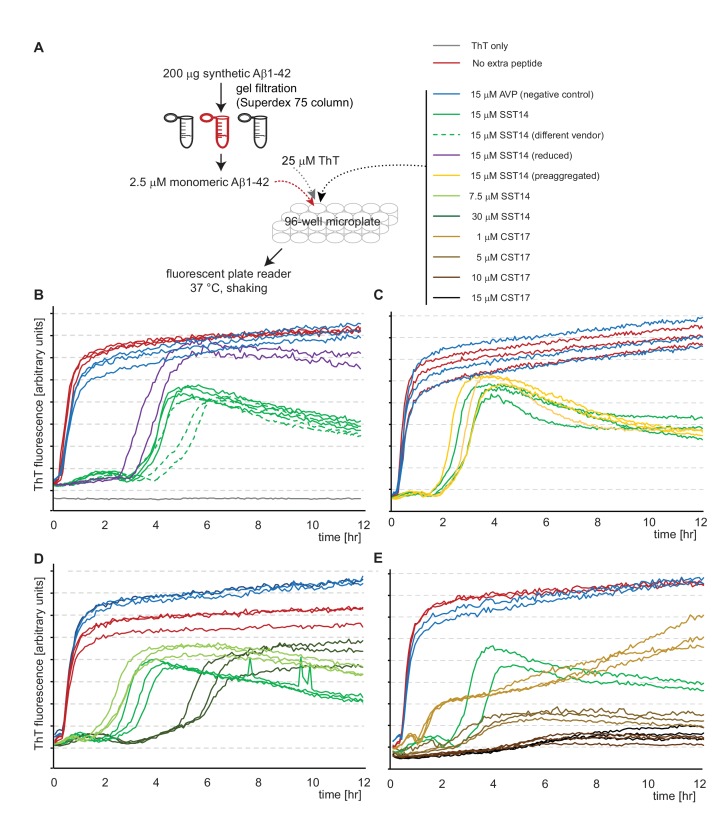
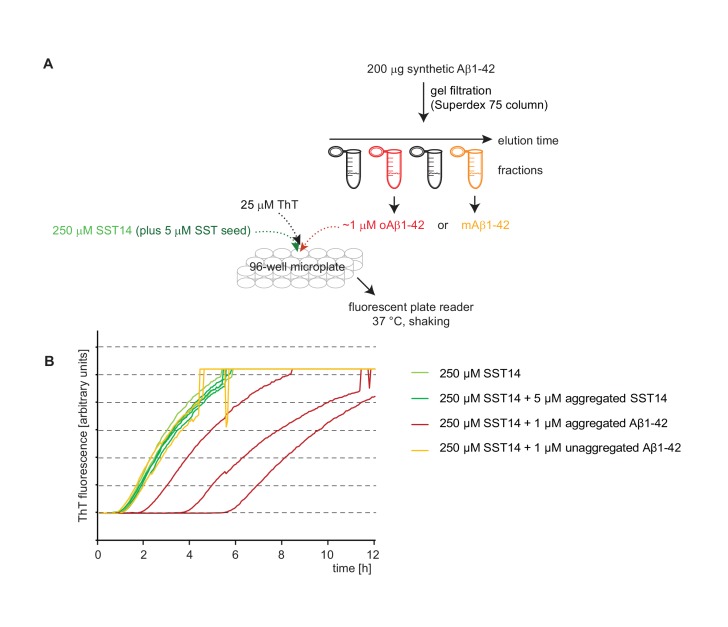
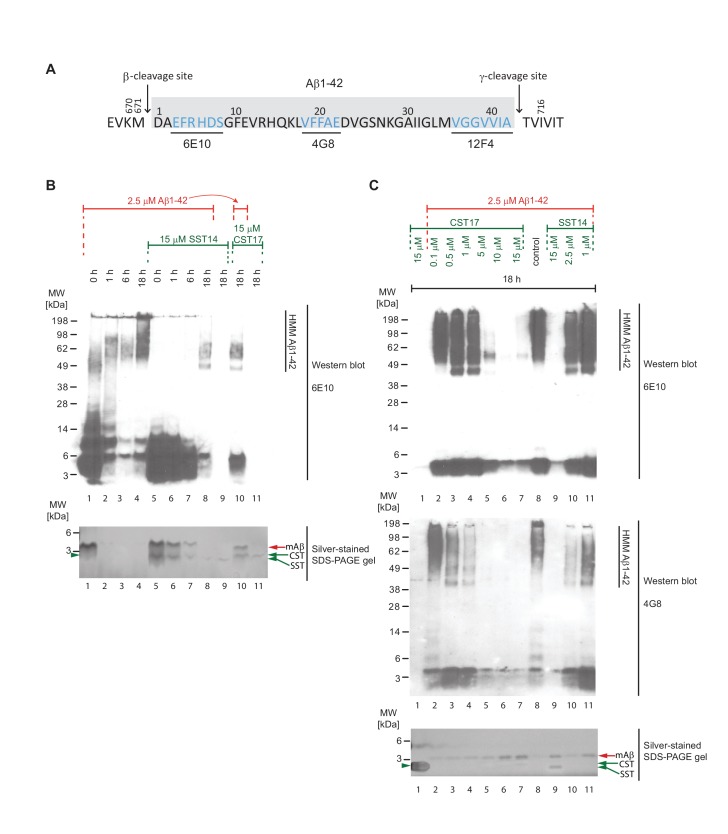
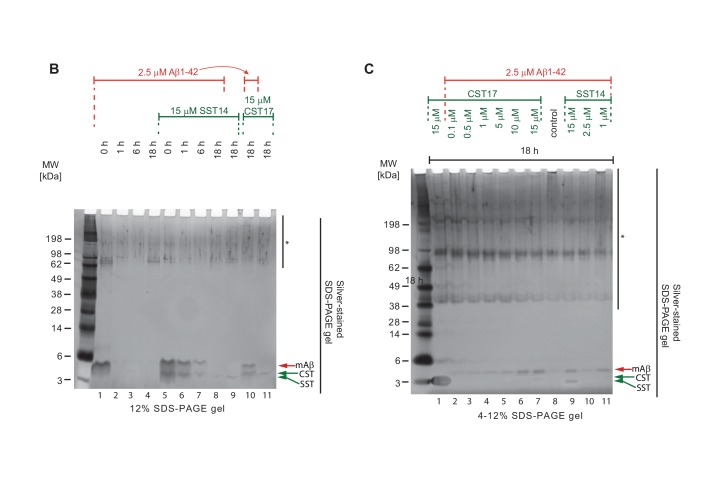
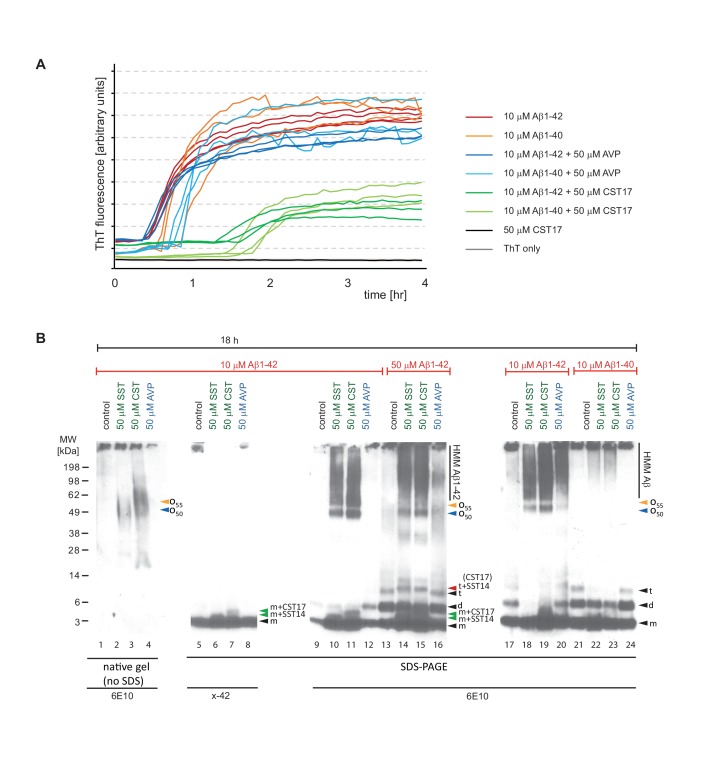
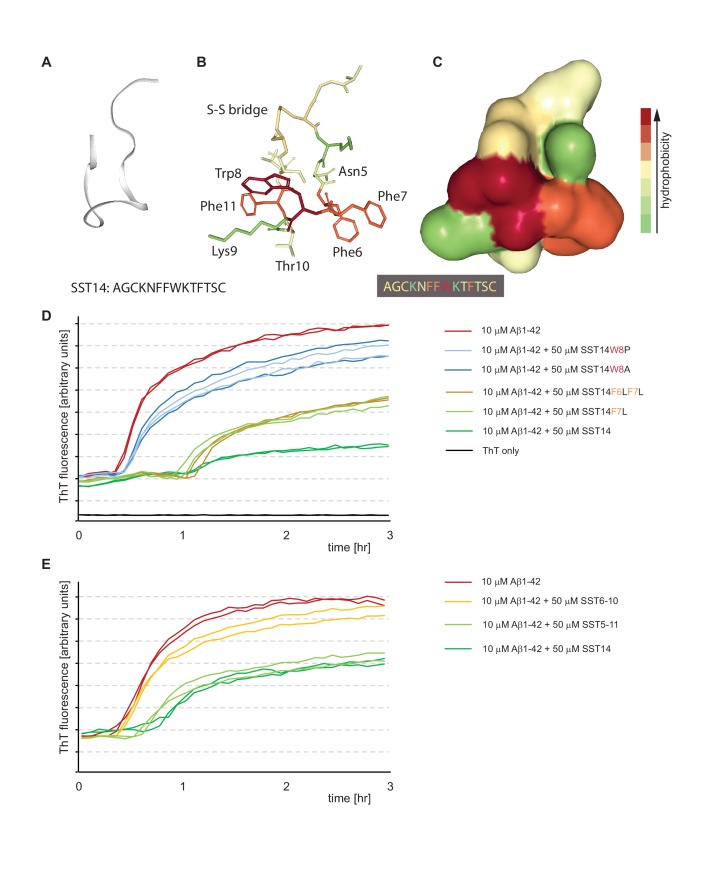
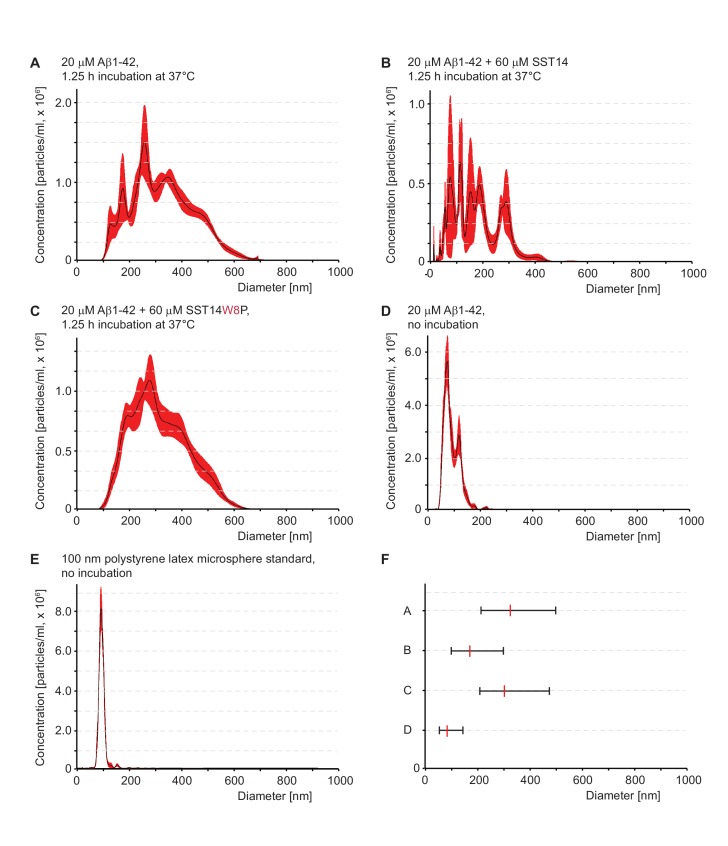
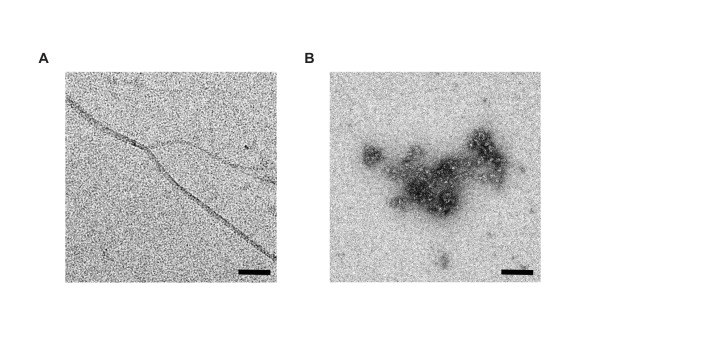
The amyloid β peptide (Aβ) is a key player in the etiology of Alzheimer disease (AD), yet a systematic investigation of its molecular interactions has not been reported. Here we identified by quantitative mass spectrometry proteins in human brain extract that bind to oligomeric Aβ1-42 (oAβ1-42) and/or monomeric Aβ1-42 (mAβ1-42) baits. Remarkably, the cyclic neuroendocrine peptide somatostatin-14 (SST14) was observed to be the most selectively enriched oAβ1-42 binder. The binding interface comprises a central tryptophan within SST14 and the N-terminus of Aβ1-42. The presence of SST14 inhibited Aβ aggregation and masked the ability of several antibodies to detect Aβ. Notably, Aβ1-42, but not Aβ1-40, formed in the presence of SST14 oligomeric assemblies of 50 to 60 kDa that were visualized by gel electrophoresis, nanoparticle tracking analysis and electron microscopy. These findings may be relevant for Aβ-directed diagnostics and may signify a role of SST14 in the etiology of AD.
淀粉样β肽(Aβ)是阿尔茨海默病(AD)病因学中的关键因素,但尚未有关于其分子相互作用的系统研究报道。在此,我们通过定量质谱法在人脑提取物中鉴定出与寡聚Aβ1-42(oAβ1-42)和/或单体Aβ1-42(mAβ1-42)诱饵结合的蛋白质。值得注意的是,环状神经内分泌肽生长抑素-14(SST14)被观察到是最具选择性富集的oAβ1-42结合剂。结合界面包括SST14内的一个中心色氨酸和Aβ1-42的N端。SST14的存在抑制了Aβ聚集,并掩盖了几种抗体检测Aβ的能力。值得注意的是,在SST14存在的情况下形成了Aβ1-42(而非Aβ1-40)的50至60 kDa寡聚体,通过凝胶电泳、纳米颗粒跟踪分析和电子显微镜观察到了这些寡聚体。这些发现可能与针对Aβ的诊断相关,并可能表明SST14在AD病因学中的作用。