Department of Electrical and Computer Engineering, University of Alberta, Edmonton, Canada.
Laboratory Medicine and Pathobiology, University of Toronto, Toronto, Canada.
PLoS Comput Biol. 2021 Mar 12;17(3):e1008771. doi: 10.1371/journal.pcbi.1008771. eCollection 2021 Mar.
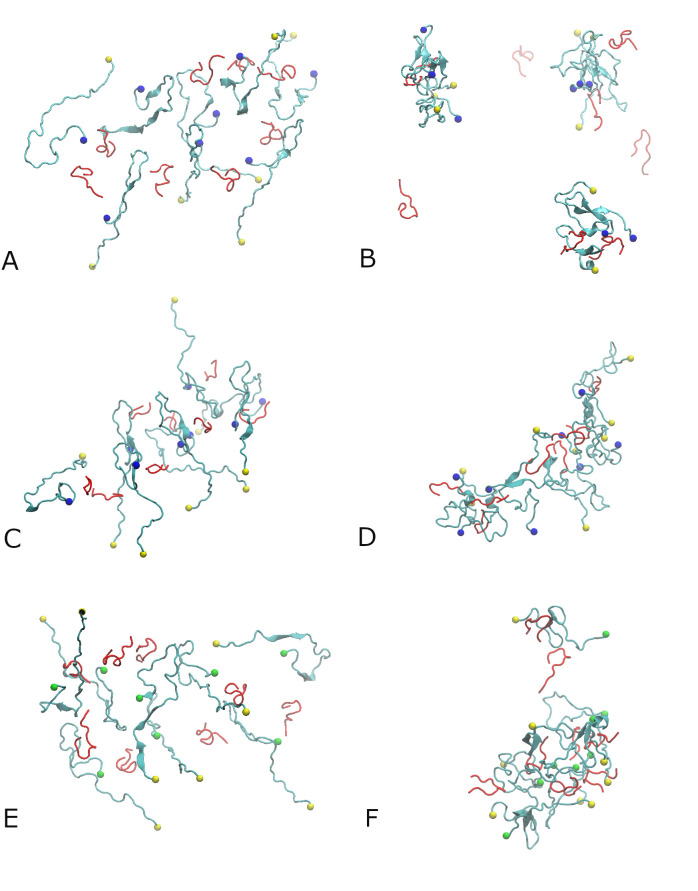
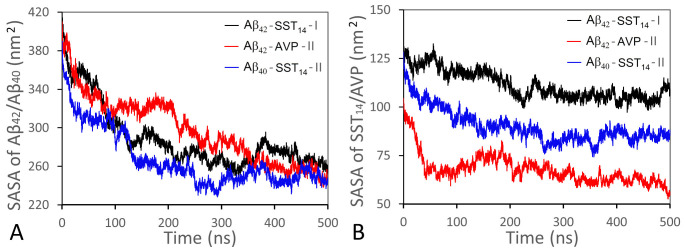
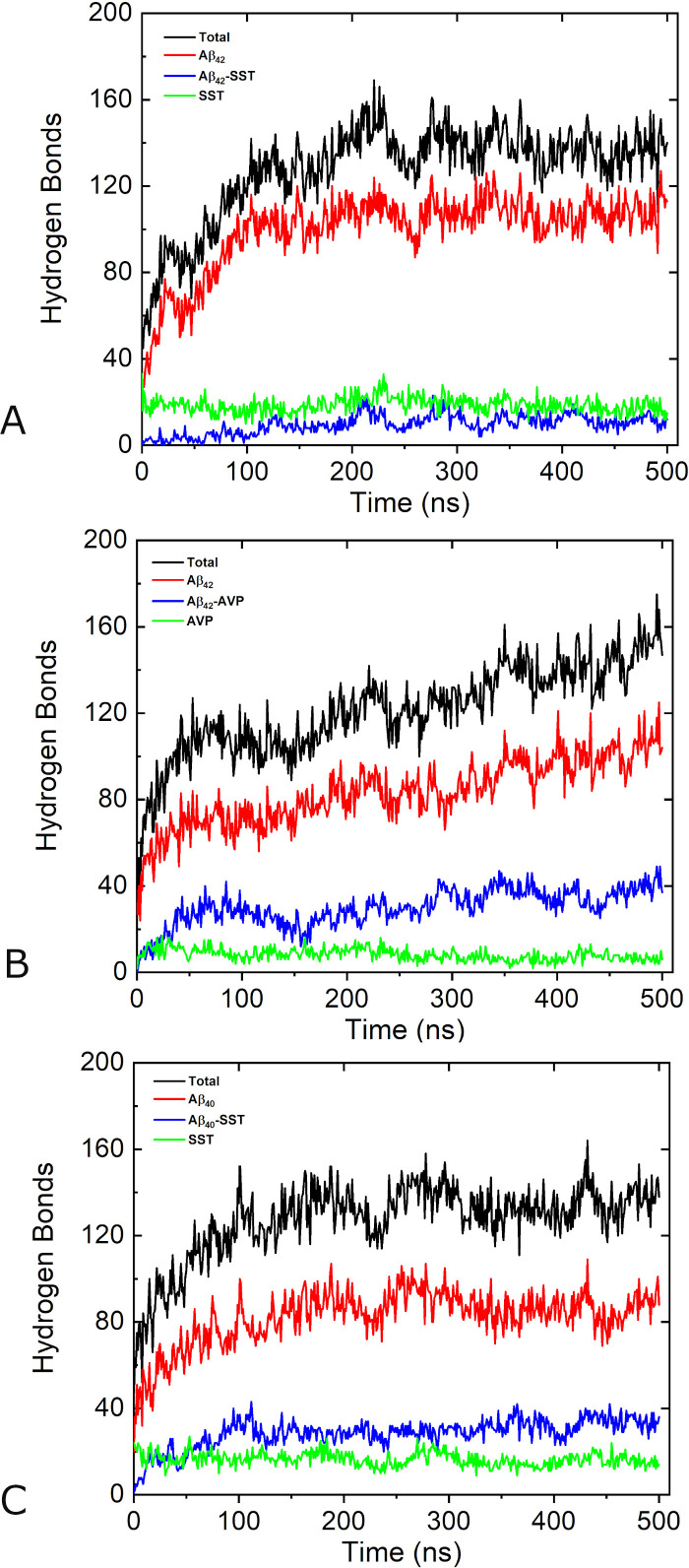
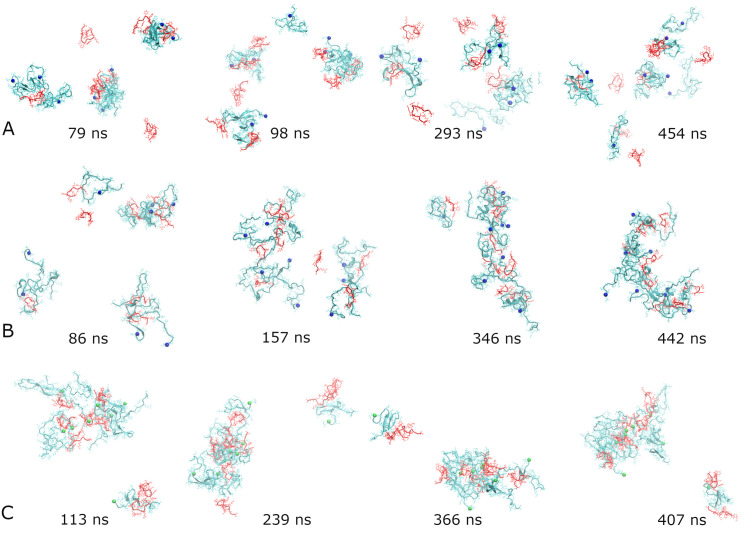
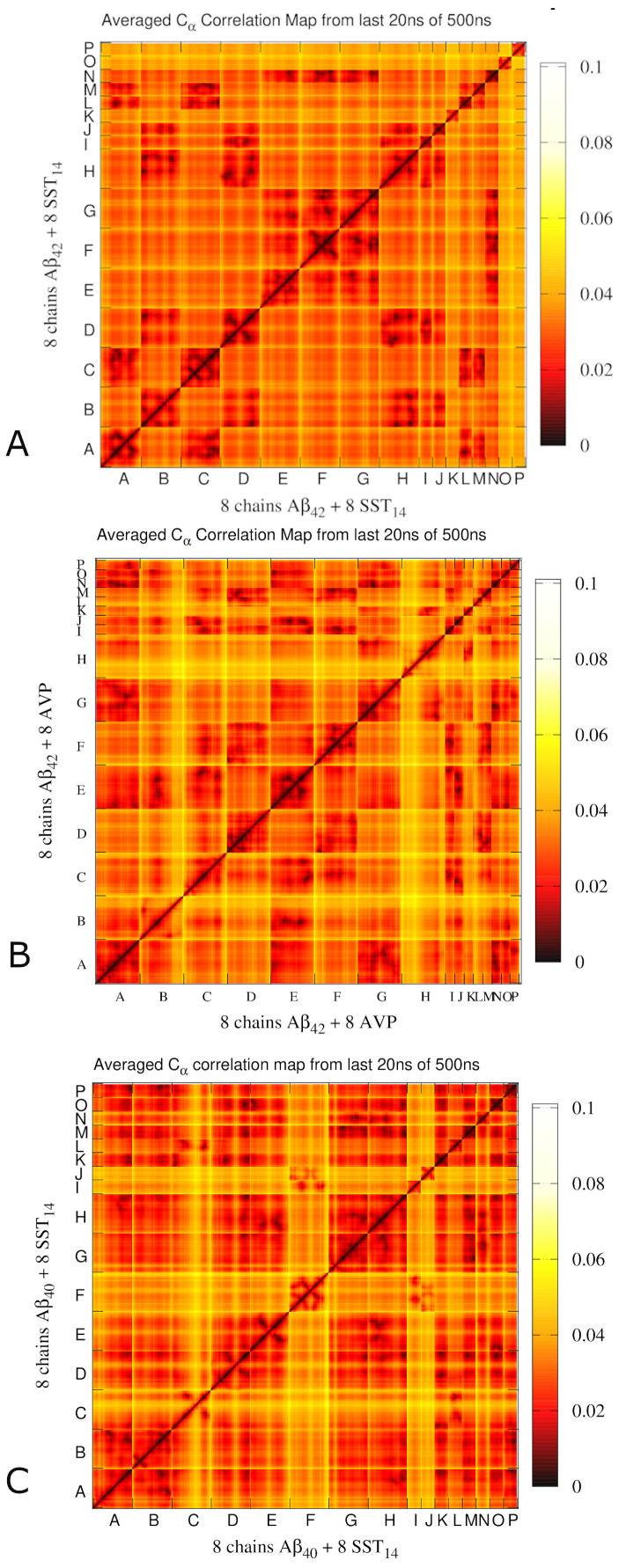
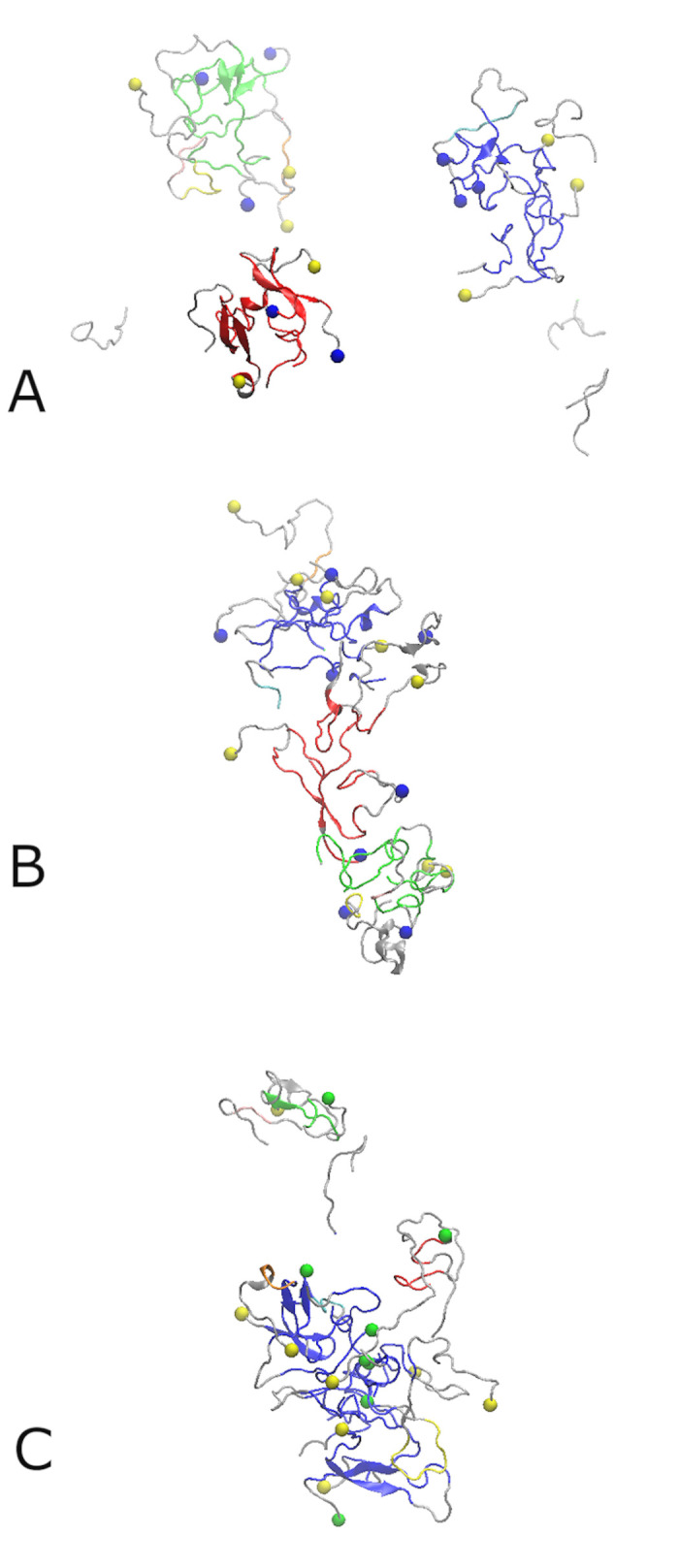
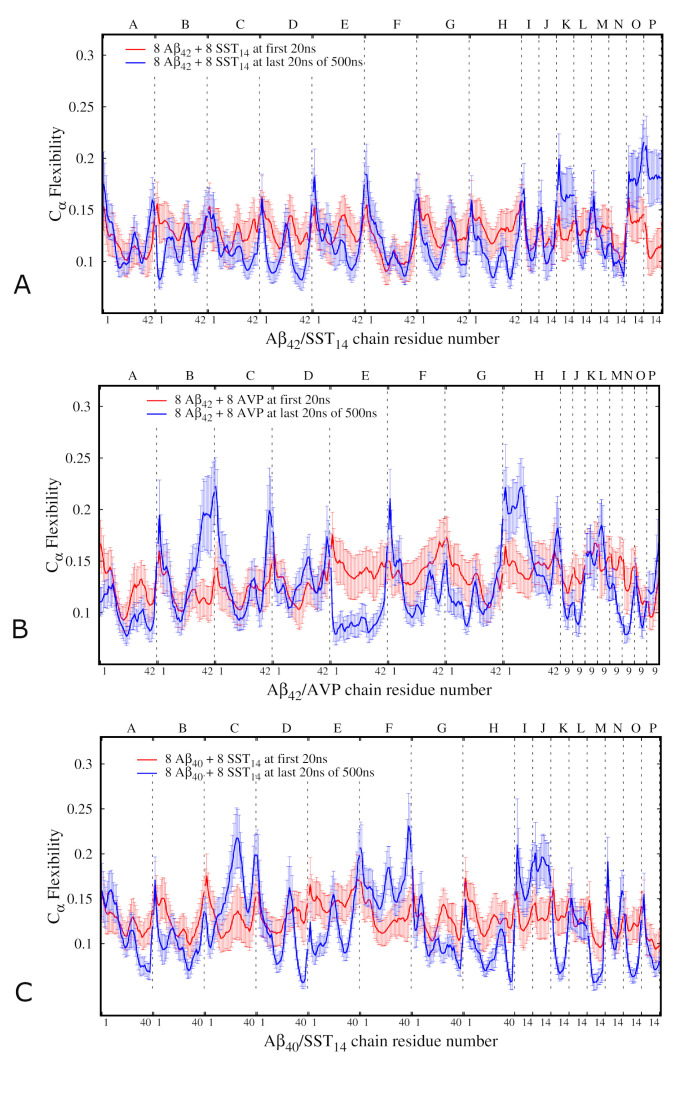
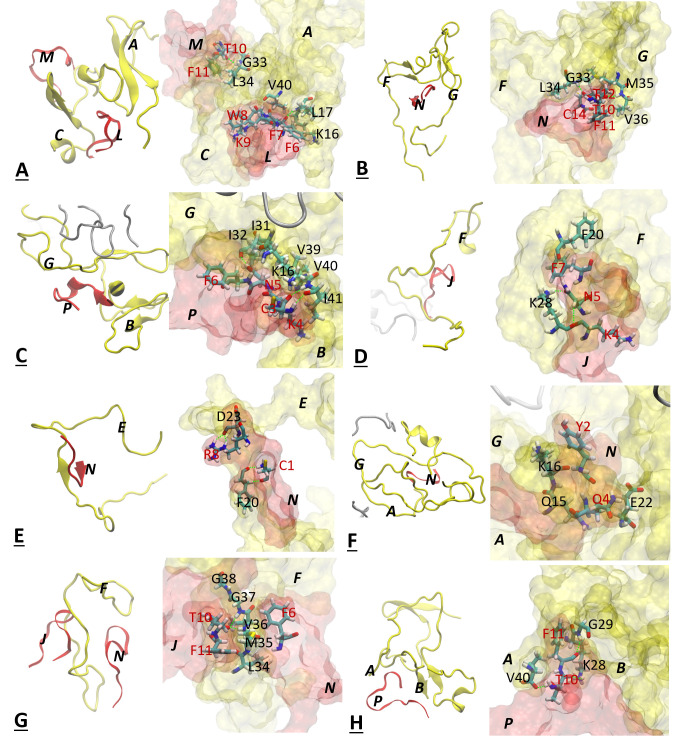
Alzheimer's disease is associated with the formation of toxic aggregates of amyloid beta (Aβ) peptides. Despite tremendous efforts, our understanding of the molecular mechanisms of aggregation, as well as cofactors that might influence it, remains incomplete. The small cyclic neuropeptide somatostatin-14 (SST14) was recently found to be the most selectively enriched protein in human frontal lobe extracts that binds Aβ42 aggregates. Furthermore, SST14's presence was also found to promote the formation of toxic Aβ42 oligomers in vitro. In order to elucidate how SST14 influences the onset of Aβ oligomerization, we performed all-atom molecular dynamics simulations of model mixtures of Aβ42 or Aβ40 peptides with SST14 molecules and analyzed the structure and dynamics of early-stage aggregates. For comparison we also analyzed the aggregation of Aβ42 in the presence of arginine vasopressin (AVP), a different cyclic neuropeptide. We observed the formation of self-assembled aggregates containing the Aβ chains and small cyclic peptides in all mixtures of Aβ42-SST14, Aβ42-AVP, and Aβ40-SST14. The Aβ42-SST14 mixtures were found to develop compact, dynamically stable, but small aggregates with the highest exposure of hydrophobic residues to the solvent. Differences in the morphology and dynamics of aggregates that comprise SST14 or AVP appear to reflect distinct (1) regions of the Aβ chains they interact with; (2) propensities to engage in hydrogen bonds with Aβ peptides; and (3) solvent exposures of hydrophilic and hydrophobic groups. The presence of SST14 was found to impede aggregation in the Aβ42-SST14 system despite a high hydrophobicity, producing a stronger "sticky surface" effect in the aggregates at the onset of Aβ42-SST14 oligomerization.
阿尔茨海默病与淀粉样β(Aβ)肽的毒性聚集有关。尽管付出了巨大的努力,但我们对聚集的分子机制以及可能影响聚集的辅助因子的理解仍然不完整。最近发现,小分子环状神经肽生长抑素 14(SST14)是与人额叶提取物中结合 Aβ42 聚集物的最选择性富集蛋白。此外,还发现 SST14 的存在也促进了体外有毒 Aβ42 低聚物的形成。为了阐明 SST14 如何影响 Aβ 低聚物的形成,我们对 Aβ42 或 Aβ40 肽与 SST14 分子的模型混合物进行了全原子分子动力学模拟,并分析了早期聚集物的结构和动力学。为了进行比较,我们还分析了在不同的环状神经肽血管加压素(AVP)存在下 Aβ42 的聚集。我们观察到所有 Aβ42-SST14、Aβ42-AVP 和 Aβ40-SST14 混合物中均形成了包含 Aβ 链和小环状肽的自组装聚集物。发现 Aβ42-SST14 混合物形成了紧凑、动态稳定但小的聚集物,疏水性残基对溶剂的暴露度最高。包含 SST14 或 AVP 的聚集物的形态和动力学差异似乎反映了它们相互作用的 Aβ 链的不同(1)区域;(2)与 Aβ 肽形成氢键的倾向;和(3)亲水性和疏水性基团的溶剂暴露。尽管 SST14 具有很高的疏水性,但它的存在被发现会阻碍 Aβ42-SST14 系统中的聚集,从而在 Aβ42-SST14 低聚物形成时在聚集物中产生更强的“粘性表面”效应。