Grunwell Jocelyn R, Travers Curtis, Stormorken Anne G, Scherrer Patricia D, Chumpitazi Corrie E, Stockwell Jana A, Roback Mark G, Cravero Joseph, Kamat Pradip P
1Department of Pediatrics, Emory University School of Medicine, Children's Healthcare of Atlanta, Atlanta, GA. 2Department of Pediatrics, Emory University School of Medicine, Atlanta, GA. 3Department of Pediatrics, Case Western Reserve University, Rainbow Babies' and Children's Hospital, Cleveland, OH. 4Department of Pediatrics, Baylor College of Medicine, Children's Hospital of San Antonio, San Antonio, TX. 5Department of Pediatrics, Baylor College of Medicine, Texas Children's Hospital, Houston, TX. 6Department of Pediatrics and Emergency Medicine, University of Minnesota Medical School, Minneapolis, MN. 7Department of Anesthesia, Pain, and Perioperative Medicine, Boston Children's Hospital, Boston, MA.
Pediatr Crit Care Med. 2017 Aug;18(8):e356-e363. doi: 10.1097/PCC.0000000000001246.
Outcomes associated with a sedative regimen comprised ketamine + propofol for pediatric procedural sedation outside of both the pediatric emergency department and operating room are underreported. We used the Pediatric Sedation Research Consortium database to describe a multicenter experience with ketamine + propofol by pediatric sedation providers.
Prospective observational study of children receiving IV ketamine + propofol for procedural sedation outside of the operating room and emergency department using data abstracted from the Pediatric Sedation Research Consortium during 2007-2015.
Procedural sedation services from academic, community, free-standing children's hospitals, and pediatric wards within general hospitals.
Children from birth to less than or equal to 21 years old.
None.
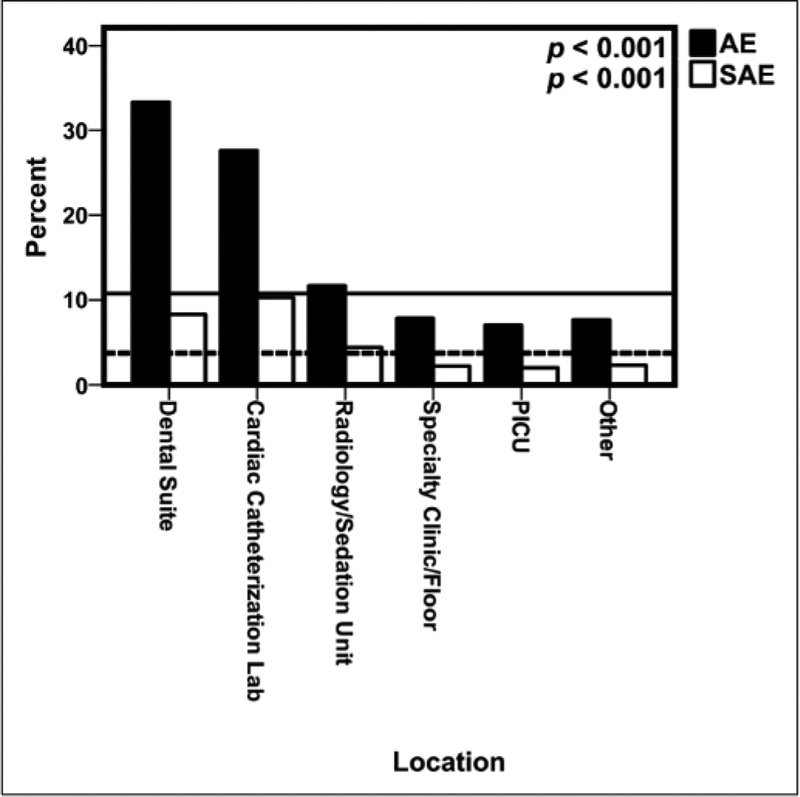
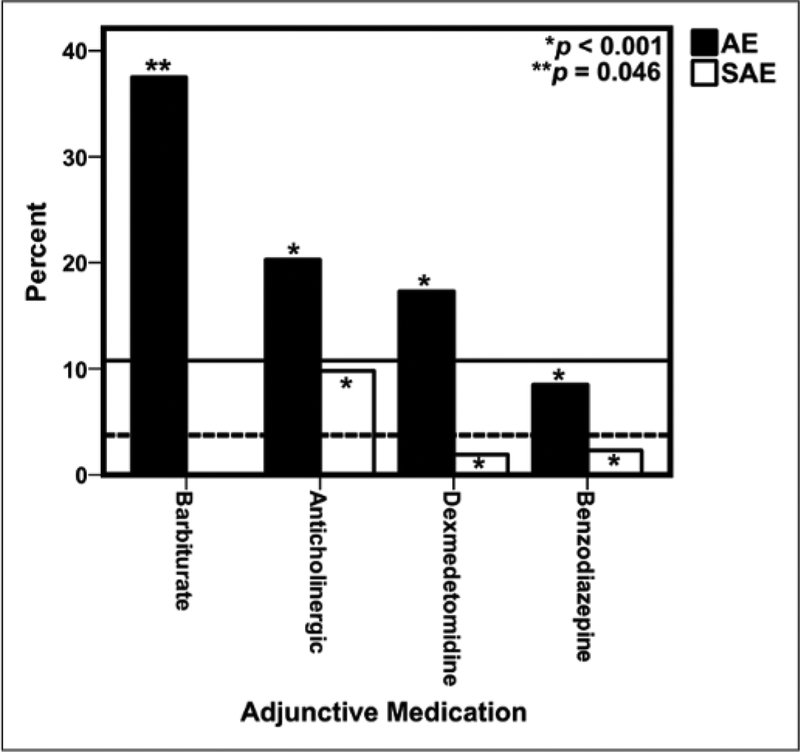
A total of 7,313 pediatric procedural sedations were performed using IV ketamine + propofol as the primary sedative regimen. Median age was 84 months (range, < 1 mo to ≤ 21 yr; interquartile range, 36-144); 80.6% were American Society of Anesthesiologists-Physical Status less than III. The majority of sedation was performed in dedicated sedation or radiology units (76.1%). Procedures were successfully completed in 99.8% of patients. Anticholinergics (glycopyrrolate and atropine) or benzodiazepines (midazolam and lorazepam) were used in 14.2% and 41.3%, respectively. The overall adverse event and serious adverse event rates were 9.79% (95% CI, 9.12-10.49%) and 3.47% (95% CI, 3.07-3.92%), respectively. No deaths occurred. Risk factors associated with an increase in odds of adverse event included ASA status greater than or equal to III, dental suite, cardiac catheterization laboratory or radiology/sedation suite location, a primary diagnosis of having a gastrointestinal illness, and the coadministration of an anticholinergic.
Using Pediatric Sedation Research Consortium data, we describe the diverse use of IV ketamine + propofol for procedural sedation in the largest reported cohort of children to date. Data from this study may be used to design sufficiently powered prospective randomized, double-blind studies comparing outcomes of sedation between commonly administered sedative and analgesic medication regimens.
在儿科急诊科和手术室之外,使用氯胺酮+丙泊酚镇静方案用于儿科操作镇静的相关结果报道较少。我们利用儿科镇静研究联盟数据库描述儿科镇静提供者使用氯胺酮+丙泊酚的多中心经验。
对2007年至2015年期间在手术室和急诊科之外接受静脉注射氯胺酮+丙泊酚进行操作镇静的儿童进行前瞻性观察研究,数据取自儿科镇静研究联盟。
学术性、社区性、独立儿童医院以及综合医院儿科病房的操作镇静服务。
出生至小于或等于21岁的儿童。
无。
共进行了7313例儿科操作镇静,以静脉注射氯胺酮+丙泊酚作为主要镇静方案。中位年龄为84个月(范围:<1个月至≤21岁;四分位间距:36 - 144);80.6%的美国麻醉医师协会身体状况分级小于III级。大多数镇静操作在专门的镇静或放射科进行(76.1%)。99.8%的患者操作成功完成。分别有14.2%和41.3%的患者使用了抗胆碱能药物(格隆溴铵和阿托品)或苯二氮䓬类药物(咪达唑仑和劳拉西泮)。总体不良事件和严重不良事件发生率分别为9.79%(95%CI,9.12 - 10.49%)和3.47%(95%CI,3.07 - 3.92%)。无死亡病例。与不良事件发生几率增加相关的危险因素包括美国麻醉医师协会身体状况分级大于或等于III级、牙科诊室、心导管实验室或放射科/镇静室位置、胃肠道疾病的主要诊断以及抗胆碱能药物的联合使用。
利用儿科镇静研究联盟的数据,我们描述了迄今为止在最大规模报道的儿童队列中静脉注射氯胺酮+丙泊酚用于操作镇静的多样化使用情况。本研究数据可用于设计有足够效力的前瞻性随机双盲研究,比较常用镇静和镇痛药物方案之间的镇静效果。