Hu Juan, Zhang Yong-Xue, Wang Li, Ding Ling, Huang Guang-Yao, Cai Guo-Wei, Gao Shan
Department of Pharmacology, Basic Medical College, Anhui Medical University, Hefei, 230032, China.
BMC Complement Altern Med. 2017 Jun 26;17(1):338. doi: 10.1186/s12906-017-1846-5.
Myocardial infarction (MI) is a major risk factor responsible for morbidity and mortality. Xinji'erkang (XJEK) has been clinically used as an effective medication in the treatment of coronary heart disease and myocarditis. The purpose of this study was to investigate the cardioprotective effect of Xinji'erkang on MI mice.
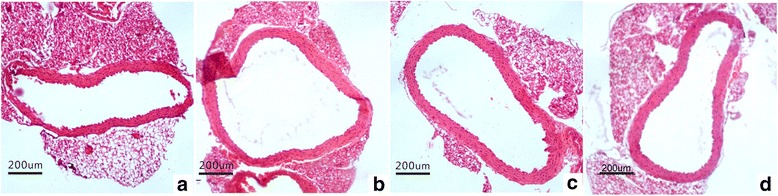
Forty male mice were randomly assigned into four groups as follows (n = 10): sham, model, MI with administration of XJEK and fosinopril for four weeks. At the end of studies, hemodynamic parameters and electrocardiography (ECG) were recorded. Heart and body mass were measured and heart weight/body weight (HW/BW) ratio was calculated as index of hypertrophy. The hypertrophy of heart and aorta was examined using the hematoxylin and eosin (HE) staining, and the collagen deposition was evaluated using Van Gieson (VG) staining. Serum nitric oxide level (NO), superoxide dismutase (SOD) activity and malondialdehyde (MDA) concentration were assayed by colorimetric analysis. The expressions of endothelial NO synthetase (eNOS) expression in serum and cardiac tissues were determined using ELISA assay and immunohistochemistry. Angiotensin II (Ang II) in serum and cardiac tissues was measured using ELISA assay. Besides, tumor necrosis factor-α (TNF-α), interleukin1β (IL-1β) and interleukin10 (IL-10) were observed in cardiac tissues with ELISA assay as well.
The administration of XJEK significantly improved cardiac dysfunction and abnormal ECG with reduced HW/BW ratio and ameliorated cardiomyocyte hypertrophy and collagen deposition compared to MI, which was partly due to the decreased SOD and increased MDA in serum. Moreover, XJEK treatment also improved endothelial dysfunction (ED) with not only enhanced eNOS activities in serum and cardiac tissues and elevated NO levels in serum, but also decreased Ang II content in serum and cardiac tissues. Finally, protein expressions of pro-inflammation cytokines, TNF-α and IL-1β in the cardiac tissues with XJEK treatment were significantly decreased compared to model. On the contrary, IL-10, an anti-inflammatory cytokine concentrated in cardiac tissues was significantly enhanced compared to model.
Xinji'erkang exerts cardioprotective effect on myocardial infarction in mice, which may be due to the improvement of endothelial dysfunction and the reduction of oxidative stress and inflammation response.
心肌梗死(MI)是导致发病和死亡的主要危险因素。辛集尔康(XJEK)在临床上已被用作治疗冠心病和心肌炎的有效药物。本研究的目的是探讨辛集尔康对心肌梗死小鼠的心脏保护作用。
将40只雄性小鼠随机分为四组(n = 10):假手术组、模型组、心肌梗死+辛集尔康给药组和福辛普利给药四周组。在研究结束时,记录血流动力学参数和心电图(ECG)。测量心脏和体重,并计算心脏重量/体重(HW/BW)比值作为肥大指标。使用苏木精和伊红(HE)染色检查心脏和主动脉的肥大情况,并使用范吉森(VG)染色评估胶原沉积。通过比色分析法测定血清一氧化氮水平(NO)、超氧化物歧化酶(SOD)活性和丙二醛(MDA)浓度。使用酶联免疫吸附测定(ELISA)和免疫组织化学法测定血清和心脏组织中内皮型一氧化氮合酶(eNOS)的表达。使用ELISA法测量血清和心脏组织中的血管紧张素II(Ang II)。此外,还使用ELISA法观察心脏组织中的肿瘤坏死因子-α(TNF-α)、白细胞介素1β(IL-1β)和白细胞介素10(IL-10)。
与心肌梗死组相比,辛集尔康给药显著改善了心脏功能障碍和异常心电图,降低了HW/BW比值,减轻了心肌细胞肥大和胶原沉积,部分原因是血清中SOD降低和MDA升高。此外,辛集尔康治疗还改善了内皮功能障碍(ED),不仅提高了血清和心脏组织中的eNOS活性以及血清中的NO水平,还降低了血清和心脏组织中的Ang II含量。最后,与模型组相比,辛集尔康治疗的心脏组织中促炎细胞因子TNF-α和IL-1β的蛋白表达显著降低。相反,与模型组相比,心脏组织中集中的抗炎细胞因子IL-10显著增强。
辛集尔康对小鼠心肌梗死具有心脏保护作用,这可能归因于内皮功能障碍的改善以及氧化应激和炎症反应的减轻。