Takano Tetsuya, Wu Mengya, Nakamuta Shinichi, Naoki Honda, Ishizawa Naruki, Namba Takashi, Watanabe Takashi, Xu Chundi, Hamaguchi Tomonari, Yura Yoshimitsu, Amano Mutsuki, Hahn Klaus M, Kaibuchi Kozo
Department of Cell Pharmacology, Nagoya University Graduate School of Medicine, Nagoya, 466-8550, Japan.
Imaging Platform for Spatio-Temporal Information, Graduate School of Medicine, Kyoto University, Kyoto, 606-8315, Japan.
Nat Commun. 2017 Jun 26;8(1):33. doi: 10.1038/s41467-017-00044-2.
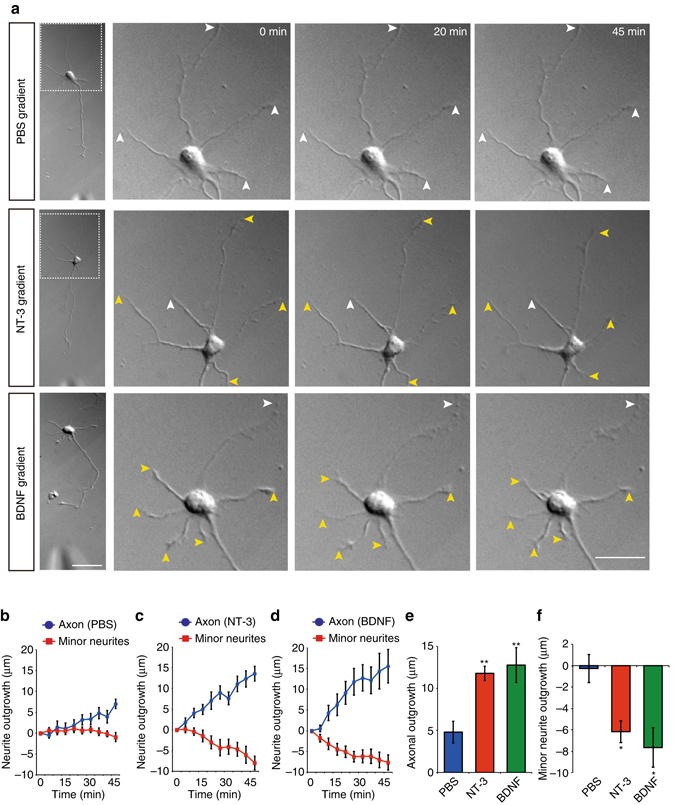
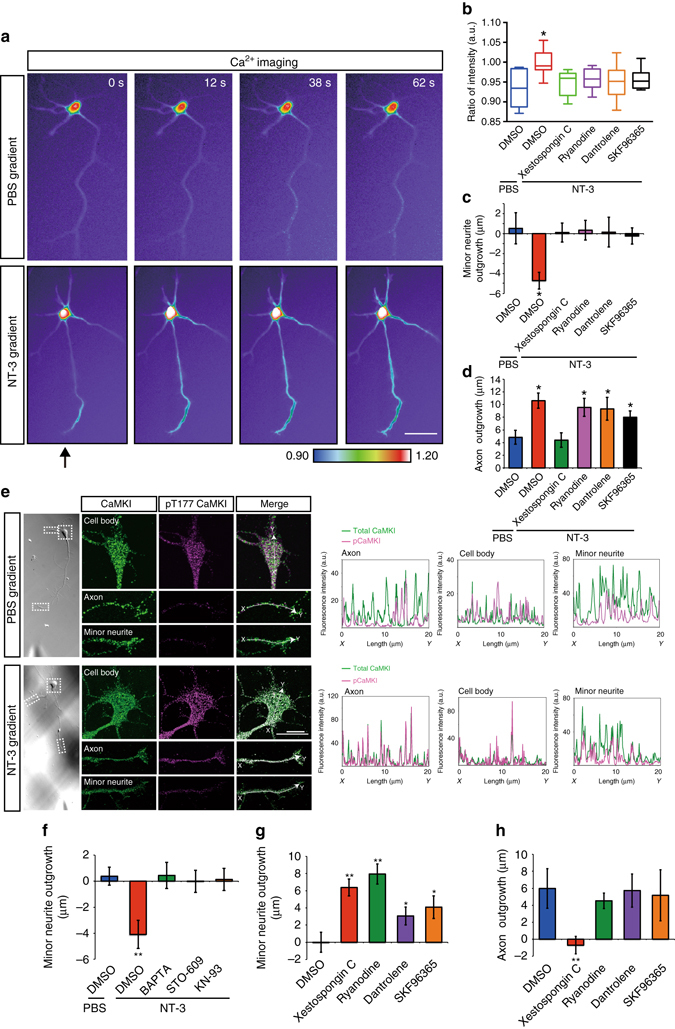
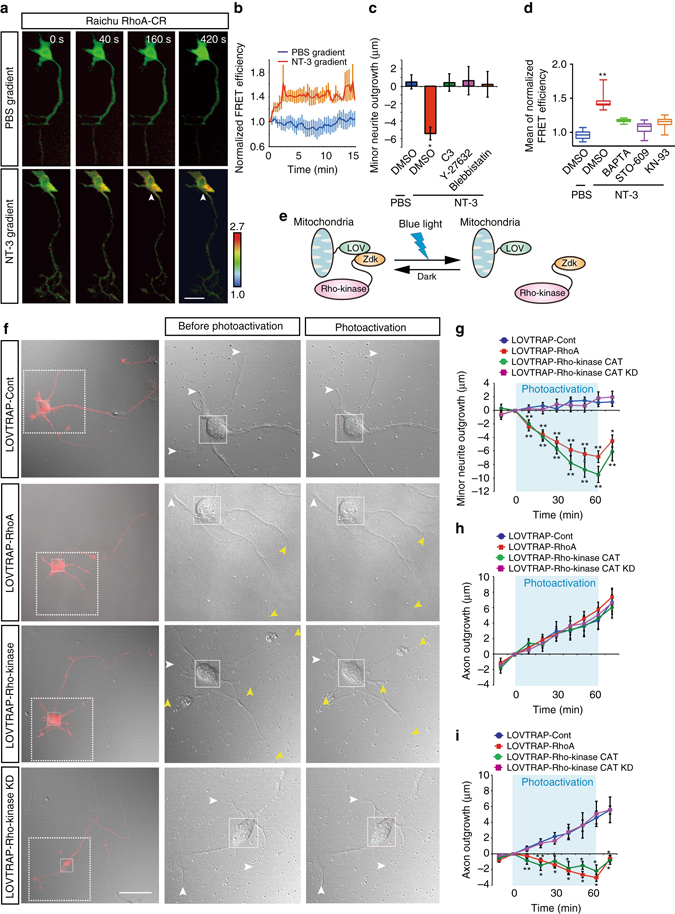
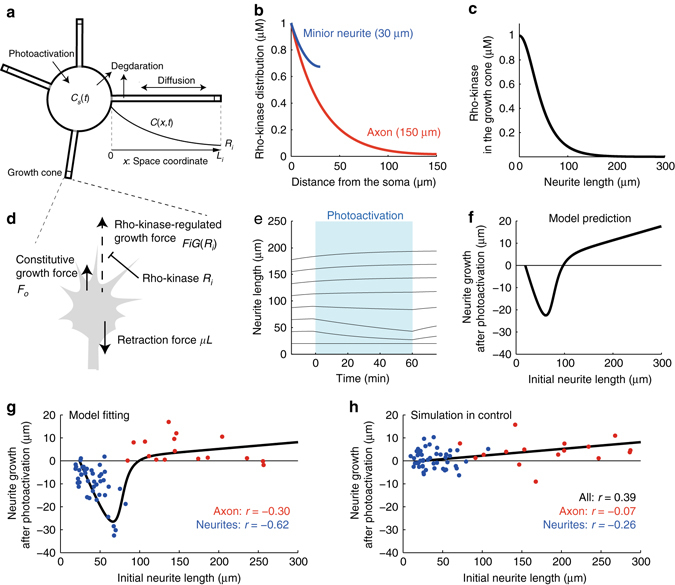
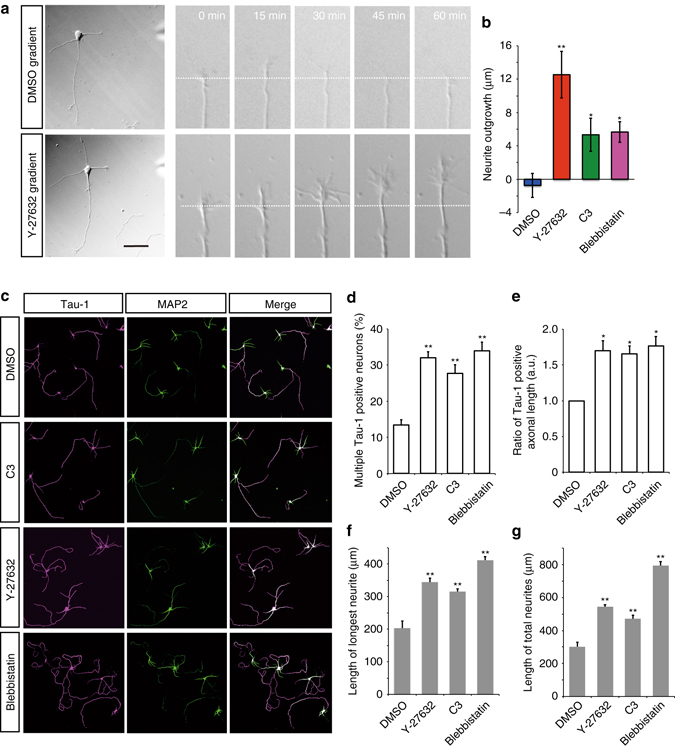
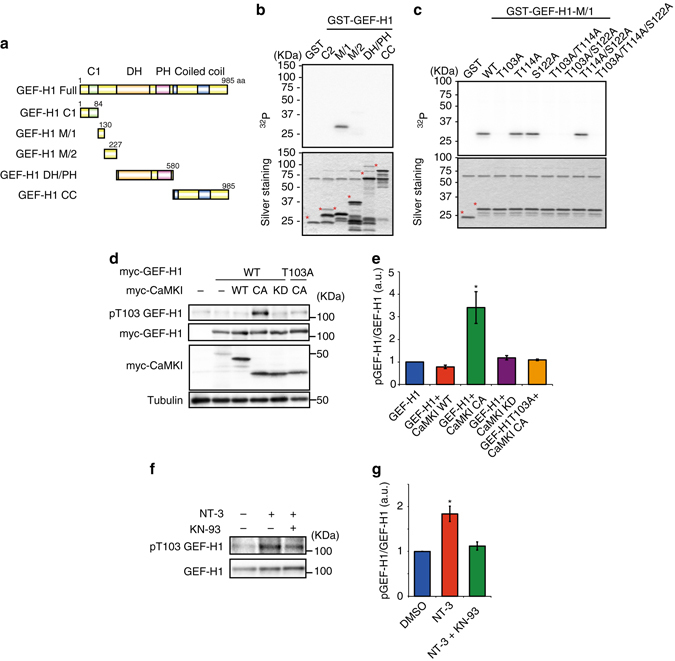
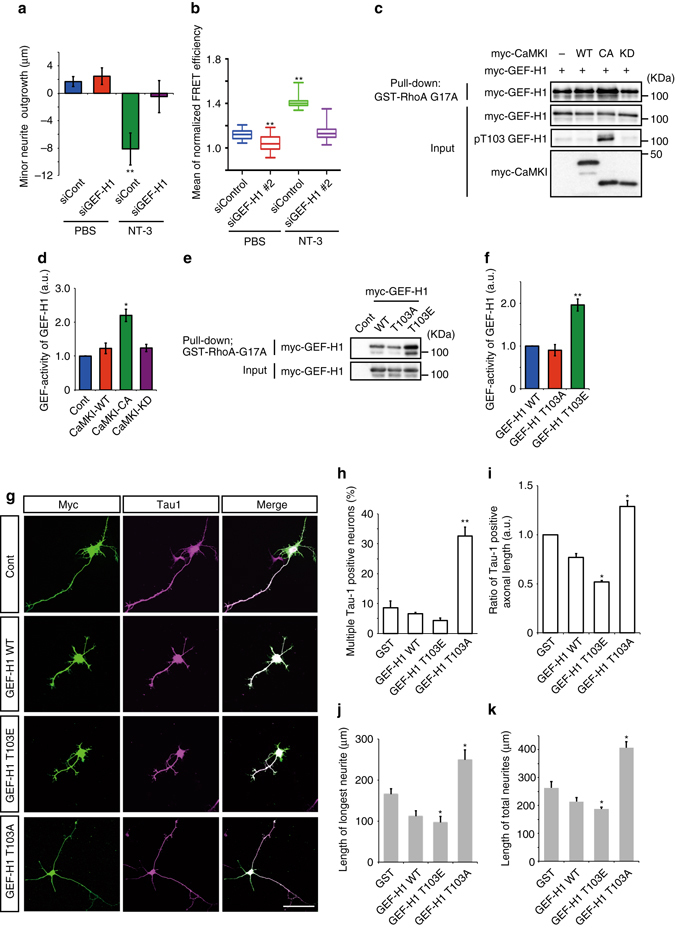
A long-standing question in neurodevelopment is how neurons develop a single axon and multiple dendrites from common immature neurites. Long-range inhibitory signaling from the growing axon is hypothesized to prevent outgrowth of other immature neurites and to differentiate them into dendrites, but the existence and nature of this inhibitory signaling remains unknown. Here, we demonstrate that axonal growth triggered by neurotrophin-3 remotely inhibits neurite outgrowth through long-range Ca waves, which are delivered from the growing axon to the cell body. These Ca waves increase RhoA activity in the cell body through calcium/calmodulin-dependent protein kinase I. Optogenetic control of Rho-kinase combined with computational modeling reveals that active Rho-kinase diffuses to growing other immature neurites and inhibits their outgrowth. Mechanistically, calmodulin-dependent protein kinase I phosphorylates a RhoA-specific GEF, GEF-H1, whose phosphorylation enhances its GEF activity. Thus, our results reveal that long-range inhibitory signaling mediated by Ca wave is responsible for neuronal polarization.Emerging evidence suggests that gut microbiota influences immune function in the brain and may play a role in neurological diseases. Here, the authors offer in vivo evidence from a Drosophila model that supports a role for gut microbiota in modulating the progression of Alzheimer's disease.
神经发育领域一个长期存在的问题是,神经元如何从共同的未成熟神经突发育出单一轴突和多个树突。据推测,生长中的轴突发出的远程抑制信号可阻止其他未成熟神经突的生长,并将它们分化为树突,但这种抑制信号的存在及本质仍不清楚。在此,我们证明神经营养因子3触发的轴突生长通过远程钙波远程抑制神经突生长,这些钙波从生长中的轴突传递到细胞体。这些钙波通过钙/钙调蛋白依赖性蛋白激酶I增加细胞体中的RhoA活性。对Rho激酶的光遗传学控制与计算模型相结合表明,活性Rho激酶扩散到其他生长中的未成熟神经突并抑制其生长。从机制上讲,钙调蛋白依赖性蛋白激酶I使一种RhoA特异性鸟苷酸交换因子GEF-H1磷酸化,其磷酸化增强了其鸟苷酸交换因子活性。因此,我们的结果表明,由钙波介导的远程抑制信号负责神经元极化。新出现的证据表明,肠道微生物群会影响大脑中的免疫功能,并可能在神经疾病中起作用。在此,作者提供了来自果蝇模型的体内证据,支持肠道微生物群在调节阿尔茨海默病进展中发挥作用。