López-Palafox Tania G, Cordero Carlos R
Posgrado en Ciencias Biológicas, Universidad Nacional Autónoma de México, Ciudad de México, México.
Departamento de Ecología Evolutiva, Instituto de Ecología, Universidad Nacional Autónoma de México, Ciudad de México, México.
PeerJ. 2017 Jun 22;5:e3493. doi: 10.7717/peerj.3493. eCollection 2017.
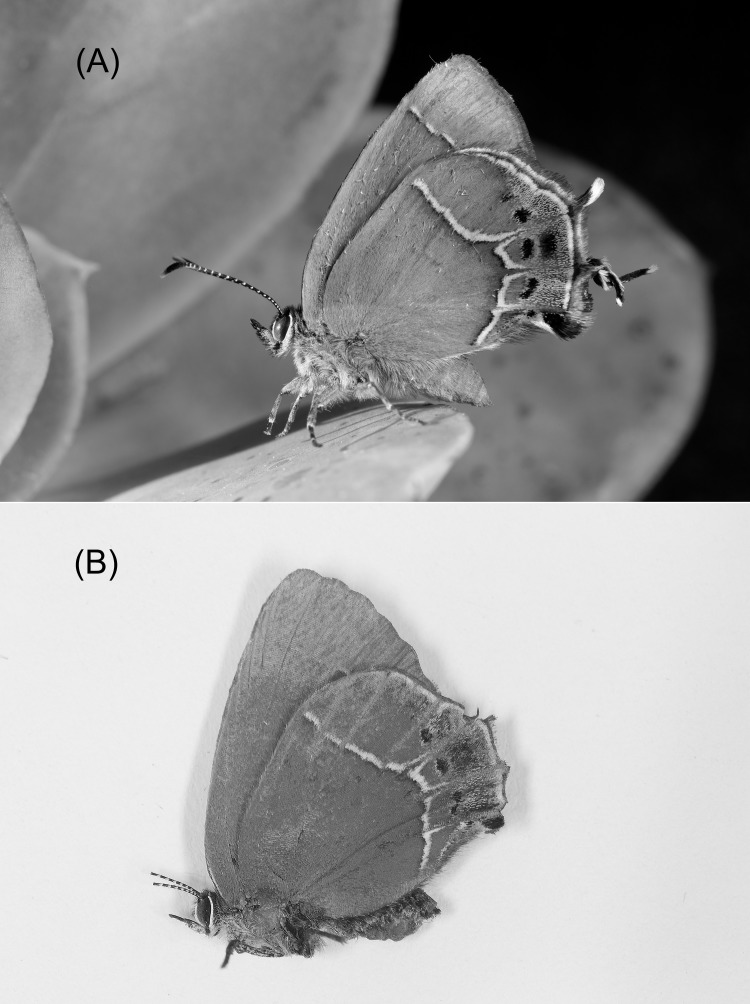
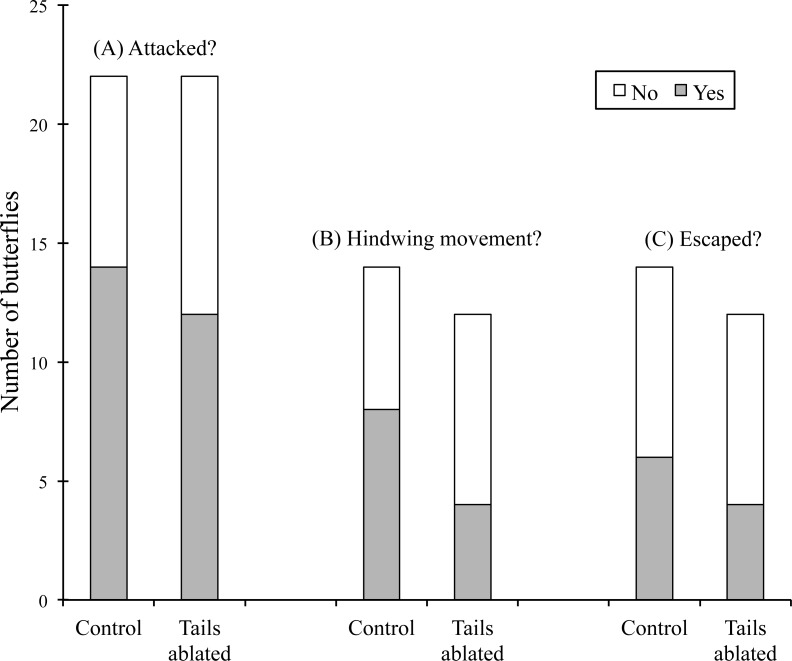
The colour patterns and morphological peculiarities of the hindwings of several butterfly species result in the appearance of a head at the rear end of the insect's body. Although some experimental evidence supports the hypothesis that the "false head" deflects predator attacks towards the rear end of the butterfly, more research is needed to determine the role of the different components of the "false head". We explored the role of hindwing tails (presumably mimicking antennae) in predator deception in the "false head" butterfly . We exposed butterflies with intact wings and with hindwing tails experimentally ablated to female mantises (). We found no differences in the number of butterflies being attacked and the number of butterflies escaping predation between both groups. However, our behavioural observations indicate that other aspects of the "false head" help survive some mantis attacks, supporting the notion that they are adaptations against predators.
几种蝴蝶物种后翅的颜色图案和形态特征使得昆虫身体后端出现头部的外观。尽管一些实验证据支持“假头”将捕食者的攻击引向蝴蝶后端的假说,但仍需要更多研究来确定“假头”不同组成部分的作用。我们探究了后翅尾突(可能模仿触角)在“假头”蝴蝶欺骗捕食者中的作用。我们将翅膀完整和后翅尾突经实验切除的蝴蝶暴露给雌性螳螂。我们发现两组之间在被攻击蝴蝶的数量和逃脱捕食的蝴蝶数量上没有差异。然而,我们的行为观察表明,“假头”的其他方面有助于在一些螳螂的攻击中存活下来,支持了它们是针对捕食者的适应性特征这一观点。