Department of Biochemistry, University of Oxford, South Parks Road, Oxford OX1 3QU, UK.
MRC Human Immunology Unit, Weatherall Institute of Molecular Medicine, University of Oxford, Headley Way, Oxford OX3 9DS, UK.
Nat Commun. 2017 Jun 27;8:15940. doi: 10.1038/ncomms15940.
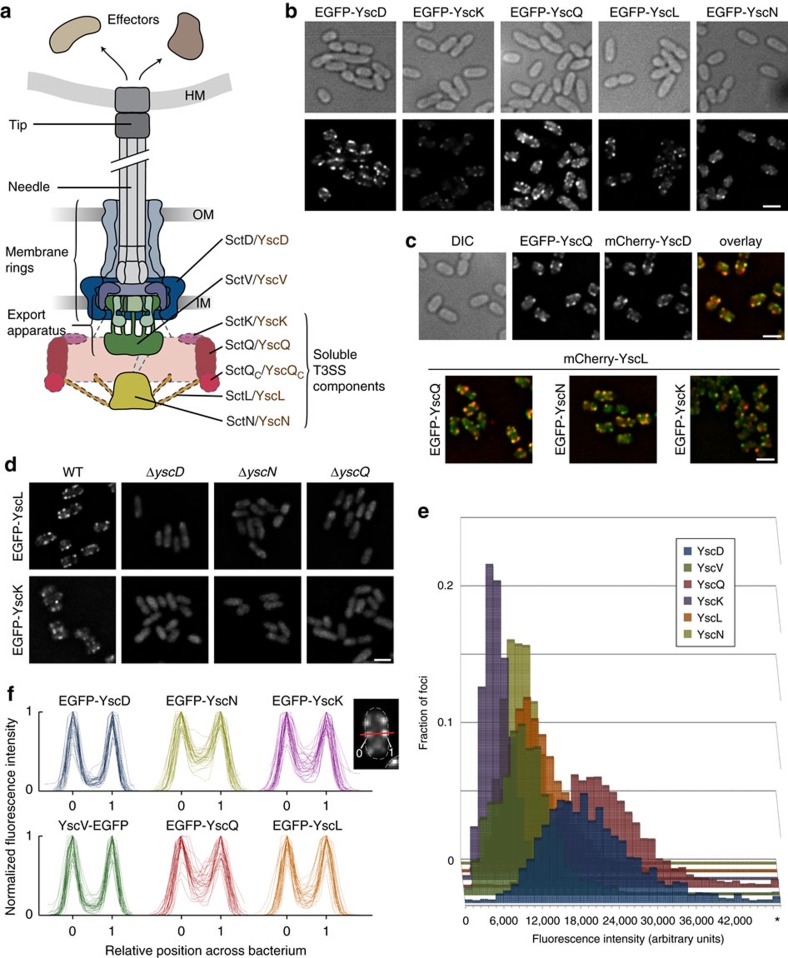
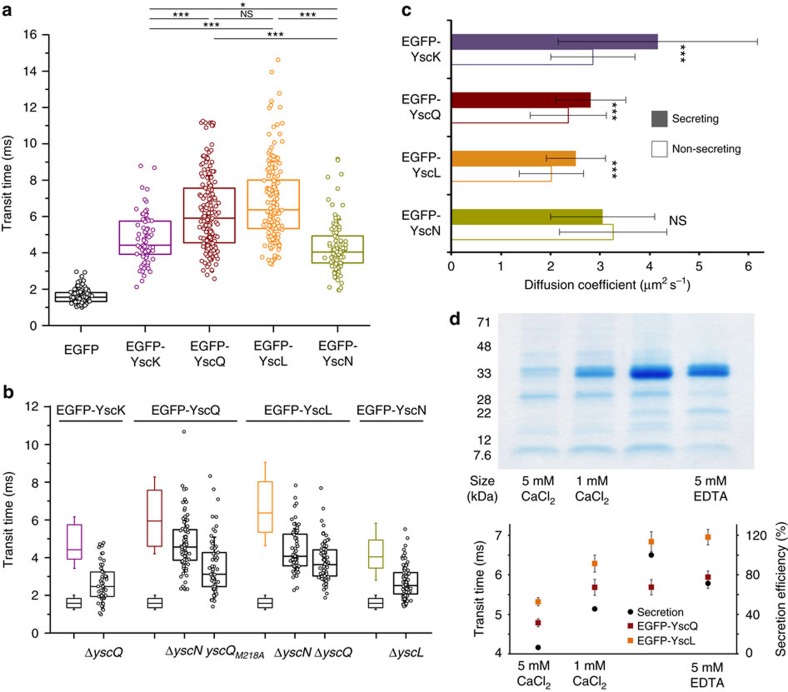
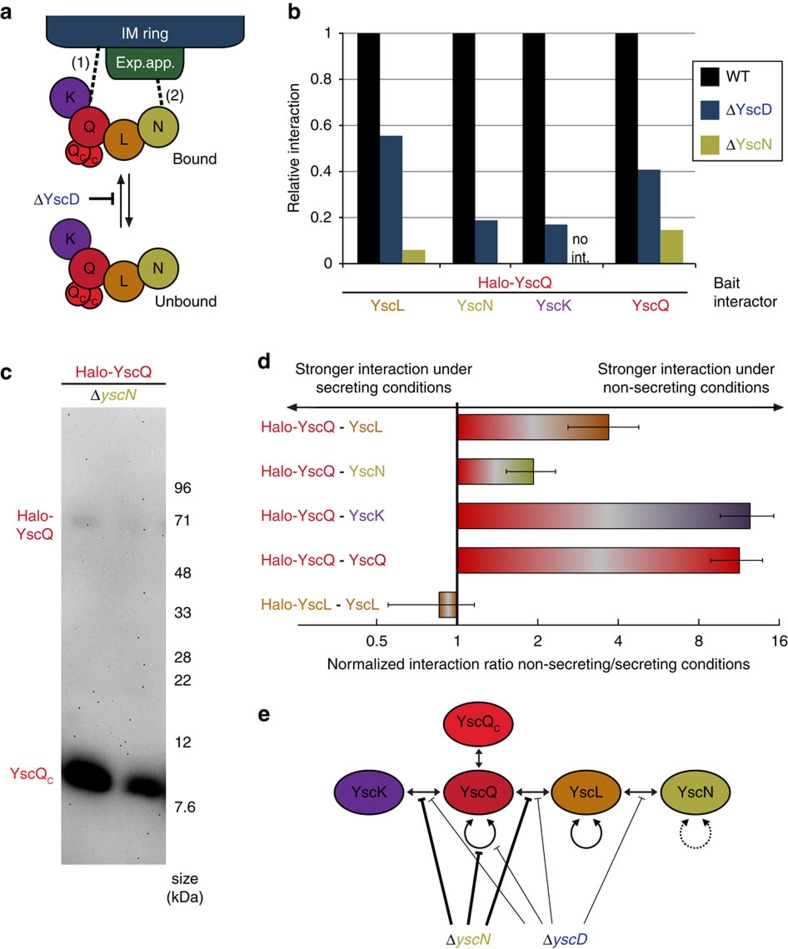
Many bacteria use a type III secretion system (T3SS) to inject effector proteins into host cells. Selection and export of the effectors is controlled by a set of soluble proteins at the cytosolic interface of the membrane spanning type III secretion 'injectisome'. Combining fluorescence microscopy, biochemical interaction studies and fluorescence correlation spectroscopy, we show that in live Yersinia enterocolitica bacteria these soluble proteins form complexes both at the injectisome and in the cytosol. Binding to the injectisome stabilizes these cytosolic complexes, whereas the free cytosolic complexes, which include the type III secretion ATPase, constitute a highly dynamic and adaptive network. The extracellular calcium concentration, which triggers activation of the T3SS, directly influences the cytosolic complexes, possibly through the essential component SctK/YscK, revealing a potential mechanism involved in the regulation of type III secretion.
许多细菌使用 III 型分泌系统(T3SS)将效应蛋白注入宿主细胞。效应蛋白的选择和输出由膜跨 III 型分泌“注入体”胞质界面处的一组可溶性蛋白控制。通过荧光显微镜、生化相互作用研究和荧光相关光谱学的结合,我们表明在活的肠炎沙门氏菌中,这些可溶性蛋白在注入体和细胞质中均形成复合物。与注入体的结合稳定了这些细胞质复合物,而包括 III 型分泌 ATP 酶在内的游离细胞质复合物构成了一个高度动态和适应性的网络。触发 T3SS 激活的细胞外钙离子浓度直接影响细胞质复合物,可能通过必需成分 SctK/YscK 进行影响,揭示了一种可能参与 III 型分泌调节的机制。