Baker Jeremy D, Shelton Lindsey B, Zheng Dali, Favretto Filippo, Nordhues Bryce A, Darling April, Sullivan Leia E, Sun Zheying, Solanki Parth K, Martin Mackenzie D, Suntharalingam Amirthaa, Sabbagh Jonathan J, Becker Stefan, Mandelkow Eckhard, Uversky Vladimir N, Zweckstetter Markus, Dickey Chad A, Koren John, Blair Laura J
Department of Molecular Medicine and Byrd Alzheimer's Institute, University of South Florida, Tampa, Florida, United States of America.
James A. Haley Veteran's Hospital, Tampa, Florida, United States of America.
PLoS Biol. 2017 Jun 27;15(6):e2001336. doi: 10.1371/journal.pbio.2001336. eCollection 2017 Jun.
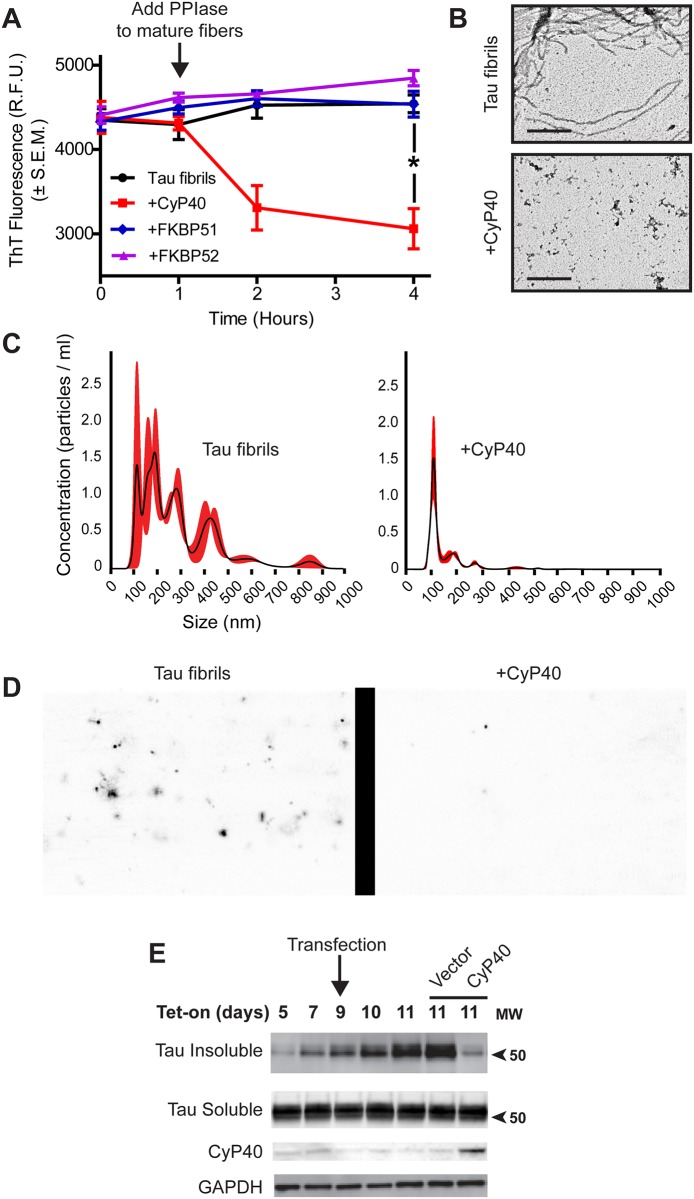
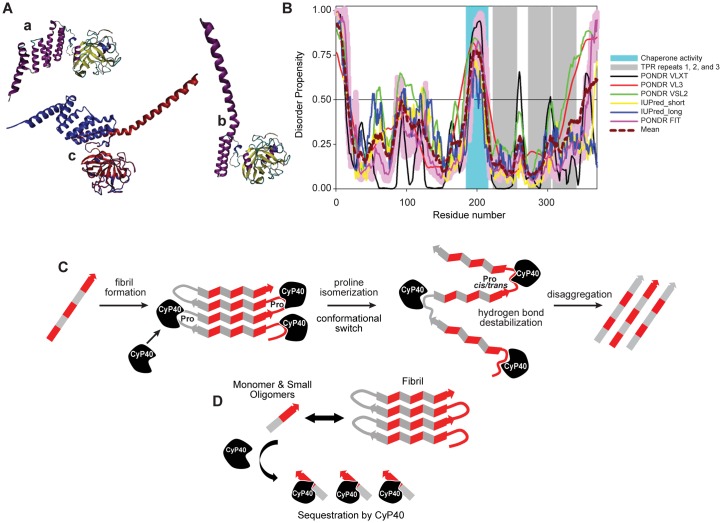
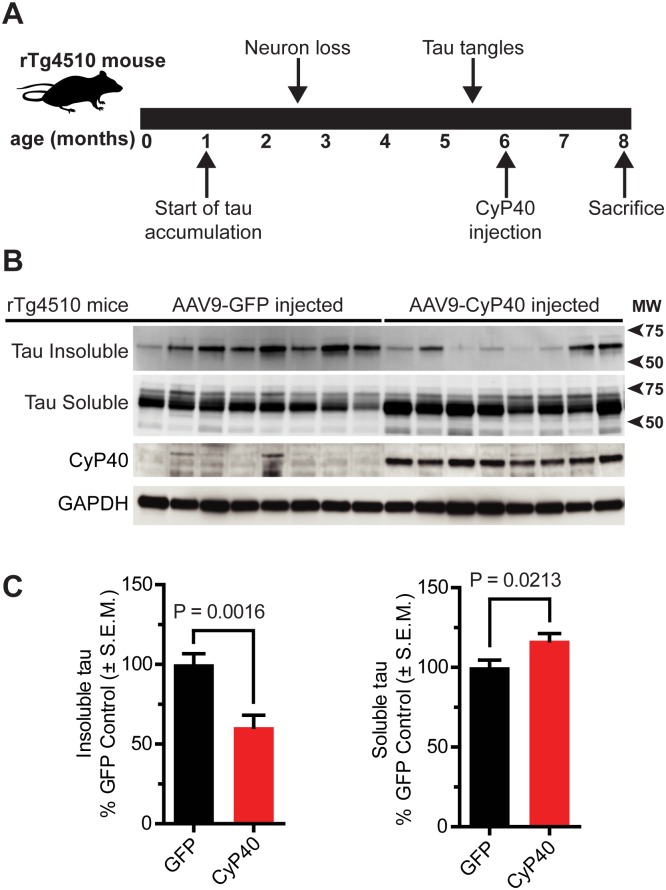
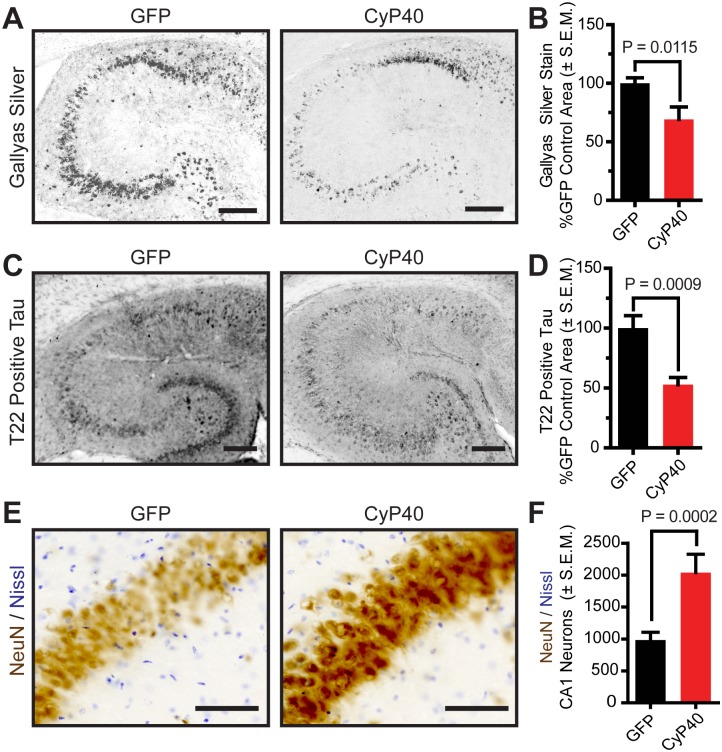
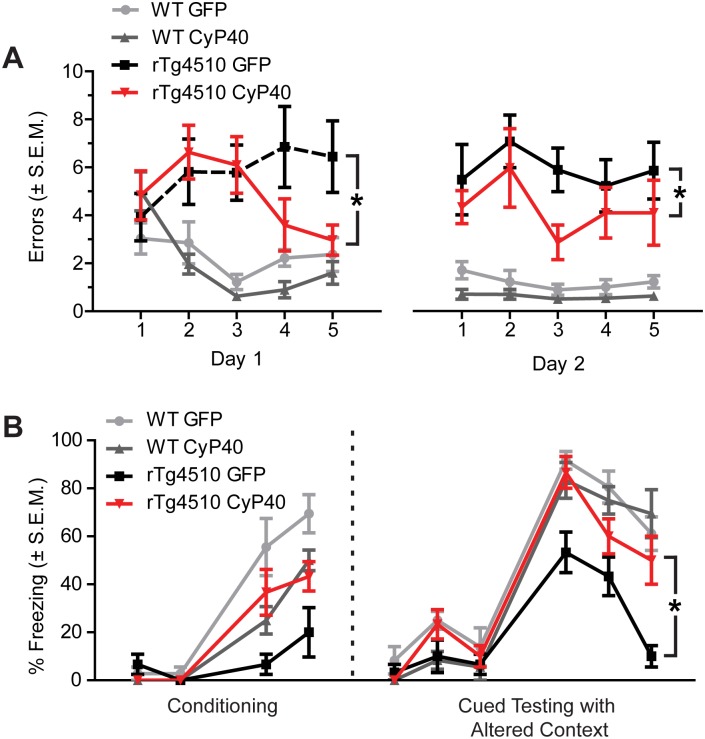
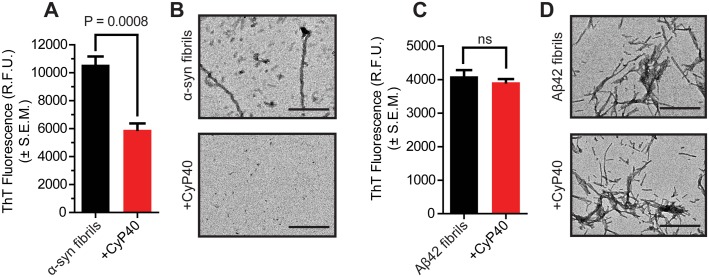
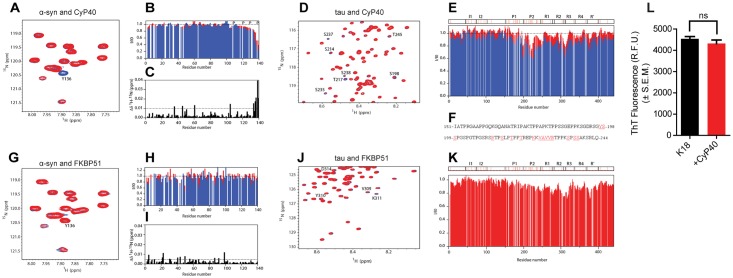
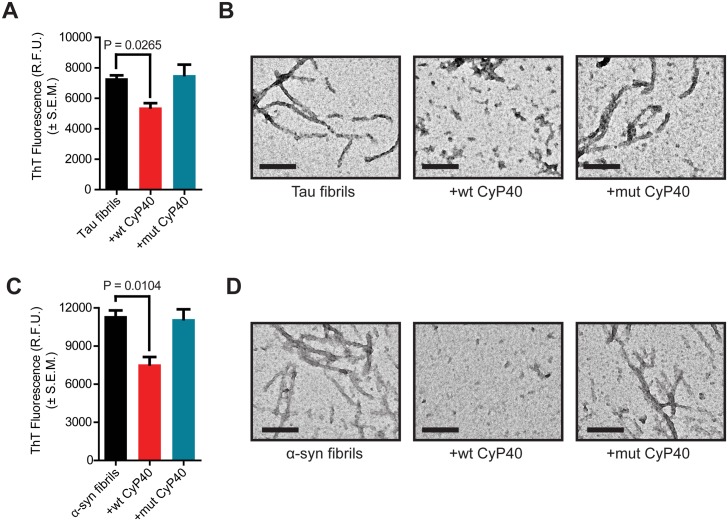
The accumulation of amyloidogenic proteins is a pathological hallmark of neurodegenerative disorders. The aberrant accumulation of the microtubule associating protein tau (MAPT, tau) into toxic oligomers and amyloid deposits is a primary pathology in tauopathies, the most common of which is Alzheimer's disease (AD). Intrinsically disordered proteins, like tau, are enriched with proline residues that regulate both secondary structure and aggregation propensity. The orientation of proline residues is regulated by cis/trans peptidyl-prolyl isomerases (PPIases). Here we show that cyclophilin 40 (CyP40), a PPIase, dissolves tau amyloids in vitro. Additionally, CyP40 ameliorated silver-positive and oligomeric tau species in a mouse model of tau accumulation, preserving neuronal health and cognition. Nuclear magnetic resonance (NMR) revealed that CyP40 interacts with tau at sites rich in proline residues. CyP40 was also able to interact with and disaggregate other aggregating proteins that contain prolines. Moreover, CyP40 lacking PPIase activity prevented its capacity for disaggregation in vitro. Finally, we describe a unique structural property of CyP40 that may permit disaggregation to occur in an energy-independent manner. This study identifies a novel human protein disaggregase and, for the first time, demonstrates its capacity to dissolve intracellular amyloids.
淀粉样蛋白的积累是神经退行性疾病的病理标志。微管相关蛋白tau(MAPT,tau)异常聚积为有毒寡聚体和淀粉样沉积物是tau蛋白病的主要病理特征,其中最常见的是阿尔茨海默病(AD)。像tau这样的内在无序蛋白富含脯氨酸残基,这些残基调节二级结构和聚集倾向。脯氨酸残基的取向由顺/反肽基脯氨酰异构酶(PPIase)调节。在这里,我们表明亲环蛋白40(CyP40),一种PPIase,在体外可溶解tau淀粉样蛋白。此外,在tau蛋白积累的小鼠模型中,CyP40改善了银阳性和寡聚tau蛋白种类,维持了神经元健康和认知功能。核磁共振(NMR)显示CyP40在富含脯氨酸残基的位点与tau相互作用。CyP40还能够与其他含脯氨酸的聚集蛋白相互作用并使其解聚。此外,缺乏PPIase活性的CyP40在体外失去了解聚能力。最后,我们描述了CyP40一种独特的结构特性,它可能允许以能量非依赖的方式发生解聚。这项研究鉴定出一种新型的人类蛋白解聚酶,并首次证明了其溶解细胞内淀粉样蛋白的能力。