Pröschel Marlene, Kraner Max E, Horn Anselm H C, Schäfer Lena, Sonnewald Uwe, Sticht Heinrich
Lehrstuhl für Biochemie, Department Biologie, Friedrich-Alexander-Universität Erlangen-Nürnberg, Erlangen, Germany.
Bioinformatik, Institut für Biochemie, Friedrich-Alexander-Universität Erlangen-Nürnberg, Erlangen, Germany.
PLoS One. 2017 Jun 27;12(6):e0179740. doi: 10.1371/journal.pone.0179740. eCollection 2017.
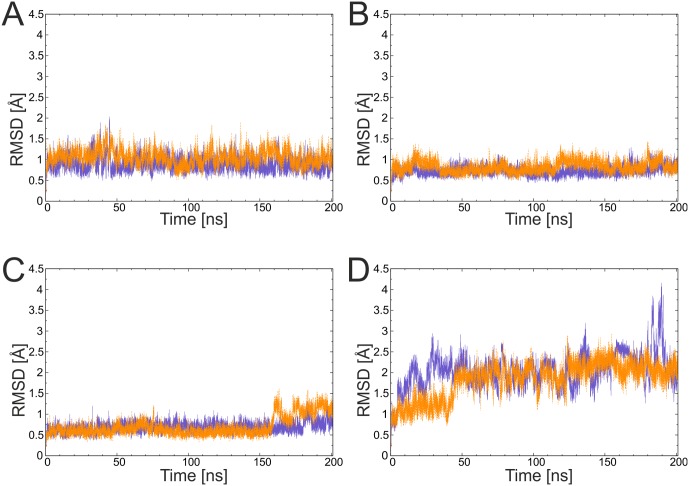
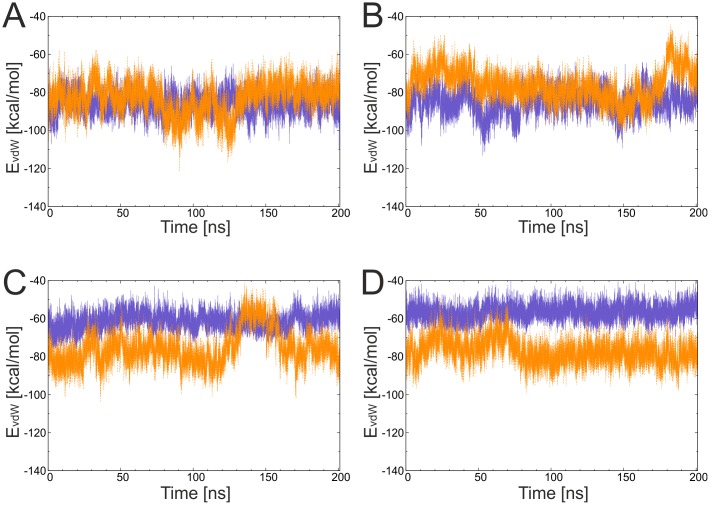
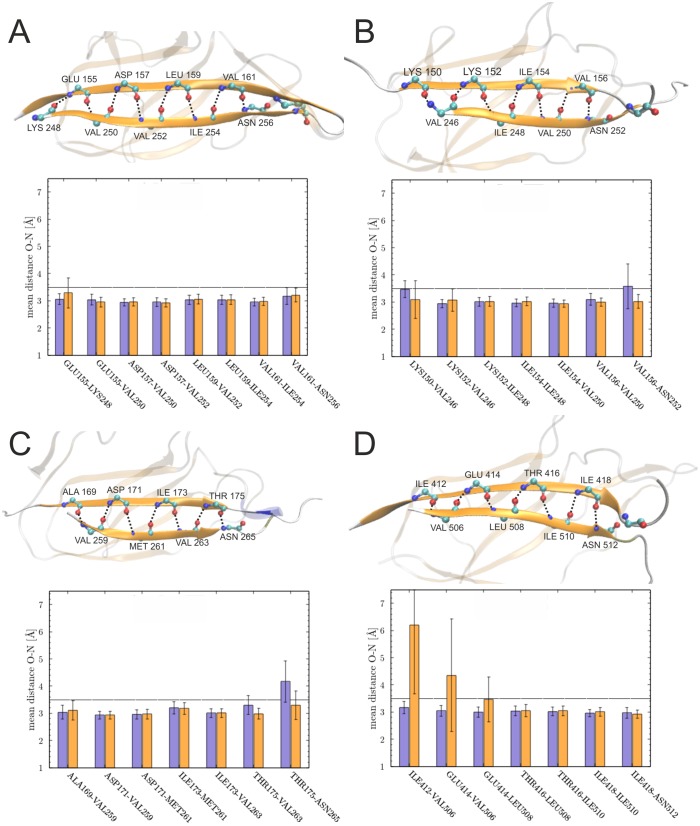
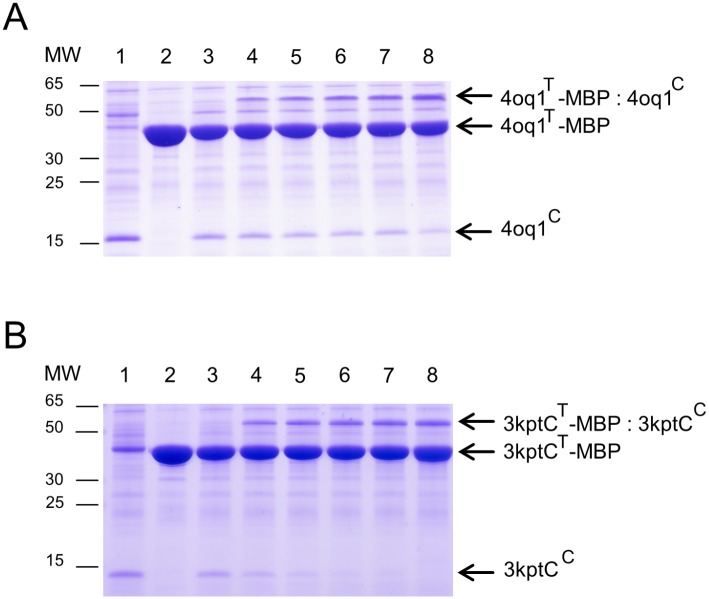
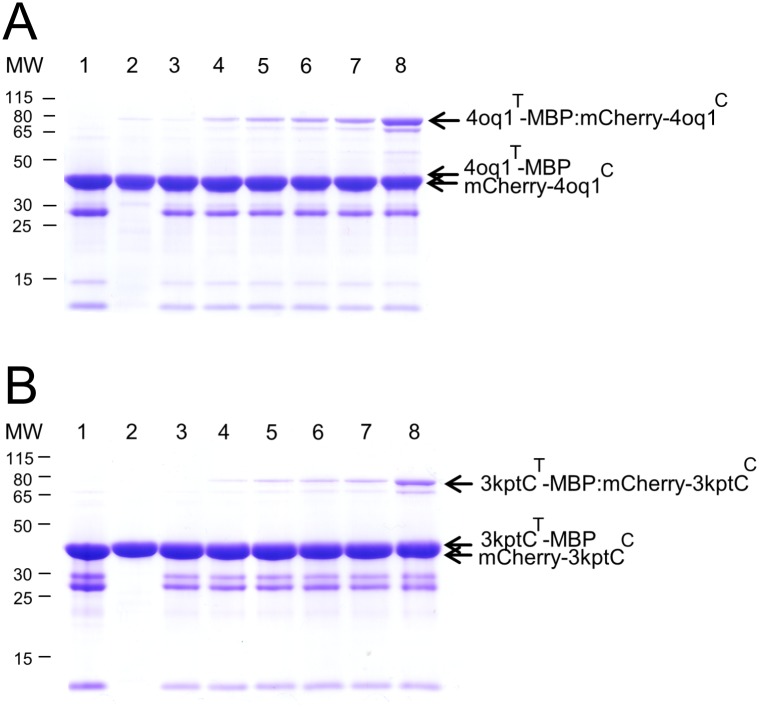
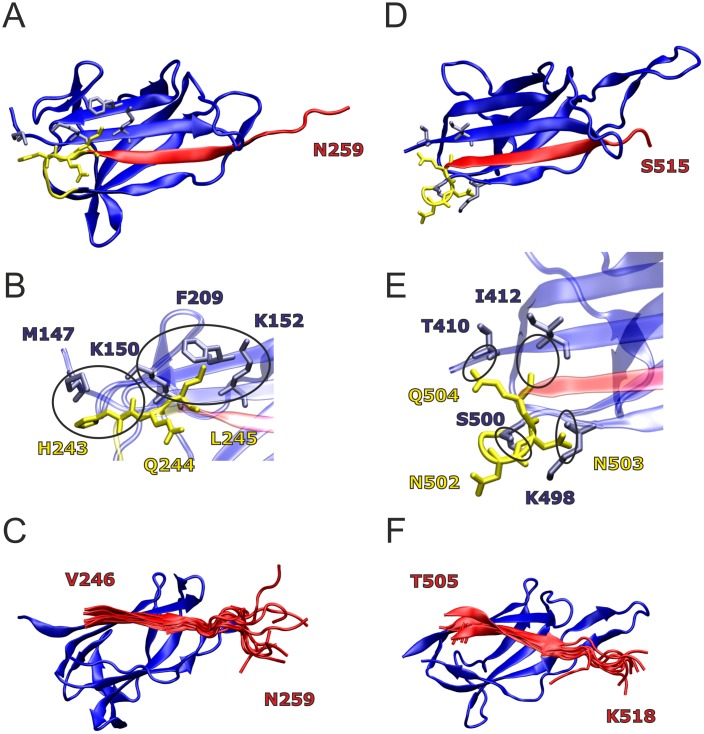
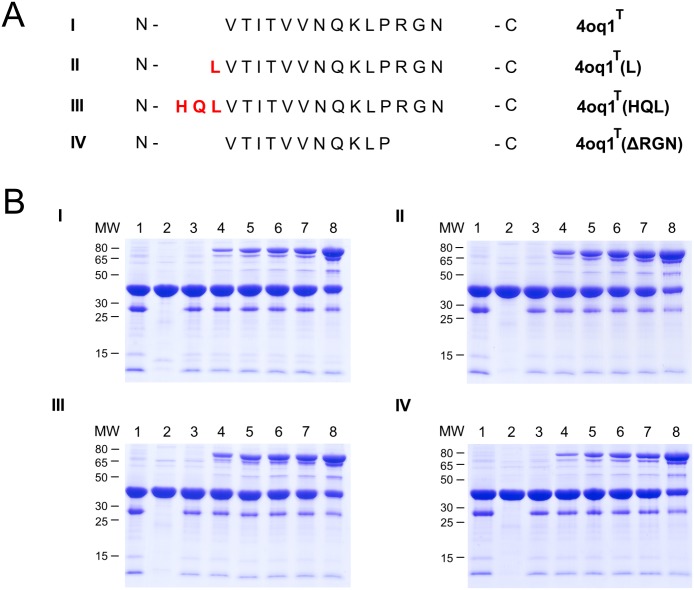
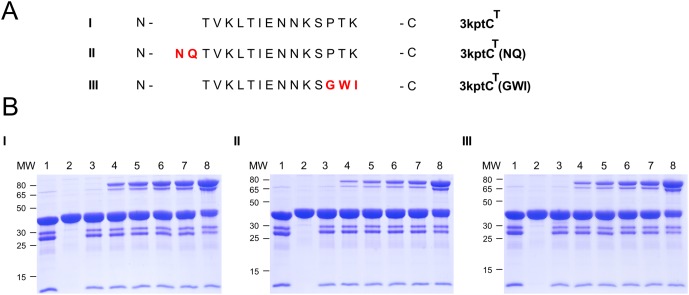
Building proteins into larger, post-translational assemblies in a defined and stable way is still a challenging task. A promising approach relies on so-called tag/catcher systems that are fused to the proteins of interest and allow a durable linkage via covalent intermolecular bonds. Tags and catchers are generated by splitting protein domains that contain intramolecular isopeptide or ester bonds that form autocatalytically under physiological conditions. There are already numerous biotechnological and medical applications that demonstrate the usefulness of covalent linkages mediated by these systems. Additional covalent tag/catcher systems would allow creating more complex and ultra-stable protein architectures and networks. Two of the presently available tag/catcher systems were derived from closely related CnaB-domains of Streptococcus pyogenes and Streptococcus dysgalactiae proteins. However, it is unclear whether domain splitting is generally tolerated within the CnaB-family or only by a small subset of these domains. To address this point, we have selected a set of four CnaB domains of low sequence similarity and characterized the resulting tag/catcher systems by computational and experimental methods. Experimental testing for intermolecular isopeptide bond formation demonstrated two of the four systems to be functional. For these two systems length and sequence variations of the peptide tags were investigated revealing only a relatively small effect on the efficiency of the reaction. Our study suggests that splitting into tag and catcher moieties is tolerated by a significant portion of the naturally occurring CnaB-domains, thus providing a large reservoir for the design of novel tag/catcher systems.
以一种明确且稳定的方式将蛋白质构建成更大的翻译后组装体仍然是一项具有挑战性的任务。一种有前景的方法依赖于所谓的标签/捕获系统,该系统与感兴趣的蛋白质融合,并通过共价分子间键实现持久连接。标签和捕获物是通过拆分包含分子内异肽键或酯键的蛋白质结构域产生的,这些键在生理条件下会自动催化形成。已经有许多生物技术和医学应用证明了这些系统介导的共价连接的有用性。额外的共价标签/捕获系统将允许创建更复杂和超稳定的蛋白质结构和网络。目前可用的两种标签/捕获系统源自化脓性链球菌和停乳链球菌蛋白质的密切相关的CnaB结构域。然而,尚不清楚在CnaB家族中结构域拆分是否普遍可耐受,还是仅在这些结构域的一小部分中可耐受。为了解决这一问题,我们选择了一组四个序列相似性较低的CnaB结构域,并通过计算和实验方法对所得的标签/捕获系统进行了表征。分子间异肽键形成的实验测试表明,四个系统中的两个具有功能。对于这两个系统,研究了肽标签的长度和序列变化,结果显示对反应效率的影响相对较小。我们的研究表明,天然存在的CnaB结构域的很大一部分能够耐受拆分为标签和捕获物部分,从而为设计新型标签/捕获系统提供了大量资源。