Department of Cardiology, Sun Yat-sen Memorial Hospital of Sun Yat-sen University, Guangzhou, Guangdong 510120, P.R. China.
Department of Cardiology, The First Affiliated Hospital of Nanchang University, Nanchang, Jiangxi 330006, P.R. China.
Int J Mol Med. 2017 Aug;40(2):558-568. doi: 10.3892/ijmm.2017.3034. Epub 2017 Jun 19.
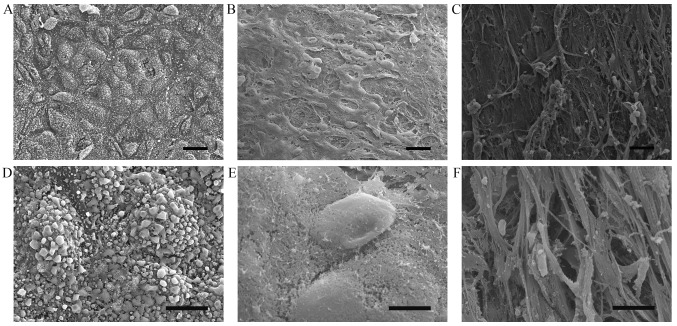
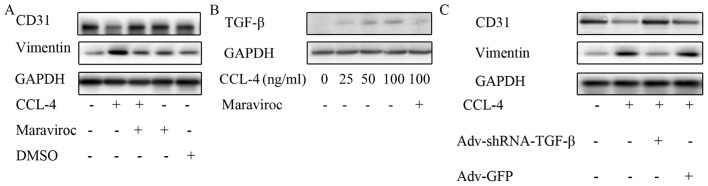
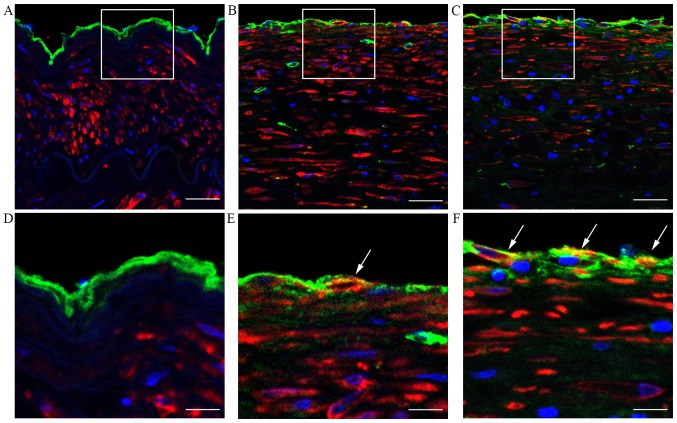
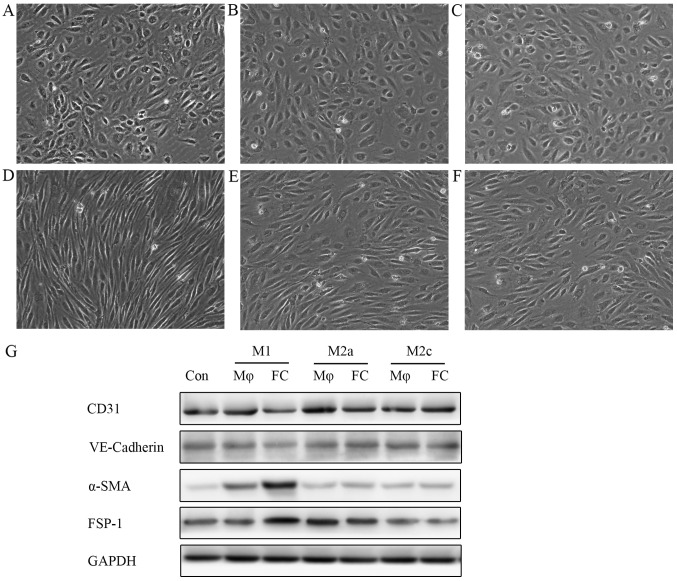
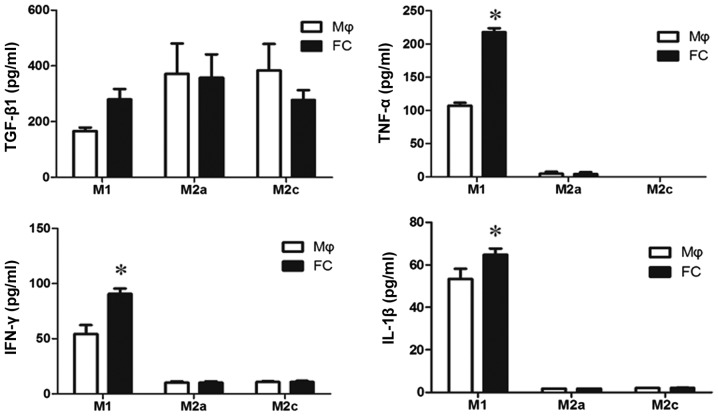
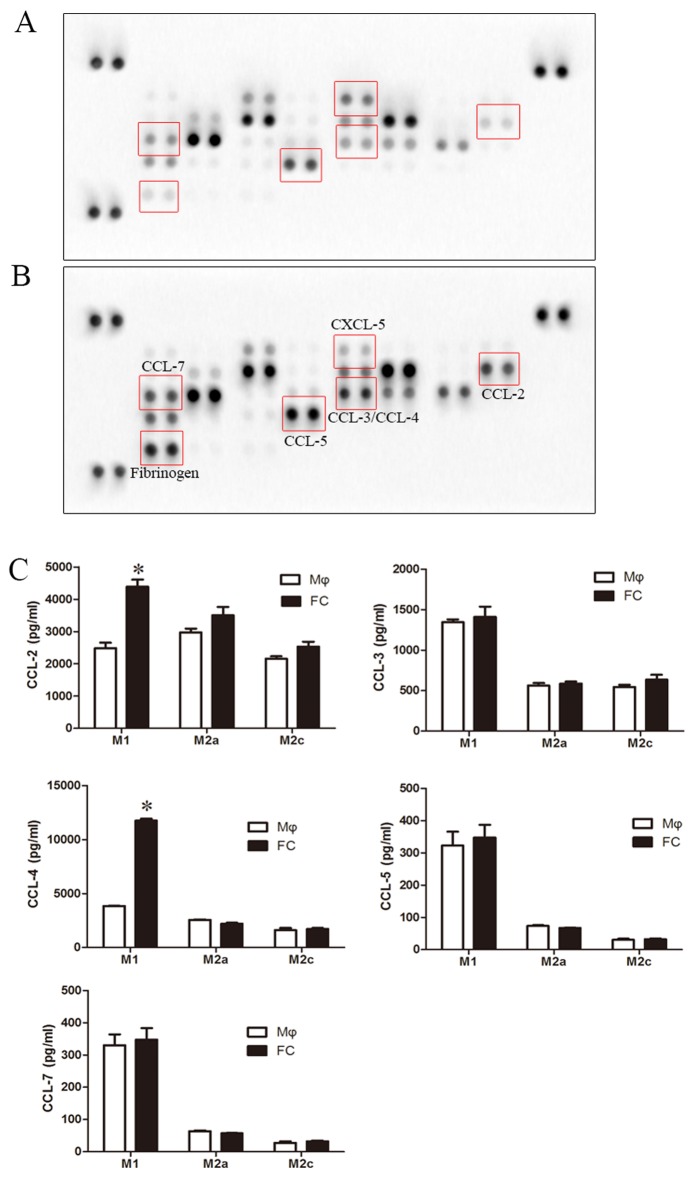
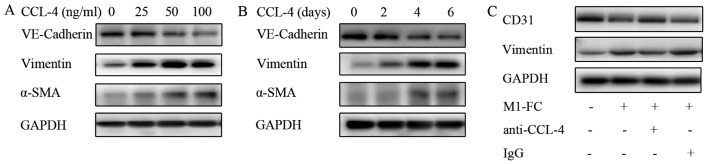
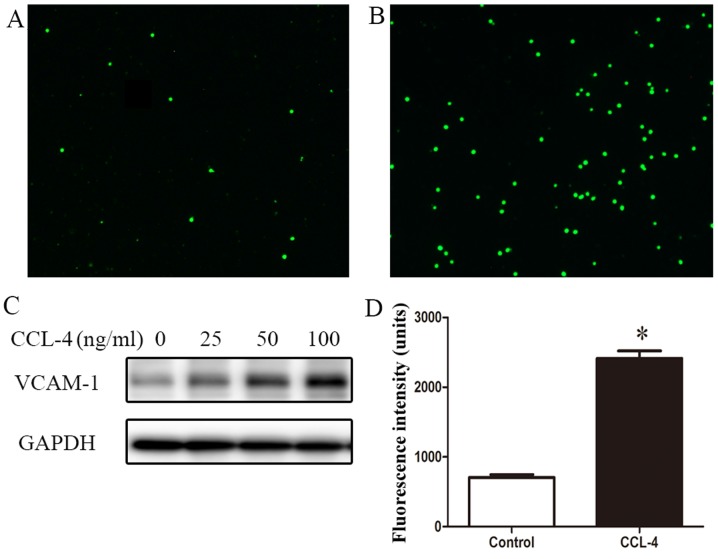
Recently, endothelial-mesenchymal transition (EndMT) has been demonstrated to play an important role in the development of atherosclerosis, the molecular mechanisms of which remain unclear. In the present study, scanning electron microscopy directly revealed a widened endothelial space and immunohistofluorescence demonstrated that EndMT was increased in human aorta atherosclerotic plaques. M1 macrophage-derived foam cell (M1-FC) supernatants, but not M2 macrophage-derived foam cell (M2-FC) supernatants, induced EndMT. A protein array and enzyme-linked immunosorbent assay identified that the levels of several cytokines, including C-C motif chemokine ligand 4 (CCL-4) were increased in M1-FC supernatants, in which EndMT was promoted, accompanied by increased endothelial permeability and monocyte adhesion. Furthermore, anti-CCL-4 antibody abolished the effects of M1-FC supernatants on EndMT. At the same time, CCL-4 activated its receptor, C-C motif chemokine receptor-5 (CCR-5), and upregulated transforming growth factor-β (TGF-β) expression. Further experiments revealed that EndMT induced by CCL-4 was reversed by treatment with CCR-5 antagonist and the RNA-mediated knockdown of TGF-β. On the whole, the data of the present study suggest that M1-FCs induce EndMT by upregulating CCL-4, and increase endothelial permeability and monocyte adhesion. These data may help to elucidate the important role of EndMT in the development of atherosclerosis.
最近,内皮-间充质转化(EndMT)被证明在动脉粥样硬化的发展中起着重要作用,但其分子机制尚不清楚。在本研究中,扫描电子显微镜直接显示内皮空间变宽,免疫荧光显示人主动脉粥样硬化斑块中 EndMT 增加。M1 巨噬细胞衍生泡沫细胞(M1-FC)上清液,但不是 M2 巨噬细胞衍生泡沫细胞(M2-FC)上清液,诱导 EndMT。蛋白质芯片和酶联免疫吸附试验鉴定出几种细胞因子的水平增加,包括 C-C 基序趋化因子配体 4(CCL-4),在促进 EndMT 的 M1-FC 上清液中增加,伴随着内皮通透性增加和单核细胞黏附。此外,抗 CCL-4 抗体消除了 M1-FC 上清液对 EndMT 的作用。同时,CCL-4 激活其受体 C-C 基序趋化因子受体 5(CCR-5),并上调转化生长因子-β(TGF-β)表达。进一步的实验表明,CCL-4 诱导的 EndMT 被 CCR-5 拮抗剂和 TGF-β 的 RNA 介导的敲低逆转。总的来说,本研究的数据表明,M1-FC 通过上调 CCL-4 诱导 EndMT,并增加内皮通透性和单核细胞黏附。这些数据可能有助于阐明 EndMT 在动脉粥样硬化发展中的重要作用。