Shan Baoyin, Zhang Jing, Song Yanlin, Xu Jianguo
Department of Neurosurgery West China School of Medicine, West China Hospital of Sichuan University, Chengdu, Sichuan, China.
Medicine (Baltimore). 2017 Jun;96(26):e7385. doi: 10.1097/MD.0000000000007385.
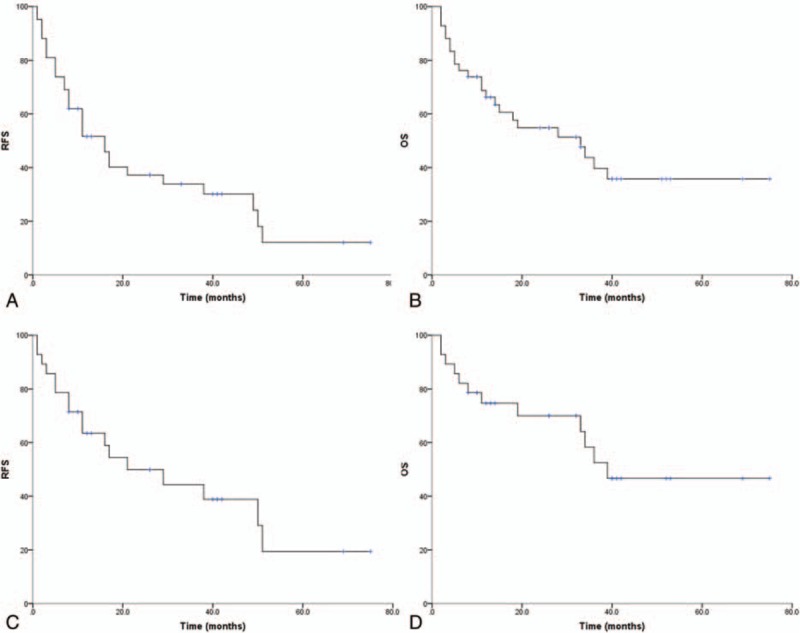
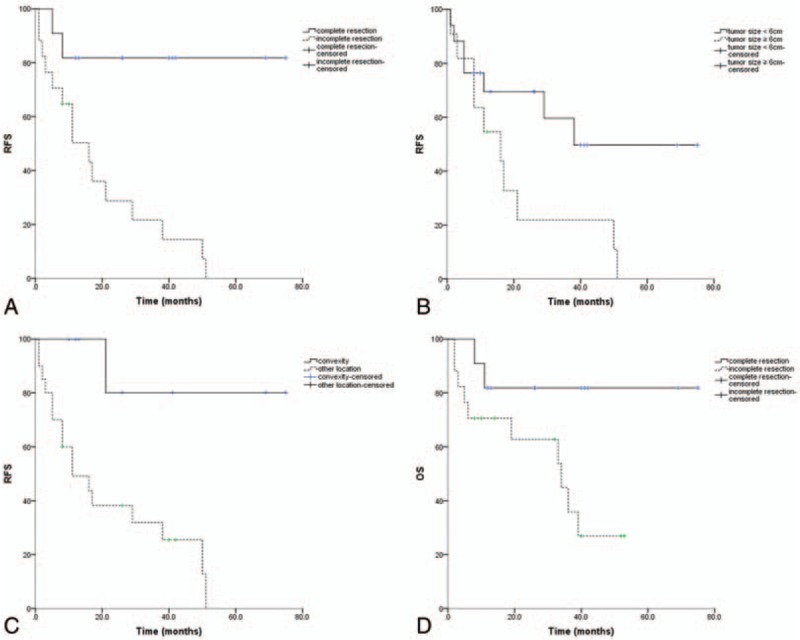
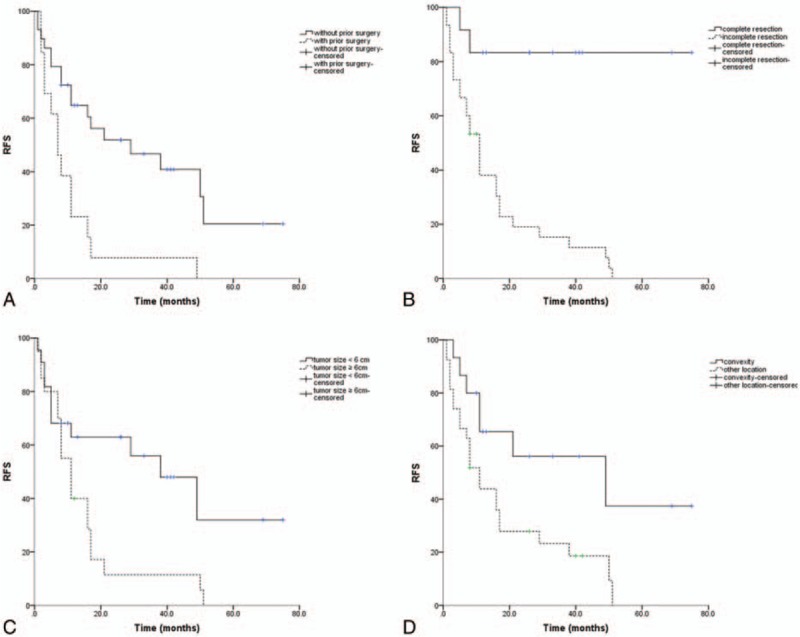
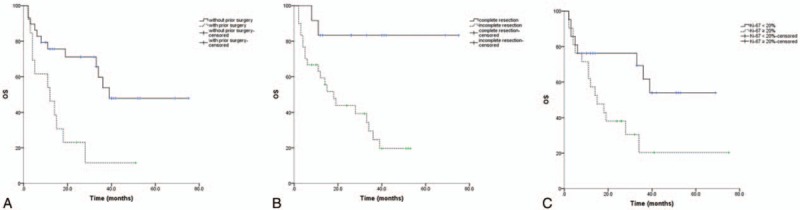
We analyzed the characteristics of patients with World Health Organization (WHO) grade III meningioma to identify factors that may predict tumor recurrence and overall survival (OS).We retrospectively reviewed the patients diagnosed with WHO grade III meningioma who were surgically treated at our institute between 2008 and 2016. Survival outcome was assessed by Kaplan-Meier analysis. Cox regression analyses were performed to identify the prognostic factors associated with tumor recurrence and OS.Forty-two patients were included. The mean follow-up time was 23.2 months (range 2-75 months). At the end of analysis, 30 patients were found with tumor recurrence. The 1-year, 3-year, and 5-year recurrence-free survival (RFS) were 51.6%, 33.9%, and 12.0%, respectively. At final follow-up, 23 patients were deceased, the 1-year, 3-year, and 5-year OS were 66.2%, 39.7%, and 35.8%, respectively. Twenty-eight newly diagnosed patients were included, and the 1-year, 3-year, and 5-year RFS were 63.5%, 44.3%, and 19.4%, respectively, and the 1-year, 3-year, and 5-year OS were 74.6%, 52.5%, and 46.7%, respectively. Extent of resection was the only factor associated with tumor recurrence and OS.WHO grade III meningioma is rare, and difficult to manage with a high rate of recurrence and poor OS. Extent of resection is an independent prognostic factor related to tumor recurrence and OS. We could not confirm the usefulness of Ki-67. We suggest that more aggressive treatment, such as safety maximizing cytoreduction by surgery, would improve treatment outcomes.
我们分析了世界卫生组织(WHO)III级脑膜瘤患者的特征,以确定可能预测肿瘤复发和总生存期(OS)的因素。我们回顾性分析了2008年至2016年间在我院接受手术治疗的WHO III级脑膜瘤患者。采用Kaplan-Meier分析评估生存结局。进行Cox回归分析以确定与肿瘤复发和OS相关的预后因素。共纳入42例患者。平均随访时间为23.2个月(范围2 - 75个月)。分析结束时,发现30例患者出现肿瘤复发。1年、3年和5年无复发生存率(RFS)分别为51.6%、33.9%和12.0%。末次随访时,23例患者死亡,1年、3年和5年OS分别为66.2%、39.7%和35.8%。纳入28例新诊断患者,1年、3年和5年RFS分别为63.5%、44.3%和19.4% , 1年、3年和5年OS分别为74.6%、52.5%和46.7%。切除范围是与肿瘤复发和OS相关的唯一因素。WHO III级脑膜瘤罕见,治疗困难,复发率高且OS差。切除范围是与肿瘤复发和OS相关的独立预后因素。我们无法证实Ki-67的有用性。我们建议采取更积极的治疗措施,如通过手术最大限度安全地减少肿瘤细胞,以改善治疗效果。