Campilongo Rosaria, Fung Rowena K Y, Little Richard H, Grenga Lucia, Trampari Eleftheria, Pepe Simona, Chandra Govind, Stevenson Clare E M, Roncarati Davide, Malone Jacob G
John Innes Centre, Norwich Research Park, Colney Lane, Norwich, United Kingdom.
Istituto Pasteur- Fondazione Cenci Bolognetti, Dipartimento di Biologia e Biotecnologie ''C. Darwin", Sapienza Universita`di Roma, Roma, Italy.
PLoS Genet. 2017 Jun 28;13(6):e1006839. doi: 10.1371/journal.pgen.1006839. eCollection 2017 Jun.
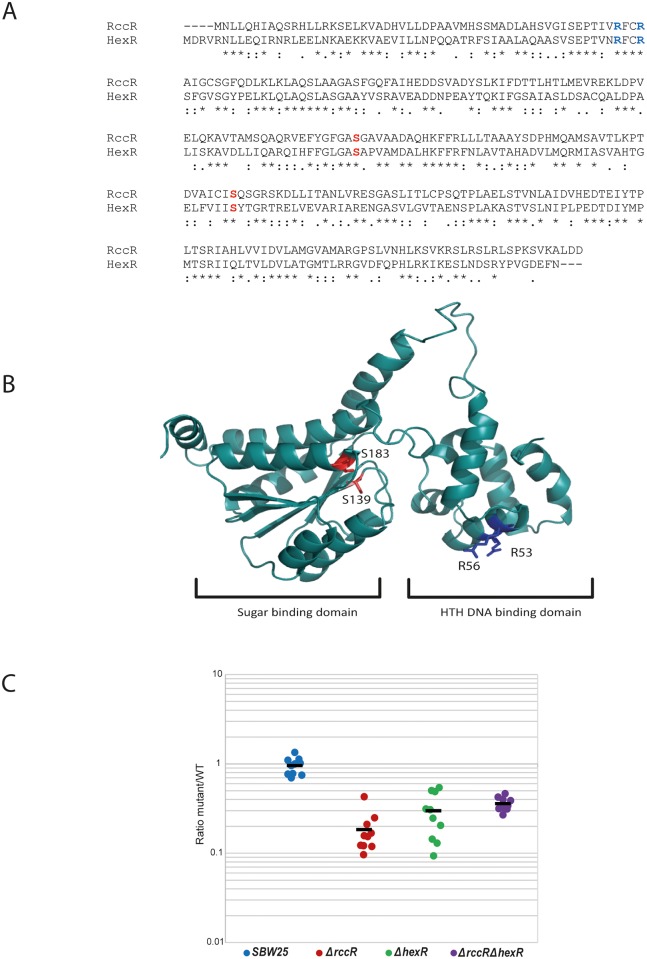
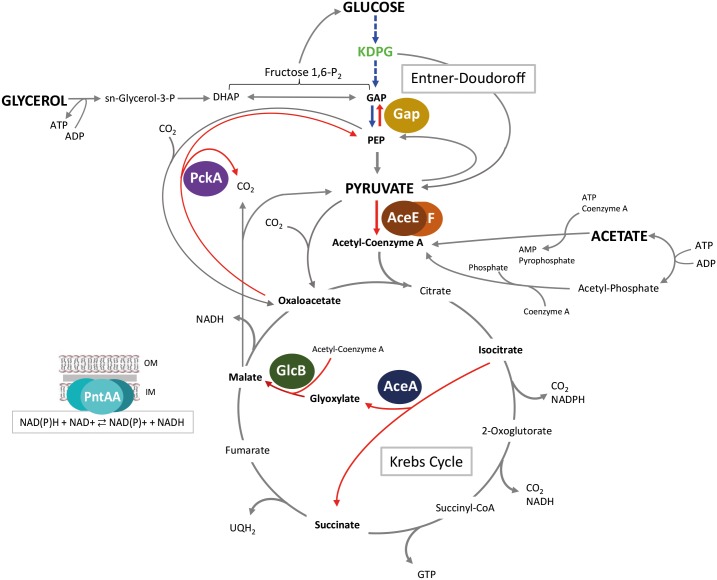
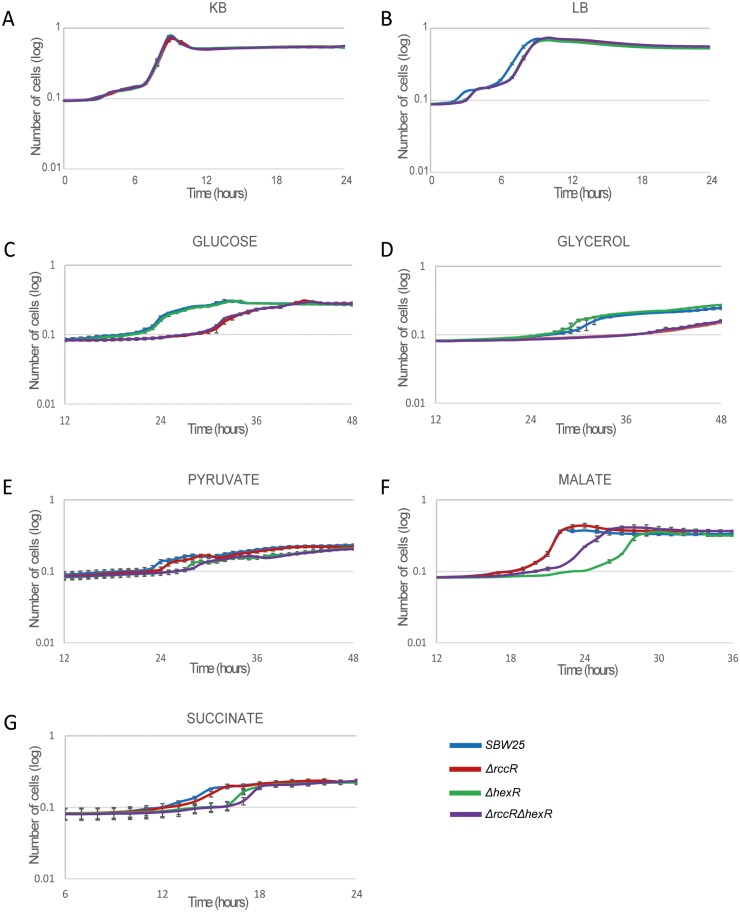
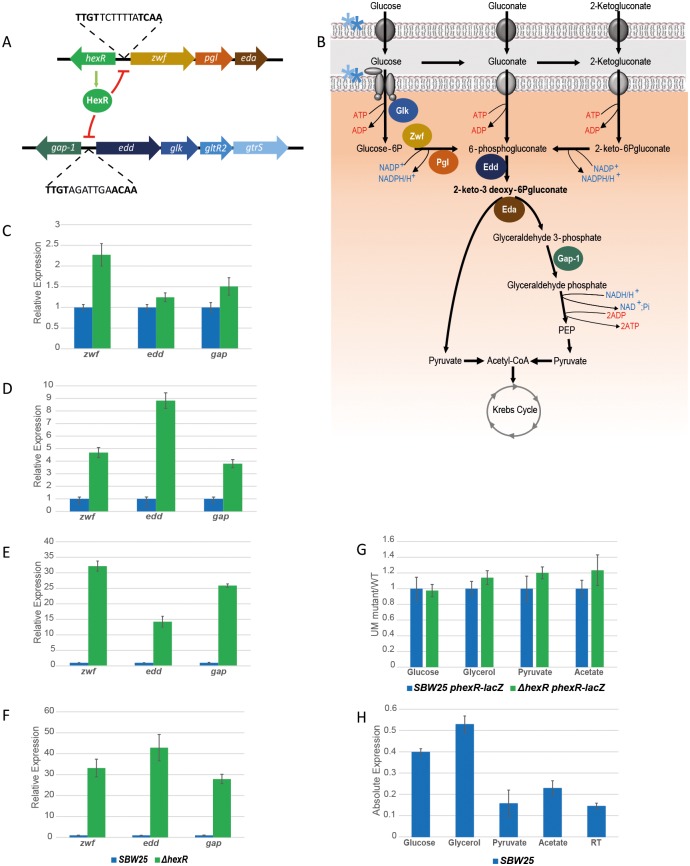
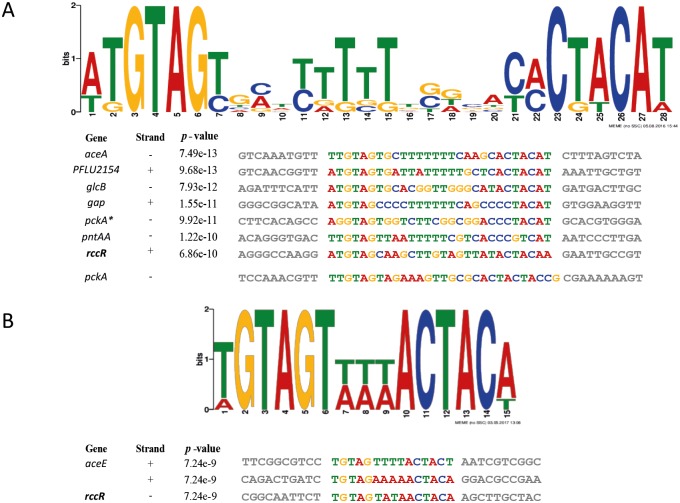
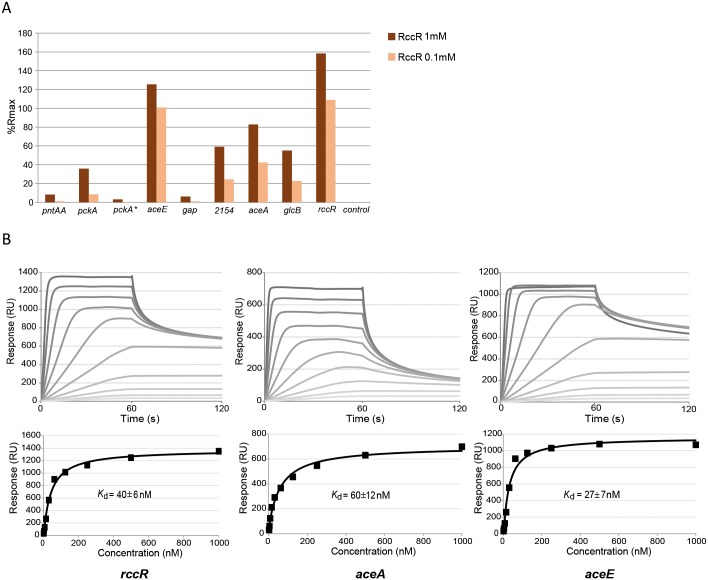
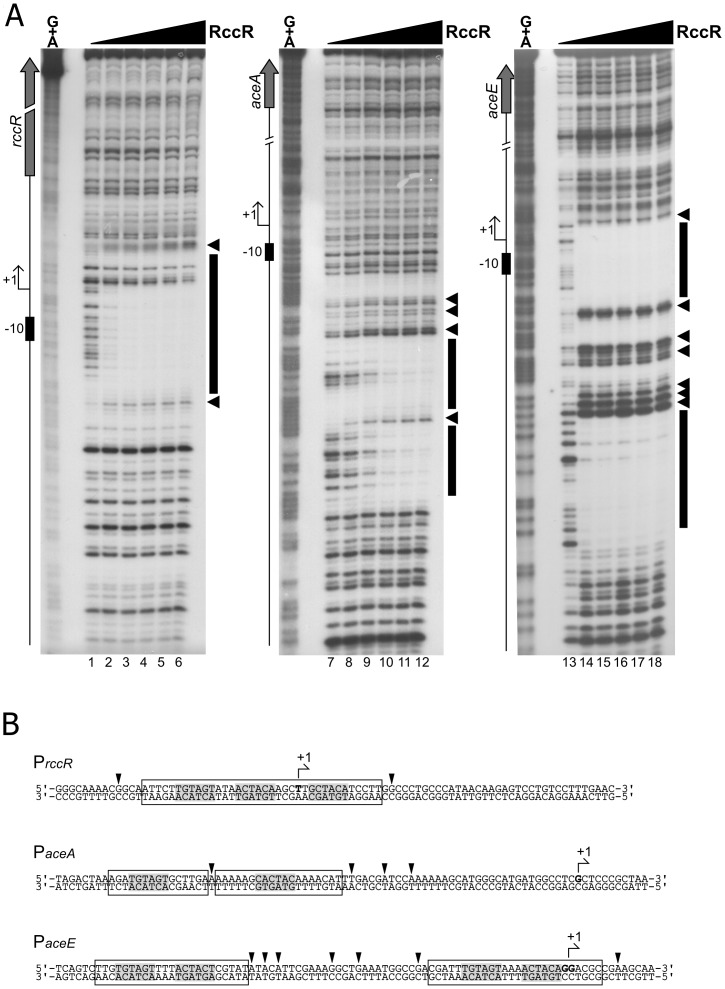
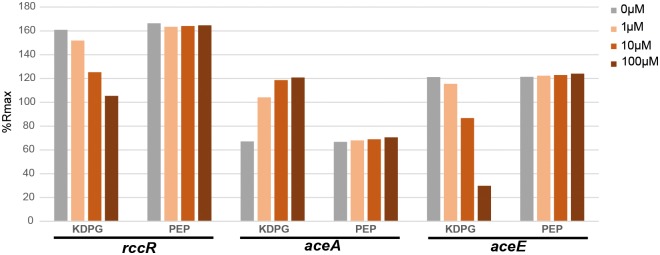
Effective regulation of primary carbon metabolism is critically important for bacteria to successfully adapt to different environments. We have identified an uncharacterised transcriptional regulator; RccR, that controls this process in response to carbon source availability. Disruption of rccR in the plant-associated microbe Pseudomonas fluorescens inhibits growth in defined media, and compromises its ability to colonise the wheat rhizosphere. Structurally, RccR is almost identical to the Entner-Doudoroff (ED) pathway regulator HexR, and both proteins are controlled by the same ED-intermediate; 2-keto-3-deoxy-6-phosphogluconate (KDPG). Despite these similarities, HexR and RccR control entirely different aspects of primary metabolism, with RccR regulating pyruvate metabolism (aceEF), the glyoxylate shunt (aceA, glcB, pntAA) and gluconeogenesis (pckA, gap). RccR displays complex and unusual regulatory behaviour; switching repression between the pyruvate metabolism and glyoxylate shunt/gluconeogenesis loci depending on the available carbon source. This regulatory complexity is enabled by two distinct pseudo-palindromic binding sites, differing only in the length of their linker regions, with KDPG binding increasing affinity for the 28 bp aceA binding site but decreasing affinity for the 15 bp aceE site. Thus, RccR is able to simultaneously suppress and activate gene expression in response to carbon source availability. Together, the RccR and HexR regulators enable the rapid coordination of multiple aspects of primary carbon metabolism, in response to levels of a single key intermediate.
有效调节初级碳代谢对于细菌成功适应不同环境至关重要。我们鉴定出一种未表征的转录调节因子RccR,它可根据碳源可用性来控制这一过程。在植物相关微生物荧光假单胞菌中破坏rccR会抑制其在限定培养基中的生长,并损害其定殖于小麦根际的能力。从结构上看,RccR与Entner-Doudoroff(ED)途径调节因子HexR几乎相同,并且这两种蛋白质都受相同的ED中间产物2-酮-3-脱氧-6-磷酸葡萄糖酸(KDPG)的调控。尽管存在这些相似性,但HexR和RccR控制着初级代谢的完全不同方面,其中RccR调节丙酮酸代谢(aceEF)、乙醛酸分流(aceA、glcB、pntAA)和糖异生(pckA、gap)。RccR表现出复杂且不寻常的调节行为;根据可用碳源在丙酮酸代谢和乙醛酸分流/糖异生基因座之间切换抑制作用。这种调节复杂性是由两个不同的假回文结合位点实现的,它们仅在连接区长度上有所不同,KDPG结合增加了对28 bp aceA结合位点的亲和力,但降低了对15 bp aceE位点的亲和力。因此,RccR能够根据碳源可用性同时抑制和激活基因表达。总之,RccR和HexR调节因子能够响应单一关键中间产物的水平,快速协调初级碳代谢的多个方面。