Zimmerman Chelsea N, Eskow Jaunarajs Karen L, Meringolo Maria, Rizzo Francesca R, Santoro Massimo, Standaert David G, Pisani Antonio
Center for Neurodegeneration and Experimental Therapeutics, Department of Neurology, University of Alabama-BirminghamBirmingham, AL, United States.
Neurophysiology and Plasticity Laboratory, Fondazione Santa Lucia IRCCSRome, Italy.
Front Syst Neurosci. 2017 Jun 13;11:43. doi: 10.3389/fnsys.2017.00043. eCollection 2017.
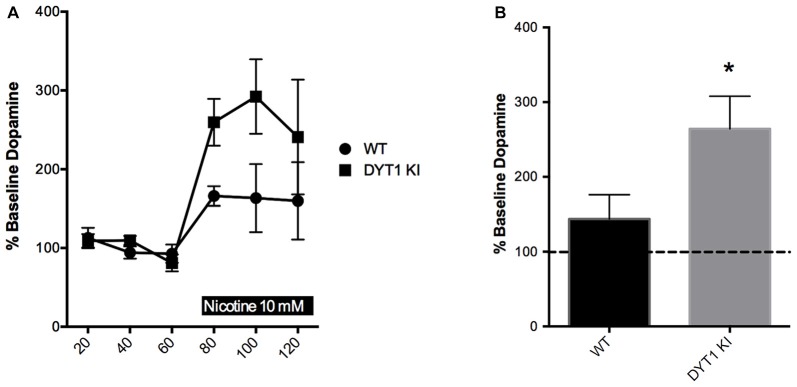
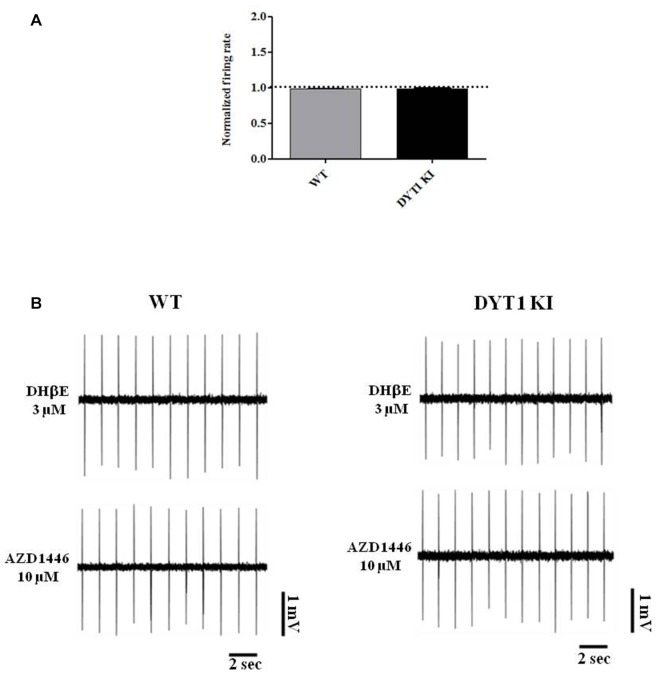
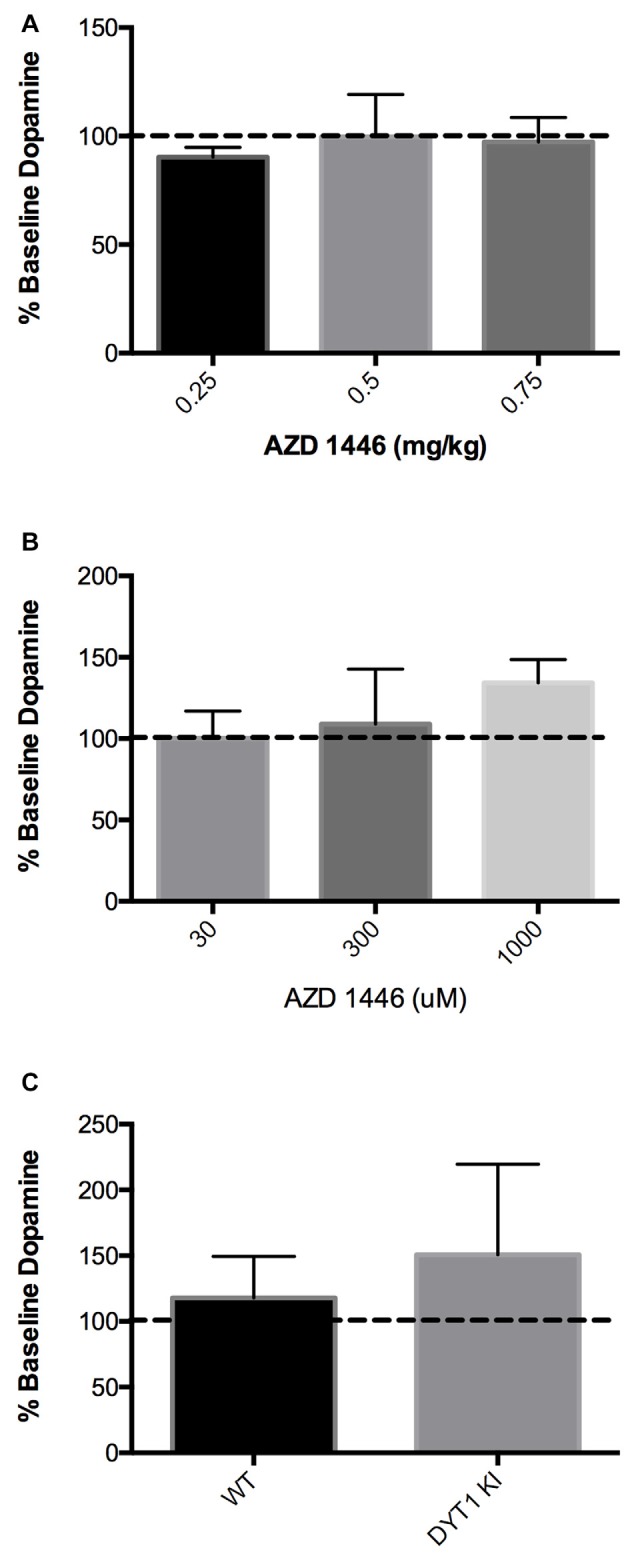
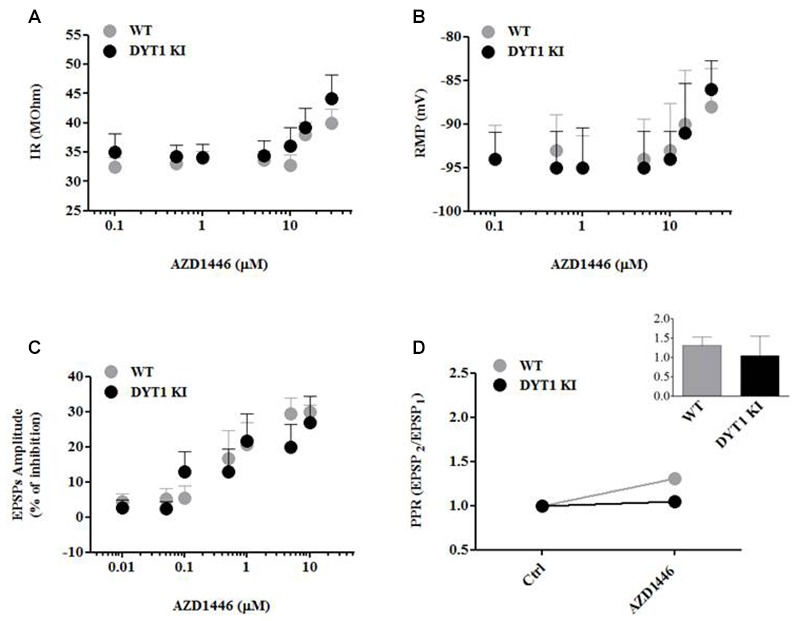
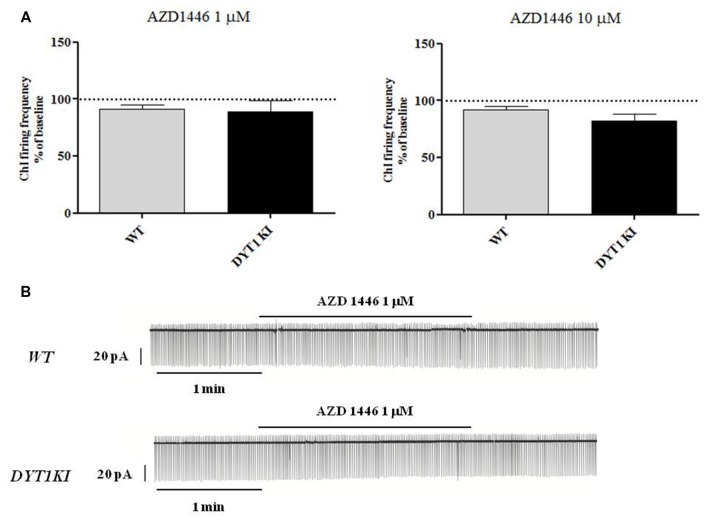
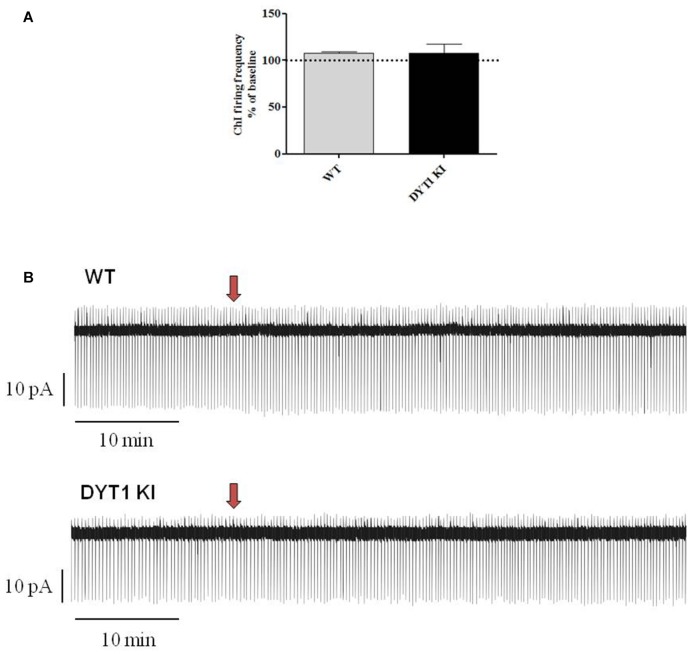
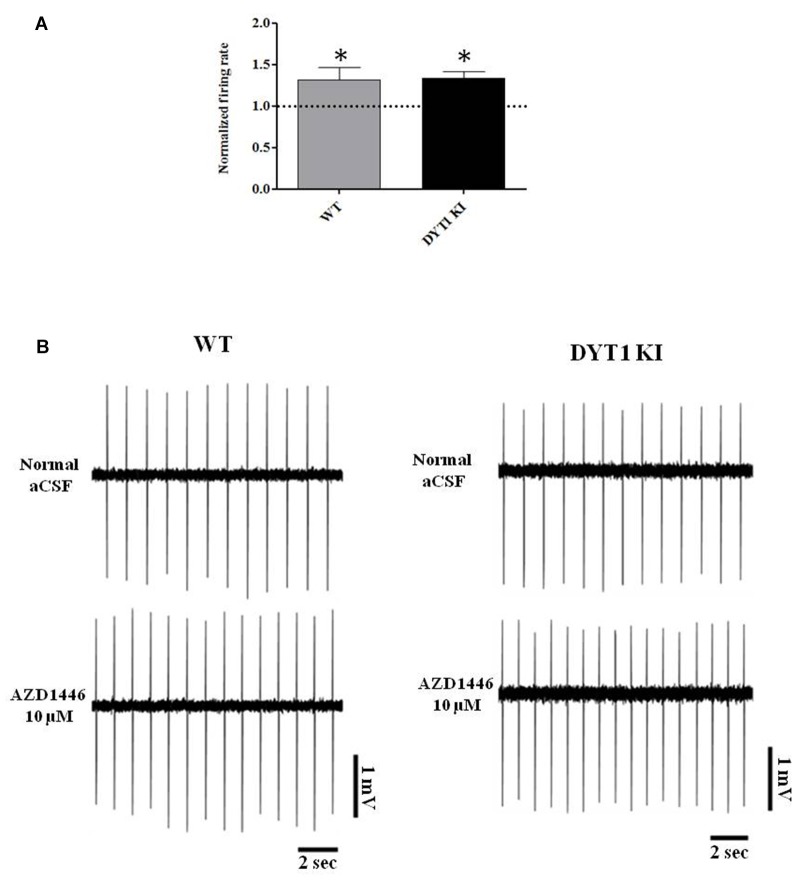
DYT1 dystonia is an early-onset, hyperkinetic movement disorder caused by a deletion in the gene TOR1A, which encodes the protein torsinA. Several lines of evidence show that in animal models of DTY1 dystonia, there is impaired basal dopamine (DA) release and enhanced acetylcholine tone. Clinically, anticholinergic drugs are the most effective pharmacological treatment for DYT1 dystonia, but the currently used agents are non-selective muscarinic antagonists and associated with side effects. We used a DYT1 ∆GAG knock-in mouse model (DYT1 KI) to investigate whether nicotine and/or a non-desensitizing nicotinic agonist, AZD1446, would increase DA output in DYT1 dystonia. Using microdialysis, we found that DYT1 KI mice showed significantly increased DA output and greater sensitivity to nicotine compared to wild type (WT) littermate controls. In contrast, neither systemic injection (0.25-0.75 mg/kg) or intrastriatal infusion (30 μM-1 mM) of AZD1446 had a significant effect on DA efflux in WT or DYT1 KI mice. , we found that AZD1446 had no effect on the membrane properties of striatal spiny projection neurons (SPNs) and did not alter the spontaneous firing of ChI interneurons in either WT or DYT1 KI mice. We did observe that the firing frequency of dopaminergic neurons was significantly increased by AZD1446 (10 μM), an effect blocked by dihydro-beta-erythroidine (DHβE 3 μM), but the effect was similar in WT and DYT1 KI mice. Our results support the view that DYT1 models are associated with abnormal striatal cholinergic transmission, and that the DYT1 KI animals have enhanced sensitivity to nicotine. We found little effect of AZD1446 in this model, suggesting that other approaches to nicotinic modulation should be explored.
DYT1肌张力障碍是一种早发性运动亢进性疾病,由TOR1A基因缺失引起,该基因编码torsinA蛋白。多项证据表明,在DYT1肌张力障碍动物模型中,基础多巴胺(DA)释放受损,乙酰胆碱能张力增强。临床上,抗胆碱能药物是治疗DYT1肌张力障碍最有效的药物,但目前使用的药物是非选择性毒蕈碱拮抗剂,且伴有副作用。我们使用DYT1 ∆GAG基因敲入小鼠模型(DYT1 KI)来研究尼古丁和/或一种不会脱敏的烟碱激动剂AZD1446是否会增加DYT1肌张力障碍中的DA输出。通过微透析,我们发现与野生型(WT)同窝对照相比,DYT1 KI小鼠的DA输出显著增加,且对尼古丁更敏感。相比之下,全身注射(0.25 - 0.75 mg/kg)或纹状体内注射(30 μM - 1 mM)AZD1446对WT或DYT1 KI小鼠的DA流出均无显著影响。我们发现AZD1446对纹状体棘状投射神经元(SPN)的膜特性没有影响,也不会改变WT或DYT1 KI小鼠中胆碱能中间神经元(ChI)的自发放电。我们确实观察到,10 μM的AZD1446可使多巴胺能神经元的放电频率显著增加,该效应可被3 μM的二氢β - 刺桐碱(DHβE)阻断,但WT和DYT1 KI小鼠中的效应相似。我们的结果支持以下观点:DYT1模型与纹状体胆碱能传递异常有关,且DYT1 KI动物对尼古丁的敏感性增强。我们发现AZD1446在该模型中作用甚微,这表明应探索其他烟碱调节方法。